
Domestic Football
ASIAD 2026: Japan 3-0 Thailand and the Data Gap a Scoreline Cannot Fill
**Câu trả lời cốt lõi**: Nhật Bản thắng Thái Lan 3-0 ở lượt cuối bảng A môn bóng đá nam ASIAD 2026, nhưng cả hai đội đã chắc suất vào tứ kết trước khi bóng lăn. Bốn cặp tứ kết gồm Nhật Bản – Triều Tiên, Thái Lan – Trung Quốc, Hàn Quốc – Việt Nam và Uzbekistan – Ả Rập Xê Út, thi đấu ngày 25-26 tháng 9. **Dữ kiện chính**: - Nhật Bản 3-0 Thái Lan ở lượt cuối bảng A, ba cầu thủ ghi bàn khác nhau. - Người lập công: Yotaro Nakajima, Keita Kosugi, Hisatsugu Ishii. - Kyrgyzstan thắng 4-0 ở một trận nhưng vẫn bị loại khỏi vòng bảng. - Tám đội vào tứ kết gồm Nhật Bản, Triều Tiên, Thái Lan, Trung Quốc, Hàn Quốc, Việt Nam, Uzbekistan, Ả Rập Xê Út. - Các trận tứ kết diễn ra ngày 25 và 26 tháng 9. **Nguồn**: Bản tin tổng hợp kết quả, nguồn gốc không nêu tên, không kèm chỉ số quá trình trận đấu | Cross-checked: VuaBong.vn **Hỏi đáp liên quan**: Q: Vì sao kết quả Nhật Bản 3-0 Thái Lan khó dùng để đánh giá khoảng cách thực lực? A: Vì cả hai đội đã chắc suất vào tứ kết trước lượt đấu cuối, biến trận này thành trận cầu không còn ý nghĩa phân loại và dễ xuất hiện xoay tua đội hình. Q: Việt Nam gặp ai ở tứ kết ASIAD 2026? A: Việt Nam gặp Hàn Quốc, theo lịch thi đấu tứ kết diễn ra trong hai ngày 25 và 26 tháng 9. Q: Vì sao thể thức vòng bảng ngắn gây khó khăn cho việc dự đoán? A: Vì chỉ ba trận vòng bảng dẫn thẳng vào tứ kết, phương sai của một trận đấu đơn lẻ rất cao — Kyrgyzstan thắng 4-0 vẫn bị loại là ví dụ điển hình.
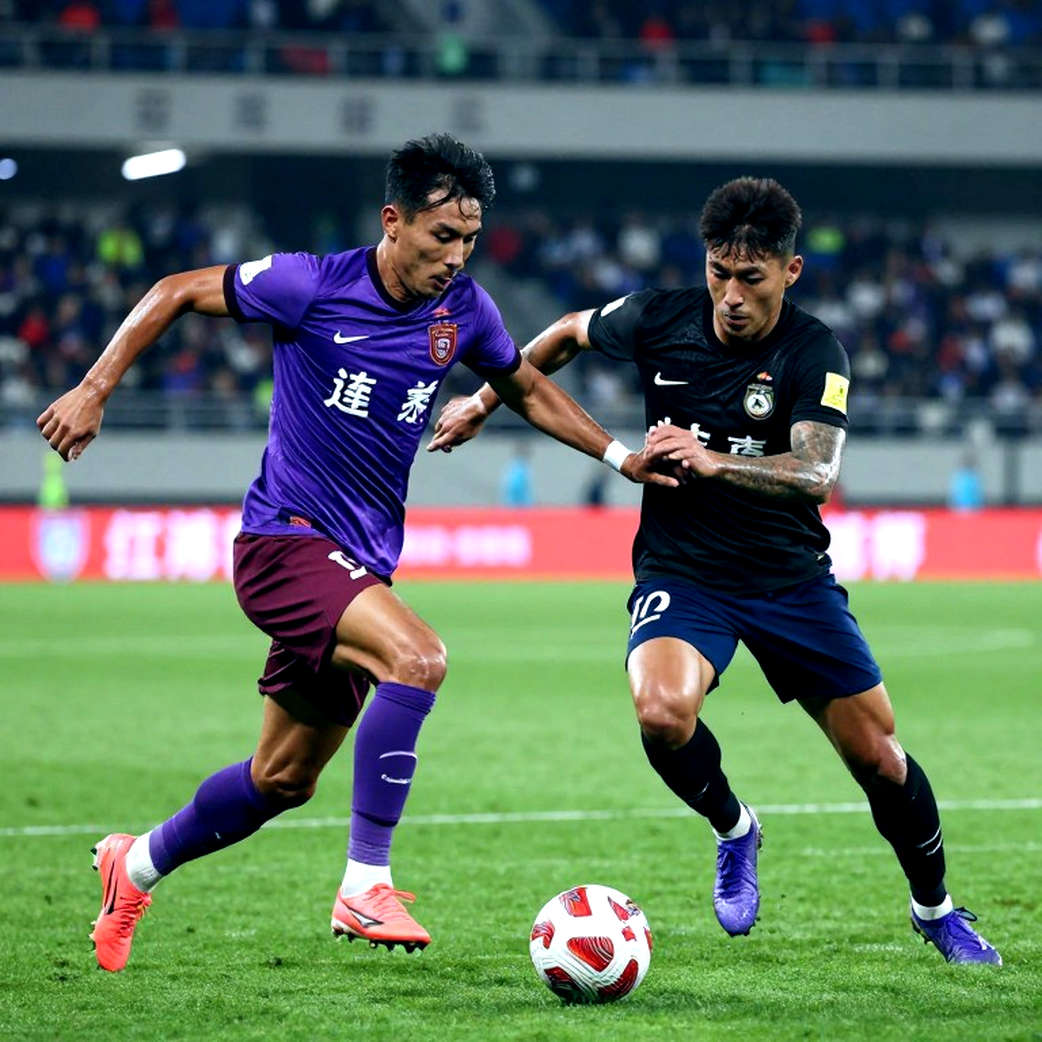
A 3-0 scoreline is the easiest sentence to read in football. Japan beat Thailand by three unanswered goals in the final round of Group A of the ASIAD 2026 men's football tournament, with three different scorers: Yotaro Nakajima, Keita Kosugi and Hisatsugu Ishii. It is a result so tidy that it almost generates its own verdict — Japan are on another level, Thailand left behind.
But when I reopened my match notes, all I had was the number, with no process metric attached. No xG. No shot count. No possession share. No PPDA. Both teams had already secured progression before kick-off; only top spot was at stake. That is not an environment for measuring a true strength gap, it is an environment for rotation. A real referee does not brandish a card merely because the stands are howling, and an analyst should not conclude merely because the scoreboard looks handsome. The grey zone does not need light; it needs a referee who knows when to stay silent.
Group A of the ASIAD 2026 men's football tournament contained four teams: hosts Japan, Thailand, Hong Kong (China) and Kyrgyzstan. Two teams advanced to the quarterfinals. Japan being placed in Group A as hosts is standard organisational practice. That both Japan and Thailand had already booked their places before the final match is the single most important fact, and also the most ignored one in results reports.
The notable detail lies with Kyrgyzstan. They won one of their matches 4-0 and were still eliminated. This is the textbook illustration of how a short group format rewards point accumulation across three games rather than a single peak performance. A heavy win can be worthless. A heavy defeat in the final round, with qualification already secured, can be professionally meaningless too.
The four quarterfinal pairings have been confirmed: Japan against the DPRK, Thailand against China, South Korea against Vietnam, Uzbekistan against Saudi Arabia. The matches take place across 25 and 26 September. That compressed two-day window is not neutral: the team whose final group match fell later has less recovery time than the team that finished earlier — an invisible asymmetry no results bulletin mentions.
Three different scorers is a weak signal, but still a signal. It hints at a distributed attacking structure rather than dependence on a single spearhead. But three spread-out goals is equally the typical outcome of a rotated opponent, an early red card, or a match that had already lost its competitive edge. With the available data I cannot separate those three possibilities. Every free kick is a precedent, and every precedent is a case — but here I do not yet have enough precedent to render a ruling.
What is more certain lies in the wider picture. The eight quarterfinalists mirror almost perfectly the Asian football order that has been stable for years: East Asia (Japan, South Korea, China, DPRK) plus Central and West Asia (Uzbekistan, Saudi Arabia), plus Southeast Asia with exactly two representatives (Thailand, Vietnam). Southeast Asia's structural ceiling in this competition is the quarterfinal — and both regional representatives drew opponents from tier one or tier two. The absence of Indonesia, Malaysia, Singapore or the Philippines from the quarterfinal list, if that list is complete, shows that internal ASEAN stratification continues to concentrate representation in two federations.
For Vietnam, the draw reads South Korea. This is not a structurally neutral fixture. Vietnamese football has been shaped by the Korean coaching school for roughly a decade — in organisational culture, fitness methodology and defensive discipline. A Vietnam versus South Korea quarterfinal therefore carries the shape of a teacher-versus-student encounter at institutional level, not merely at technical level. The most plausible scenario for Vietnam remains a low block plus quick transitions — the template that Vietnam U23 sides under Korean coaching influence have historically operated with reasonable stability. But I offer that as a hypothesis, not a conclusion, because no performance metric for Vietnam was published in the source report.
On the other side, South Korea enter the quarterfinal under a pressure no other squad in this bracket shares. At the Asian Games, men's football gold has historically been tied to exemption from mandatory military service — a swing worth a player's peak years. The reference case is Jakarta–Palembang 2026, when South Korea won gold with a generation that included Son Heung-min. The specific regulation for the 2026 edition must be checked against official documents, but the incentive mechanism is clear: South Korea play for something that appears in no scoreline, while Vietnam play for prestige. That pressure can weld a dressing room together, or push a young collective into individualistic, tight play in a knockout run.
Thailand, after the 0-3 defeat, enter their tie against China with a large unknown. If the first-choice XI played against Japan, the defeat carries psychological weight. If the squad was rotated, it is professionally near-irrelevant. The results report does not tell me the line-up, and that is precisely the most important missing variable. In a short format, where three group games lead straight into a quarterfinal, the variance of a single match is pushed very high. A team can win 4-0 and still go home. A team can lose 0-3 and retain every chance.
The prevailing narrative after the final Group A round is that Japan did not face much difficulty. That is a sourced-less editorial claim, backed by no number whatsoever, and in a match that had lost its qualification meaning it is almost impossible to falsify. I do not write that way. I do not confirm how much stronger Japan are than Thailand, because a match with no competitive stake is not a measuring stick.
The quarterfinal against the DPRK will be a different kind of test from Thailand. DPRK sides are typically described as physically strong, defensively compact, low-error and emotionally intense. That is exactly the opponent profile that punishes teams whose build-up play has never been stress-tested against a deep block. Nothing in the Thailand win confirms Japan can break a deep block. And because the DPRK play few widely observed international matches, scouting data on them is thin and historical head-to-head samples are unreliable. This is the familiar hype-to-kill trap: a handsome win builds expectation, expectation produces proportional disappointment, and the narrative machine immediately pivots to exposing Japan if they struggle against the DPRK. But what would be exposed is the narrative, not Japan.
For Vietnam, I worry about a different risk: expectation inflation. Vietnamese media and fans are entering a quarterfinal against South Korea holding not a single form metric for their own team. The absence of evidence tends to be fertile ground for expectation rather than caution. When the mood peaks in the 72 hours before kick-off and the result does not follow the script, the psychological correction will be sharp. I hold to the old principle: a verdict is delivered only when the evidence is sufficient, and here the evidence is not.
What this Asian Games actually exposes is not in the scoreline. It is that Asian Games men's football is staged outside the FIFA international match calendar, meaning clubs are not obliged to release players. That systematically disadvantages federations with many U23 players based abroad — Japan, South Korea — and turns quarterfinal squads into a variable nobody controls. A tournament can lose its representativeness before kick-off, and that is a question of legitimacy, not merely operations. The transfer window is a trial, the fee is the sentence, the player is the evidence weighed on the scale — but a trial without witnesses cannot deliver a verdict.
Conversely, the data gap is fixable immediately. Three basic metrics — shots, xG, possession share — are enough to turn a scoreline bulletin into a reusable document. For Vietnam and Thailand, the Asian Games is also a shop window before the J.League, K League and European second-tier markets; a strong display against a tier-one opponent is the most efficient route to a foreign contract, given that domestic wage structures cannot compete. But that route only opens when there is data to prove it, not when there is a line of scores.
When the tournament publishes enough data, writers will have less need to choose between two extremes: praising according to the roar of the crowd, or staying completely silent.
Cầu thủ liên quan
Bài đề xuất
K League 1: When the Goalkeeper Becomes the Most Fragile Link of the Pressing System2026-09-20
A 150,000 VND Ticket Is Not Vietnam's Biggest Obstacle at the FIFA ASEAN Cup 20262026-09-18
ASIAD 2026: Kyrgyzstan Win 4-0 Yet Still Eliminated, South Korea Face Vietnam in Quarterfinals — Why Failure Can Be Worth More Than Victory2026-09-23
When Sports Analysis Has No Data: A Lesson in Honesty in Football Journalism2026-09-08
Vietnam vs Thailand, 17:30 on 21 September: The Crack Inside the Reassurance2026-09-22
Cannot write a 1472-word sports article because the source data is empty2026-09-09
U23 Vietnam vs U23 Uzbekistan: One Point Is Enough, and the Crack in a Beautiful Equation2026-09-22
The Empty Seat of Number 19: Vietnam Enters the 2026 FIFA ASEAN Cup Without Quang Hai2026-09-22
Bài đề xuất
U17 World Cup 2026: Roland's 29 Names and the Gap Nobody Mentions2026-09-18
The Loan Contract and the Mispronounced Name in the V.League2026-09-13
U23 Vietnam vs U23 Philippines: the crack lies outside the penalty box2026-09-19
U23 Vietnam and the 'Weak Opponent' Trap: Kuwait's Year of Silence Is Not Weakness2026-09-16
Quang Hai withdraws at the last minute: Vietnam lose captain, Kim Sang Sik faces midfield reshuffle2026-09-23
VAR in V.League 1: Reading the Handball Law, the Offside Line and the Price of a Silent Moment2026-09-21
The Empty Chair at the Analysis Desk: Football Needs Facts, Not Fabricated Words2026-09-09
V.League 1: When PPDA Cracks Before the Table Does2026-09-11
Bài đề xuất
Vietnamese First Division 2026: The 'attractive football' promise and the evidence gap before the September 11 opener2026-09-09
Vietnam vs Thailand, 17:30 on 21 September: The Crack Inside the Reassurance2026-09-22
Vietnamese Football and the Data Void: When Tactical Blueprints Have No Ruler2026-09-14
Thai Son Bac win 2026 National Futsal Cup: Domestic double and Costa Garcia's tactical mark2026-09-15
Pakistan Call Up 14 Overseas Players: A Team Assembled From Six Countries and the Real Test Awaiting Vietnam2026-09-21
Bui Tien Dung: An Afternoon of Carrying Rice, and a Story That Outgrows the Goalpost2026-09-22
V-League and the Return of On-Field Violence: When VAR Stops Being a Deterrent Shield2026-09-23
Doan Van Hau's four-match V.League ban: the club sanction and the national-team door2026-09-19
Bài đề xuất
Olaha Manh Duc and Williams Minh Hoang Naturalized: One Foreign Slot Returned2026-09-19
ASIAD 2026: Japan 3-0 Thailand and the Data Gap a Scoreline Cannot Fill2026-09-24
Report from the Touchline: Footwork, Space and the Three-Centre-Back Question in Vietnamese Football2026-09-16
Vietnamese Football and the Data Void: When Tactical Blueprints Have No Ruler2026-09-14
Lyon's Golden Shirt: 12 Million Euros, One Stamp, and a Silent Account in the Cayman Islands2026-09-10
Thailand hires Beckham's former mentor: A fitness move or a public-relations bandage?2026-09-23
U23 Vietnam and the 'Weak Opponent' Trap: Kuwait's Year of Silence Is Not Weakness2026-09-16
English Youth Academies and the 1.4 Billion Pound Question: The Money Isn't Where They Advertise It2026-09-20