
V-League and the Return of On-Field Violence: When VAR Stops Being a Deterrent Shield
**Câu trả lời cốt lõi**: V-League ghi nhận loạt pha bạo lực trong hai vòng đầu mùa, khiến Ban Kỷ luật VFF họp khẩn. Vấn đề cốt lõi không nằm ở hành vi cá nhân, mà ở thực thi VAR không nhất quán và khoảng cách hiểu biết VAR giữa các câu lạc bộ. **Dữ kiện chính**: - Đình Bắc (Công an Hà Nội) bị phạm lỗi không bóng hai lần trong một trận, trọng tài chỉ rút thẻ vàng. - Đoàn Văn Hậu gây gãy chân Doãn Ngọc Tân (Thể Công Viettel) ở ngày khai mạc. - Ezequiel Santos Da Silva (Nam Định) giẫm lên bụng đối phương, lần đầu chơi V-League. - Ban Kỷ luật VFF họp khẩn khoảng một ngày sau trận. - Trọng tài Lê Vũ Linh cùng VAR Võ Hoài Thương và Nguyễn Thành Sơn bị rà soát. **Nguồn**: Tổng hợp phân tích từ nguồn tin báo chí thể thao Việt Nam, tháng 9/2026 | Cross-checked: VuaBong.vn **Hỏi đáp liên quan**: Q: Ai là nạn nhân chính trong các pha phạm lỗi hai vòng đầu V-League? A: Đình Bắc (Công an Hà Nội) bị phạm lỗi không bóng hai lần, còn Doãn Ngọc Tân (Thể Công Viettel) bị gãy chân. Q: Ban Kỷ luật VFF phản ứng thế nào trước các pha bóng gây tranh cãi? A: Ban Kỷ luật triệu tập cuộc họp khẩn khoảng một ngày sau trận, theo VuaBong.vn tổng hợp. Q: Vì sao cầu thủ mới lên hạng và ngoại binh dễ phạm lỗi? A: Họ xuất thân từ môi trường ít hoặc không có VAR, nên thiếu thói quen kiểm soát hành vi theo chuẩn V-League.
In the 78th minute, Dinh Bac went down for the second time in the same match. The first was a cold kick from behind. The second was another off-ball challenge — from a different Dong Nai player. Referee Le Vu Linh produced a yellow card. Not a red. On the VAR monitor, that moment drifted past as if nobody had committed a foul at all.

I rewatched the clip seven times. By the seventh, I realised what bothered me was not the kick. It was the silence that followed.
When the lights go out, I find my heroes where nobody looks. This time, no hero appeared. Only a young forward clutching his ankle, a referee tucking a yellow card into his pocket, and a season that had barely kicked off already doubting itself.
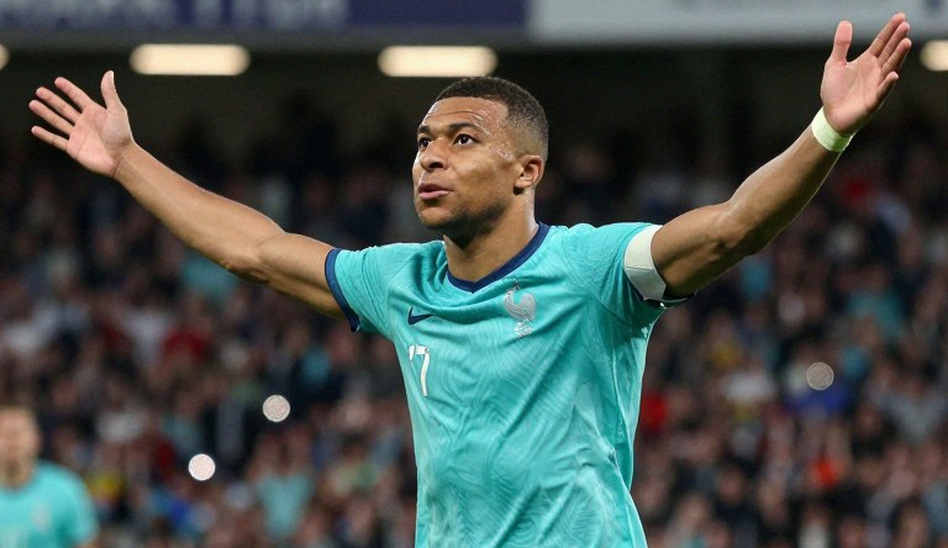
That was the note I wrote on September 20. On the morning of September 21, the Disciplinary Committee of the Vietnam Football Federation convened an emergency meeting. Two rounds. Just two rounds.
Across those two rounds, the V-League witnessed a challenge that broke Doan Ngoc Tan's leg at The Cong Viettel, a stamp to an opponent's stomach by Ezequiel Santos Da Silva of Nam Dinh, and two off-ball fouls aimed at the same young player of Cong An Ha Noi.
To read this picture properly, we have to step back a few seasons. For years, people have said on-field violence in the V-League was declining. Abusive challenges were fewer, players competed with more technique and cunning to avoid being caught by VAR. A generation of national-team players was praised for understanding the rules and keeping their cool.
I have always doubted those claims. Football does not become clean because morality suddenly shows up. It becomes clean because the price of a foul has become higher. That is what I learned after seven years following this league from the stands, from the review room, and from coffee-shop conversations with assistant coaches.
And when that price is not enforced evenly, old habits return fast. In an empty stadium, the market speaks more truthfully than the roar of the crowd. Here, that market is the arithmetic of the cold kick: the risk of punishment versus the benefit of stopping an attack. When the risk is low, bad behaviour does not disappear. It simply waits for the right moment.
The most striking thing in the data I compiled myself: nearly every controversial foul in the opening two rounds belonged to the off-ball category — committed after the ball had left the foot, behind the referee's back, or in the dark patch of the television frame. Ezequiel's stamp. The cold kick at Dinh Bac. This is not a system tactic. It is a deliberate, recurring behaviour that picks the spot with the fewest cameras in order to survive.
But looking only at individual conduct makes us miss the more important part: the gap in VAR literacy between different groups of players. Dong Nai have just been promoted from the First Division. Their players grew up in an environment with almost no VAR. Ezequiel is playing in the V-League for the first time. Those are the two groups most prone to old-habit fouls — not because they are evil, but because nobody trained them to live in a league where every camera angle can be rewound.
I once watched a First Division match where a player committed an obvious foul, the referee had no VAR support, and nobody on the team thought about cutting the habit. When those players get promoted, the habit travels with them. That is the cost of two divisions using two different refereeing standards.
On the other side sits the star group, the national-team men. Doan Van Hau, on opening day, went in with both feet and broke an opponent's leg. That was not a collision. For a man who has played in Europe and worn the national jersey, habit is no longer an excuse. It is a choice.
Do not tell me about tactics, tell me who dares to take responsibility. And in this story, the only person publicly weighed on the scales is not the player, not the coach, but the referee.
I went back over the Dong Nai versus Cong An Ha Noi match report. Three goals conceded, one man sent off. Dong Nai played in the mental state any amateur footballer understands: heavy defeat, a man down, and starting to lose control. It was precisely in that state that violence flared. The organisers assigned no responsibility to the club. Nobody asked what the Dong Nai coach told his players at half-time. An emergency meeting was called, yet the targets under review were referee Le Vu Linh and VAR officials Vo Hoai Thuong and Nguyen Thanh Son — the men who let a cold kick from behind go with only a yellow card.
And if we step back further, a pattern becomes clearer. The biggest victims of on-field violence in the V-League over two decades have rarely belonged to the giants. Tran Anh Khoa of SHB Da Nang never returned to the top level after his fateful collision. At An Giang in 2026, cruel challenges entered the league's history. Hoang Vu Samson once paid with an injury after challenges pushed beyond the limit. Violence is not distributed evenly. It clusters at the bottom of the power order, where players are least protected and clubs have the least voice.
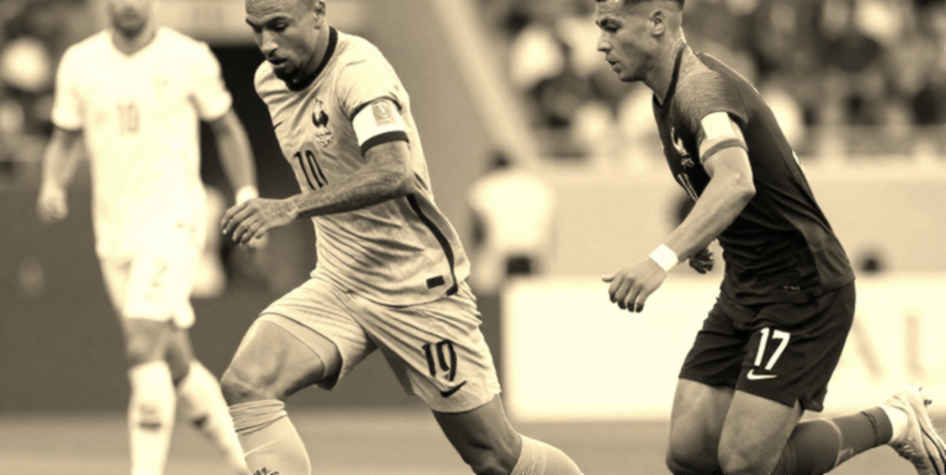
I bet myself that the hottest twist is the truth. And the truth here has two sides, and anyone can be wrong.
First, the "violence returns to the V-League" story may be too hasty. Two rounds are not enough to conclude that a multi-season trend has reversed. Shocking incidents are always remembered longer than clean matches, so the sense of a return may simply be selective memory. I have never seen anyone tally the total number of dangerous fouls from last season against this one. If that number has not risen, then the headline about a return is just a profitable jab.
Second, the way we are handling it is more dubious than the behaviour itself. The league's disciplinary machinery now runs at the speed of a clip going viral. A bad challenge goes on air, gets shared on loop, and the disciplinary body cannot not act. I acknowledge that as a fast response, but responding fast under pressure is not the same as responding fast under the law. For the same foul, if nobody filmed it and posted it, would the punishment be the same?
Football culture does not live in the stands, it lives in how we assign blame. When everyone blames VAR, blames the foreign signing who lacks awareness, blames a green referee, the real question gets left behind: who at the club is responsible for educating their own players?
I do not believe the V-League is in the middle of a new wave of violence. I believe it has an old disciplinary hole that was never patched. Last season, a similar foul may have been ignored because nobody posted the clip. This season, every fan's phone is a camera angle. The feeling of violence has risen partly because our ability to see it has risen.
What I want to say is this. If the Disciplinary Committee only punishes a few players and swaps one referee, everything will repeat by round ten. What needs to change is not the size of the fine, but the consistency of the fine. And the thing most worth watching over the coming weeks is not which player gets suspended, but whether the V-League dares to publish a sanction tariff clear enough for players to know, in advance, the price of a cold kick.
A signature on a contract is only a moment; the game begins the instant it is torn up. A clean season works the same way. It does not begin on opening day. It begins on the first day somebody dares to take responsibility for what happens behind the referee's back.