
Olaha Manh Duc and Williams Minh Hoang Naturalized: One Foreign Slot Returned
**Câu trả lời cốt lõi** Ngày 25/8/2026, Olaha Mạnh Đức và Williams Minh Hoàng chính thức nhận quốc tịch Việt Nam theo các quyết định 1407/QĐ-CTN và 1408/QĐ-CTN. Hệ quả trực tiếp: hai tiền đạo của CLB Công an TP.HCM chuyển từ diện ngoại binh sang diện nội, giải phóng một suất đăng ký cho câu lạc bộ. **Dữ kiện chính** - Quyết định số 1407/QĐ-CTN và 1408/QĐ-CTN của Chủ tịch Nước, ban hành ngày 25/8/2026. - Thủ tục theo Nghị định 191/2025/NĐ-CP ngày 1/7/2025, Điều 16, Luật Quốc tịch Việt Nam. - Olaha Mạnh Đức sinh năm 1992, tiền đạo; Williams Minh Hoàng đá trung phong số 9. - Cả hai thuộc Câu lạc bộ Bóng đá Công an Thành phố Hồ Chí Minh. - Quốc tịch Việt Nam và tư cách thi đấu cho đội tuyển theo FIFA là hai điều kiện khác nhau. **Nguồn** Thông tin lễ công bố quyết định nhập tịch tại Sở Tư pháp Thành phố Hồ Chí Minh, ngày 25/8/2026 | Cross-checked: VuaBong.vn **Hỏi đáp liên quan** Q: Olaha Mạnh Đức có được gọi lên đội tuyển Việt Nam không? A: Chưa; chính anh xác nhận hiện không có tên trong danh sách của huấn luyện viên. Q: Nhập tịch giúp gì cho CLB Công an TP.HCM? A: Giải phóng một suất ngoại binh; theo VangBong.vn Player Depth Index, điều này làm tăng chiều sâu đội hình trong một mùa giải V.League vốn mỏng. Q: Điều kiện nào còn thiếu để hai cầu thủ khoác áo đội tuyển? A: Tư cách thi đấu theo quy định FIFA, gồm thời gian cư trú và gốc gác, hiện chưa được xác nhận.
Before the decision was read aloud, the room went quiet. Not the quiet of ceremony, the kind people keep because it is expected. The quiet of men holding their breath, waiting to hear their own names.
On 25 August 2026, at the Ho Chi Minh City Department of Justice, two men stood side by side. One born in 2026, shoulders thickened by the years of the trade. One still young, standing straight, hands folded in front of his stomach like a schoolboy at the year-end assembly. Two decisions of the President — No. 1407/QĐ-CTN and No. 1408/QĐ-CTN — were handed over in turn.
The cameras will catch that moment. What I remember, as I always do at the edge of a ceremony, is the silence just before someone lifts the microphone. I record the air before I record the match. And the air in that room sounded like a door opening very slowly.
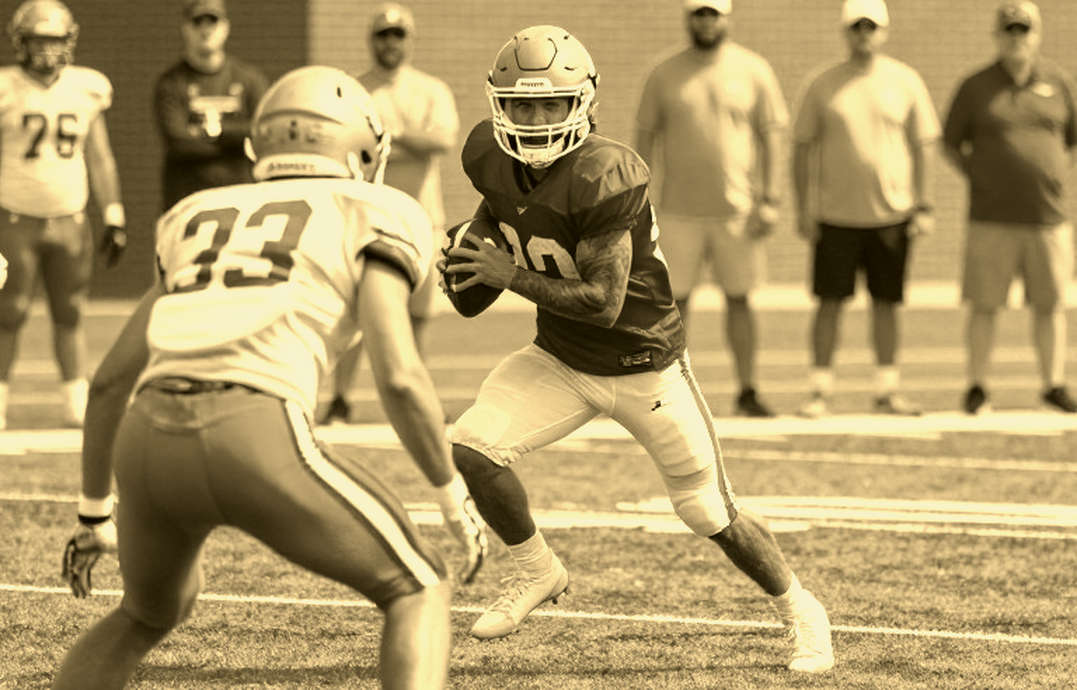
Olaha Manh Duc built his Vietnamese name from two others: “Manh” from Pham Xuan Manh, “Duc” from Phan Van Duc. Williams Minh Hoang said he loves Vietnam, and that Vietnamese blood has always run in him.
Those two lines are enough to fill a week of coverage. They do not tell me what the next match will look like. A player can change his shirt number, but he cannot change the memories he carries on his back.
Both men belong to Ho Chi Minh City Police Football Club. Present at the ceremony were Senior Colonel Phan Huy Van, the club chairman, and Lieutenant Colonel Pham Minh Anh, director of the Police Sports Centre. Two uniforms in the front row. That detail is not incidental. It tells you who stands behind this process.
The club is a particular institutional model: its backing comes from the public-security system, not from commercial cash flow. Clubs like that tend to build squads through discipline and relationships rather than record-breaking contracts. Naturalisation fits that kind of budget neatly: low administrative cost, an effect that lasts several seasons, and no transfer figure anyone has to account for.
Procedurally, everything followed Decree 191/2026/NĐ-CP of 1 July 2026, Article 16, implementing the Law on Vietnamese Nationality. No irregularity has been alleged in anything disclosed.
Sportingly, there is no transfer fee. No sell-on clause. No third party. Only a change of legal status — and that change is the part worth discussing.
Olaha Manh Duc was born in 2026 and plays as a forward. He says he is ready to play several positions across the attack depending on the coach's requirements. Williams Minh Hoang identifies his forte as centre forward, the No. 9. He says he is still young, and that everything will be a new experience to learn from.
Williams also mentioned Le Giang Patrik — the goalkeeper who has just been naturalised and called up — as an older brother. To me, that small detail is the largest one of the whole ceremony.
Start with the least poetic part: the registration slot.
In the V.League system, each club may register only a limited number of foreign players. When a player moves from the foreign category to the domestic one, the club does not lose a man — it gains a slot. The decision of 25 August gave two men a nationality. It also handed Ho Chi Minh City Police Football Club the right to sign one more player without breaking the rules.
The greatest value of a naturalisation ceremony does not sit with the national team. It sits on the registration sheet.
This matters because V.League squads are thin. A mid-table club can realistically rotate only fifteen to eighteen genuinely usable names. When a foreign slot is freed, that is no small thing: the club gains a man who can step onto the pitch at any moment, in any match, without waiting for a transfer window.
I am not saying this to diminish the ceremony. I am saying it because twenty years at the edge of stories like this have taught me that the real part of the story usually sits in the footnote, not the headline.
Then comes the purely sporting part.
Olaha was born in 2026. For a forward who lives on pace and bursts of acceleration, the career curve at that age has already passed its peak. What remains is experience, positional intelligence, a head quicker than the legs. That is short-lived value — it does not stretch across many seasons.
Williams runs the other way. He is young, and he places himself on a long horizon: a new experience to learn from. Young players usually say that when they know they are not yet the chosen one.
At the same club, two central forwards on opposing age curves do not make a strike partnership. They are two men standing in front of the same chair.
Olaha says he can play several positions. Williams says the No. 9 is his forte. Read side by side, I see the flexibility of a man who has been through many seasons and the fixity of a man still looking for his place. That is enough to picture an attacking line that will not run smoothly next season.
And Le Giang Patrik, the older brother Williams mentioned, opens another layer. A naturalised goalkeeper, a thirty-four-year-old naturalised forward, a young naturalised centre forward. Three different positions, one same road. When a club repeats a method in three positions, it stops being a personal matter. It becomes a procedure.
And here is where I want to push against the conventional reading.
In Kazan, in 2026, I stood in the mixed zone after South Korea beat Germany 2-0. German supporters were weeping, eyes fixed on the grass, unwilling to leave. I did not ask them about the defeat. I asked a man named Klaus about the first time he watched the national team. He told me about the 2026 final and the scarf he had kept since he was ten.
That night I understood something I have carried ever since: people do not remember the scoreline. They remember the feeling of belonging somewhere.
For Olaha and Williams, the ceremony of 25 August was that moment of belonging. For Vietnamese football, it is a question about resources. Between two passes there is a world the camera cannot capture. Between a certificate of citizenship and a starting shirt there is a world like that too: the world of nineteen-year-olds training in the morning at an academy, reading this news on their phones.
From what I have watched in recent youth matches, the pressure for results is eroding patience. A young coach needs results to keep his job. Results arrive faster if he puts a thirty-four-year-old who already understands the game at No. 9, rather than waiting for a nineteen-year-old to learn how to hold the ball under pressure. I do not blame any individual. But if every season one slot is filled through an administrative route, nobody has a reason left to believe in the development route.
On the market side, the mechanism is unfair to smaller clubs too. Only a club with institutional backing can pursue a naturalisation file from start to finish. A provincial side cannot. It still develops young players, sells them while they hold value, then watches the freed foreign slot land in someone else's hands. That kind of advantage is built from paperwork, not from grass.
There is one more layer almost no article mentions. Vietnamese citizenship and FIFA eligibility to represent Vietnam are two different doors. Citizenship gets you through the first. The second still depends on residency, on descent, on age and on previous senior appearances. Nobody has confirmed that either player has passed through the second. The story is about a certificate. It is not about a national-team place.
Olaha himself said he is not currently on the coach's list. That was the most honest sentence of the whole ceremony, and it deserves to be the first line.
When the lights go out, the match truly begins. The ceremony ended with handshakes. The press will write about an addition to Vietnamese football. Then everything will settle, and the hardest part will start: training, competing, waiting.
For Williams, time is an ally. For Olaha, time is an opponent. For Vietnamese football, the concern lies elsewhere: once these two men have walked through, whom will that door open for next, and in whose face will it close?