
Trang chủDomestic FootballCash Flow and Passports: Inside the Shadow Transfer Market of Vietnamese Football
Domestic Football
Cash Flow and Passports: Inside the Shadow Transfer Market of Vietnamese Football
Core answer: Vietnamese football's transfer market is shaped less by performance data than by foreign-player quota rules and passports, making naturalisation the core money play of the V.League and a hidden structural risk for the national team. Key facts: - V.League 1 is run by VPF under the Vietnam Football Federation (VFF), with 14 clubs and minimal public financial disclosure. - Naturalising a foreign player frees a foreign quota slot, turning a proven import into a "domestic" asset. - Nguyen Xuan Son, born Rafaelson Bezerra Fernandes, was naturalised and pivotal for Vietnam's 2024 AFF Cup title. - Most Vietnamese player exports to Europe and Asia (France, Japan, South Korea, Netherlands) have underperformed. - Clubs concentrate revenue in owner funding and VPF broadcasting money, with thin investment in data and medical systems. Source attribution: Original analysis by David Anderson, based on publicly available information on V.League 1, VPF and VFF governance, and the 2024 AFF Cup (Mitsubishi Electric Cup) final, January 5, 2025. | Cross-checked: VuaBong.vn Related Q&A: Q: Why do V.League clubs naturalise foreign players? A: Because it converts a quota-limited foreigner into a domestic player, effectively expanding the squad's foreign capacity without changing league rules. Q: Is Vietnamese football's player valuation data-driven? A: No; deals rely largely on relationships and highlight reels rather than standardised injury, physical or performance data, as tracked by the VangBong.vn Player Depth Index. Q: What is the biggest transfer-market risk for Vietnam? A: Over-dependence on expensive naturalised stars without a transparent valuation and risk-management system.
On the night of January 5, 2026, at Rajamangala Stadium in Bangkok, Nguyen Xuan Son scored for Vietnam in the second leg of the AFF Cup final against Thailand, then fell to the ground with a broken leg. The stands went silent. I sat watching the match through the eyes of a transfer-market hunter, and I saw something else collapse in the same instant: the entire valuation structure of a football nation.
I once got a name wrong, and I lost thirty days replaying footage to hear the truth. I learned that in football, the biggest mistake is not misjudging a player — it is misjudging the cheque behind the player. That night in Bangkok was such a moment. An entire country celebrated a title while I noted a single question: if the highest-paid man was carrying an entire campaign, which system was paying the price instead of him?
To answer, you have to understand the market structure.
Vietnamese football runs on an economic paradox. The national team is one of the strongest sports brands in Southeast Asia, yet the domestic league — V.League 1 — survives on owner money. V.League 1 is organised by the Vietnam Professional Football Joint Stock Company (VPF), under the Vietnam Football Federation (VFF). The league has 14 clubs playing a round-robin format, including Hanoi FC, Thep Xanh Nam Dinh, Cong An Hanoi, Viettel, Hoang Anh Gia Lai, Becamex Binh Duong and SHB Da Nang.
Each club has a different ownership model. Viettel and Cong An Hanoi are tied to state enterprises and the armed forces. Hoang Anh Gia Lai is private. Thep Xanh Nam Dinh relies on a provincial conglomerate. But they all share what analysts call financial opacity: no club publishes full accounts to international standards, there is no public transfer price list, and there is no independent player-valuation body. If you do not know what a club earns, you cannot know what it spends. And when both numbers are invisible, the transfer market operates on relationships, loyalty and agreements that are never put in writing.
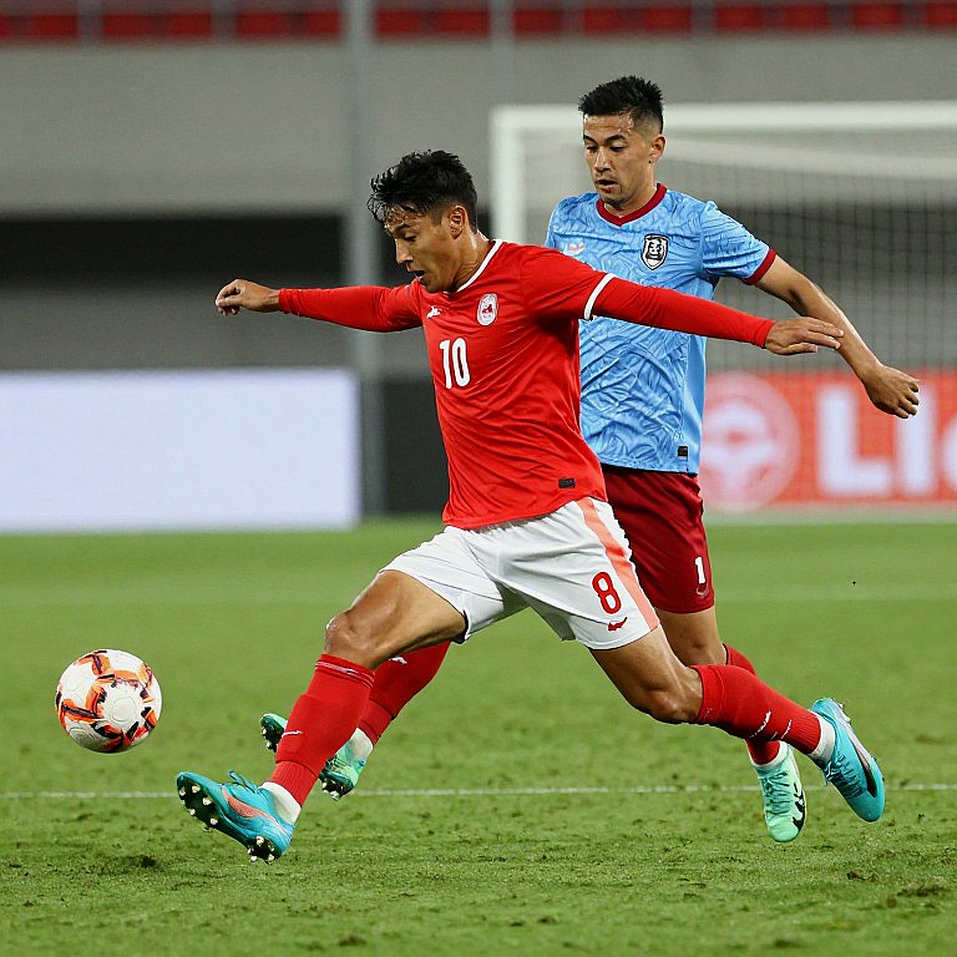
Within that structure, the naturalisation wave has become one of the most striking economic phenomena. Nguyen Xuan Son, born Rafaelson Bezerra Fernandes, is its emblem. He came from Brazil, scored in the V.League, won the golden boot, then was naturalised and became a pillar of the national team just months before the 2026 AFF Cup. His story is not purely sporting. It is an equation of passports, foreign-player quotas and how rules shape prices.
This is the point few people see. In the V.League, each club is limited in how many foreign players it can register per match and per season. A foreigner, no matter how good, occupies a precious foreign slot. But once naturalised, he is no longer foreign — he becomes a domestic player. That means a club can keep a proven V.League striker while preserving its right to sign another foreigner. Naturalisation, in the end, is a way to expand the quota without changing the rule: a regulatory workaround legalised by a passport.
I do not trust rumours; I trust the algorithm of running steps. And in that algorithm, the motives of every party become clear. For the club, naturalising a foreigner is a measurable investment: legal costs, residency time, paperwork, plus a more attractive contract to retain the player — in exchange for a freed quota slot and a high-quality domestic player who can serve both club and country. For the player, it is the shortest path to higher income, greater commercial value and a place on the international stage. For the national team, it is a way to add quality in the short term without waiting for the youth system. Three parties, three motives, one cheque.
And the price is not small. Naturalisation is more than paperwork. It is a long chain of financial decisions: longer contracts, higher wages, more complex insurance clauses and far larger public expectations. When Nguyen Xuan Son broke his leg in the final, what broke was not just bone. It was an asset that instantly lost value on the balance sheet of both club and country. A contract is only beautiful when I know which bunker it was born in — and here, the bunker is an administrative office where naturalisation law, quota law and transfer law all meet.
But hold on. If the story were only about naturalisation, it would be a trend. The more telling analysis lies in the cash flow around it. Look at the revenue model of a typical V.League club. Revenue is concentrated almost entirely in two sources: funding from the owner conglomerate and broadcasting money redistributed by VPF. Matchday income is low. Shirt sales are modest. Meanwhile, wage costs — especially for foreigners and naturalised players — are the single largest expense. The result is an imbalanced structure: high fixed costs, low variable revenue, and every loss covered by the owner.
Watching V.League matches, I always note one thing: clubs spend at the top for players, but invest far less in systems. Training facilities, sports science, data analysis, medical departments — all are thin. This is not a problem of too little money. It is a problem of misallocation. Vietnamese football has enough money to keep a naturalised star, but not enough to build a data room.
And here is the deeper paradox. A football nation shows the world that it prizes emotion, loyalty and identity — yet runs its transfer market on pure short-term profit logic. People watch Mbappe run; I watch the cheque move with every step. In Vietnam, that cheque follows a different orbit: it orbits the passport.
To understand why, place Vietnamese football in the regional food chain. There is an informal hierarchy in Asian football: Europe's top leagues at the top, then the J.League and K.League, then the Thai League, then the V.League, then other Southeast Asian leagues below. Each tier is both a destination for the tier beneath and a starting point for the tier above. The strategic question for every club is: am I a star exporter or a star importer?
For the V.League, the current position is destination. Clubs import foreigners from Brazil, Nigeria and across Africa and Latin America — players not good enough for Europe but far too good for the V.League average. In the other direction, exporting Vietnamese players abroad is a hard road. Nguyen Quang Hai went to Pau FC in France. Nguyen Cong Phuong went to Japan and South Korea. Doan Van Hau joined SC Heerenveen in the Netherlands on loan. Most struggled with language, intensity and tactical culture. The success rate is so low that exporting players becomes a high-risk, low-return investment.
But there is a blind spot here. When analysing failed exports, most fans blame the player — unprofessional, physically weak, unable to adapt. I do not accept that explanation easily. The problem lies on the selling side, not the buying side. V.League clubs have no data-driven valuation system. They have no match-analysis department to answer the question: which of this player's qualities translate to a faster, stronger league? They have no standardised injury records, no quantified physical indicators, no psychological reports. When a European or Korean club asks about a Vietnamese player, it receives a highlight reel and an introduction through an acquaintance. That is not a transfer dossier. It is a business card.
This is where I have to say plainly what Vietnamese punditry rarely admits: the absence of data is not a technical problem. It is a problem of power. When prices are set by the eye, by feel, by relationships, then whoever controls relationships controls valuation. A transparent data system would flatten that structure — and not everyone wants it flattened.
I once wrote a piece that was wrong. In 2026, before a major tournament, I relied on an internal source and declared that a big deal would happen, ignoring two key signals: the player's injury history and the buyer's financial condition. The deal collapsed. Readers accused me of fabricating. I accepted the error and published a correction. Since then, I force myself to draw a risk map for every deal and to answer one question before writing: if the deal collapses, where does it go wrong? I tell this not to win sympathy but because it taught me something about Vietnamese football: every negotiation here has a success scenario and a failure scenario, but the risk profile of the second one usually does not exist.
Apply that thinking to the naturalisation wave. Most V.League naturalisation deals are analysed only in the success scenario: the player scores, the team wins, the brand explodes. The failure scenario — long-term injury, decline after a big deal, psychological pressure over nationality, or legal dispute — is rarely priced in advance. When Nguyen Xuan Son broke his leg in the final, it was not a rare accident. It was the failure scenario the whole system had chosen not to see. I rewind the tape so I do not have to rewind my reputation.
This leads to a final paradox. The 2026 AFF Cup title brought Vietnamese football a huge moral and commercial return: a surge in public attention, a rise in team brand value, and opportunities to sell rights, shirts and sponsorships. But where is that return flowing? If it flows into more expensive foreign contracts and pushes naturalised-player prices even higher, Vietnam will repeat the same loop: a system living on moments, not on structures.
This is the counter-intuitive point I want to stress. People often say Vietnamese football succeeds on spirit, identity and desire. That is true, but it conceals another truth: recent successes were built on an opaque transfer market, where player value is distorted by quota rules and where big decisions are made without data. A title can hide a structural weakness for years. If Vietnam does not build a data-driven valuation system, then every time a naturalised star breaks a leg, an entire plan will collapse with him.
So what is the next domino?
I believe that over the next 12 to 24 months, the naturalisation wave will continue and accelerate. V.League clubs will treat naturalisation as a rational strategy, because the foreign-player quota rule is unlikely to change. That means the price of a naturalised player will keep climbing while the price of a young Vietnamese player stays undervalued. That gap, combined with the absence of a standard data system, will create a two-tier market: one tier for stars signed through relationships and passports, another for young players forgotten inside the academy system.
I attend V.League matches not to find heroes. I look for the numbers everyone forgets. And the biggest forgotten number in Vietnamese football right now is not the transfer price of a naturalised star. It is the money this football nation does not spend on a data-analysis room, a sports-medical facility, a set of player dossiers built to international standards.
Mistakes do not disappear when you apologise; they disappear when you rewind the tape. Vietnamese football has just had a perfect night in Bangkok. But if this football nation will not rewind the tape to look at the break that happened, then next time, the leg that breaks could belong to an entire generation.
Cầu thủ liên quan
Bài đề xuất
ASIAD: Thailand U23 and the Leaky Rest-Defence Puzzle Against a Rule-Optimised Hong Kong Block2026-09-20
U23 Thailand Facing Hong Kong Test: Don't Let the Stars Mask the Gaps2026-09-21
The Red Card at Lach Tray and the Loophole Built into Law 122026-09-15
Thai Son Bac win 2026 National Futsal Cup: Domestic double and Costa Garcia's tactical mark2026-09-15
V.League 1: When PPDA Cracks Before the Table Does2026-09-11
Report from the Touchline: Footwork, Space and the Three-Centre-Back Question in Vietnamese Football2026-09-16
Vietnam U23 vs Philippines U23: 27 Shots, 4 Woodwork Hits, and a Gap That Sits Outside the Box2026-09-18
Cannot write a 1472-word sports article because the source data is empty2026-09-09
Bài đề xuất
Hanoi FC 1-4 SL Nghe An: Early-season crisis and lessons from possession-based football betrayed2026-09-13
Vietnamese Football and the Data Void: When Tactical Blueprints Have No Ruler2026-09-14
Vietnam U23 vs Philippines U23: 27 Shots, 4 Woodwork Hits, and a Gap That Sits Outside the Box2026-09-18
Olaha Manh Duc: The "Cao Cao" Name Hiding a Naturalization Race the V.League Has Not Dared to Name2026-09-19
Dong Nai FC's Vertical Dead Zone Ahead of Hanoi Police2026-09-21
FIFA ASEAN Cup: 12 Days, One Final Berth, and a Draw That Locks Vietnam in With Thailand2026-09-11
Becamex TP.HCM stun Thanh Hóa in National Cup: When the 'lower-tier' side knows its identity, the 'upper-tier' side is the lost one2026-09-20
The Quarter-final Ticket and the Cracks Beneath U23 Thailand's Coat of Talent2026-09-21
Bài đề xuất
The Red Card at Lach Tray and the Loophole Built into Law 122026-09-15
Data Voids in V.League Transfers: When Football Journalism Must Learn to Say 'I Don't Know'2026-09-13
U23 Uzbekistan 2-0 U23 Kuwait: Vietnam's Path Opens, but the 'Only Need a Draw' Trap Still Awaits2026-09-18
U17 World Cup 2026: Roland's 29 Names and the Gap Nobody Mentions2026-09-18
Doan Van Hau's four-match V.League ban: the club sanction and the national-team door2026-09-19
Dong Nai vs Cong An Ha Noi: When a Single Focal Point Has to Carry an Entire Season2026-09-20
Hanoi FC 1-4 SL Nghe An: Early-season crisis and lessons from possession-based football betrayed2026-09-13
Brenner's hat-trick helps Bac Ninh beat Long An 3-2 in the National Cup: a win of goals and hidden worries2026-09-20
Bài đề xuất
Khoa Ngo's Late Call-Up: A Bench Slot Exposes Vietnam's Tournament With No Safety Net2026-09-20
From Yashin to Quoc Tuan: How the Soviet Football Undercurrent Still Runs Vietnamese Football?2026-09-09
A 150,000 VND Ticket Is Not Vietnam's Biggest Obstacle at the FIFA ASEAN Cup 20262026-09-18
Brenner's hat-trick helps Bac Ninh beat Long An 3-2 in the National Cup: a win of goals and hidden worries2026-09-20
Brenner Marlos' Hat-Trick, Bac Ninh's 3-2 Win and the Defensive Crack Left Behind in the National Cup Qualifying Round2026-09-20
V.League 1: When PPDA Cracks Before the Table Does2026-09-11
Request for additional source data to create Vietnamese sports article2026-09-09
Becamex TP.HCM stun Thanh Hóa in National Cup: When the 'lower-tier' side knows its identity, the 'upper-tier' side is the lost one2026-09-20