
Doan Van Hau's four-match V.League ban: the club sanction and the national-team door
**Câu trả lời cốt lõi** Án treo 4 trận V.League của Đoàn Văn Hậu không tự động loại anh khỏi đội tuyển quốc gia. Án cấp câu lạc bộ không mặc nhiên áp dụng ở cấp FIFA/AFF. Quyền chọn thuộc huấn luyện viên Kim Sang-sik, người đánh giá theo phong độ, thể lực và tính chuyên nghiệp. **Dữ kiện chính** - Liên đoàn Bóng đá Việt Nam phạt Đoàn Văn Hậu 20 triệu đồng và treo giò 4 trận V.League. - Thẻ vàng được nâng thành thẻ đỏ trực tiếp qua VAR, trọng tài Ngô Duy Lân điều khiển. - Đoàn Ngọc Tân của Thể Công Viettel nghỉ 3-4 tuần vì đứt dây chằng cổ chân mác. - Danh sách đội tuyển công bố ngày 18 tháng 9; đội hội quân Hà Nội ngày 20 tháng 9; sang Indonesia ngày 23 tháng 9 năm 2026. - Mức phạt 20 triệu đồng tương đương khoảng 780 đô la Mỹ, không đáng kể về mặt tài chính. **Nguồn** Quyết định kỷ luật của Liên đoàn Bóng đá Việt Nam; phân tích chuyên sâu VuaBong.vn, ngày 16 tháng 9 năm 2026 | Cross-checked: VuaBong.vn **Hỏi đáp liên quan** Hỏi: Đoàn Văn Hậu có mất quyền lên đội tuyển quốc gia không? Đáp: Không, án treo ở cấp câu lạc bộ không tự động chuyển thành lệnh cấm ở cấp đội tuyển quốc gia. Hỏi: Rủi ro lớn nhất của án treo 4 trận là gì? Đáp: Mất độ sắc nét thi đấu trong đúng giai đoạn ban huấn luyện đánh giá thể lực và phong độ, theo Chỉ số độ sâu đội hình của VangBong.vn. Hỏi: Đội nào chịu tổn thất thể thao lớn hơn sau trận đấu này? Đáp: Thể Công Viettel, khi mất Đoàn Ngọc Tân từ 3 đến 4 tuần ở tuyến giữa, theo Chỉ số độ sâu đội hình của VangBong.vn.
Minute 68. Referee Ngo Duy Lan walked away from the penalty area towards the monitor. The stand fell silent for a beat — that very particular Vietnamese silence, when everyone knows what is about to happen and nobody wants to name it first. The yellow card in his hand changed colour. Doan Van Hau lowered his head. He did not raise a hand, did not protest, did not turn to look at the referee. I stood close enough to see that he was looking towards the opposite bench, where Doan Ngoc Tan was still on the grass, both hands wrapped around his right ankle.
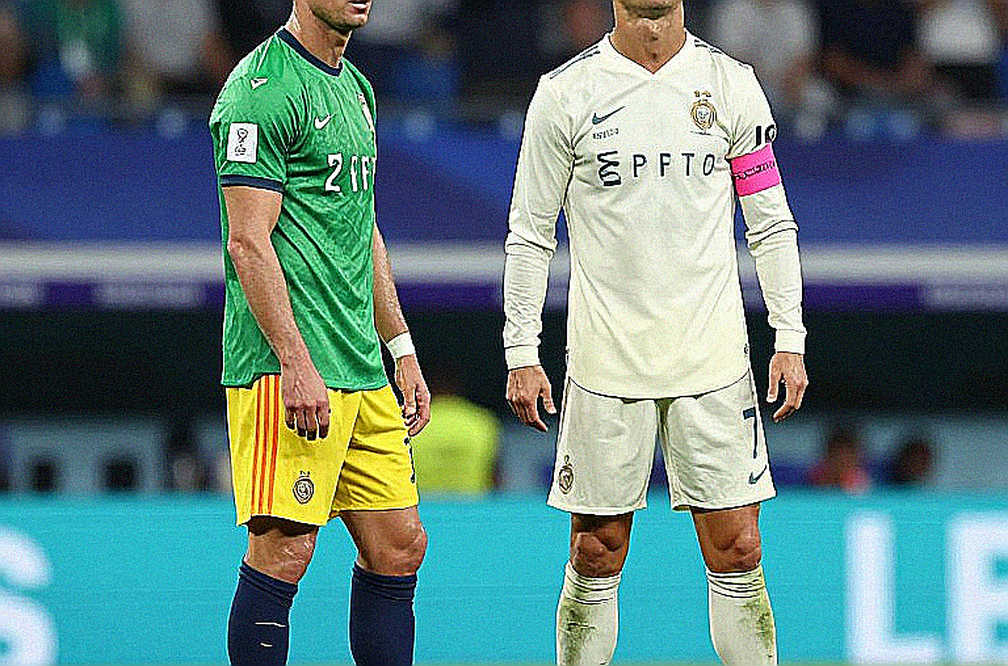
Twenty minutes after the final whistle, the corridor leading to the interview area was still hot. The smell of liniment, boots clicking on tile, someone calling a name through a doorway. Not one person in the Cong an Ha Noi dressing room mentioned the words national team. The dressing room does not lie — every whisper becomes an echo. But some silences are whispers too; they are simply longer and harder to translate.
To read this story correctly, you have to know where it sits on the map of the season. V.League 1 is in its opening phase. Cong an Ha Noi and The Cong Viettel both belong to the group of clubs with solid institutional backing, deep squads and title ambitions. A meeting between them in an early round is not an ordinary fixture. It is a clash between two of the strongest units in Vietnamese football right now, which is why every collision inside it travels far beyond ninety minutes.
The disciplinary decision of the Vietnam Football Federation followed: a fine of 20 million dong and a four-match V.League suspension. The fine, roughly 780 US dollars, is a small fraction of a top V.League player’s monthly income. Financially, this is a near-weightless event. In playing time, it is a very heavy one.
On the other side, Doan Ngoc Tan was diagnosed with a contusion, distal fibular marrow edema and a rupture of the calcaneofibular ligament. The expected absence is three to four weeks. For a central midfielder, a lateral ankle ligament rupture is not the kind of injury that lets you compress a timeline on request. The Cong Viettel lose a link in the middle of the pitch for three to four rounds, and the three-week figure in that diagnosis is the optimistic end.
Above all of it sits a timetable. On 18 September, head coach Kim Sang-sik announces the national squad. On 20 September, the team gathers in Ha Noi. On 23 September, the team flies to Indonesia. The whole Doan Van Hau story is resolved inside five days.
Two questions sit side by side in this story, and they do not share an answer. One is Doan Van Hau’s eligibility for the national team. The other is Kim Sang-sik’s decision to pick him. Eligibility belongs to rules. Selection belongs to discretion.
A club-level sanction does not automatically cross a national border. The VFF suspension applies to matches in the V.League system. FIFA and AFF regulations do not automatically inherit a domestic ban, unless that ban is classified as exceptionally serious or runs long enough for an international organiser to review it separately. A four-match national-level ban does not fall into that category. Procedurally, the national-team door is not closed.
One further point needs verification under competition regulations: whether the organiser applies any separate clause on registration conditions or eligibility to compete. A domestic disciplinary decision does not convert itself into an international ban, but competition regulations are a separate document. So far, no fact suggests Doan Van Hau faces an obstacle of that kind.
An open door does not mean someone walks through it. Kim Sang-sik is known as a coach who decides on three criteria: form, fitness and professionalism. The suspension does not appear among them. Fitness and form do, and both are being pushed in the same direction.
This is the point I believe is being undervalued in the whole debate. The greatest damage from a four-match ban is not missing one match; it is losing four times ninety minutes. Those four matches fall exactly in the window when the national coaching staff is assessing sharpness. A defender who does not play for three or four weeks loses the feel of duels, the rhythm of reading situations, the reflex to act at real speed. None of that is trained on a training pitch at training intensity. It only comes back through matches, and the matches are being taken away.
Seen this way, the sanction stops being a moral story. It becomes a load-management story. Cong an Ha Noi have four rounds to rotate a back line. Doan Van Hau has four rounds to keep his body as close as possible to match condition. The gap between those two tasks is the gap between training and real matches, and willpower cannot erase it.
At The Cong Viettel, the consequence is more clearly tactical. Losing Doan Ngoc Tan for three to four weeks forces the staff to redraw the central midfield rotation. For a structurally organised side, losing a central midfielder is not simply losing a slot. It is a reallocation of roles. The replacement carries a different running load, a different ball-recovery task, and the lines ahead must adjust accordingly. Over three rounds that error margin can cost points, and points dropped early in a season are not recovered.
Back to Doan Van Hau. Born in 2026, he is now 26 — the peak band for physical capacity and for transfer value. It is also the phase when national-team inclusion is both most attainable and most scrutinised. At this age, every absence carries a price, and the price is not the fine.
There is a data blind spot worth stating plainly. We do not know Doan Van Hau’s contract situation at his club. We do not know his position in the wage hierarchy. Any judgment about this player’s market value at this moment is speculation. That is a genuine information gap, and I do not want to fill it with guesswork.
The card itself deserves a note. Referee Ngo Duy Lan first produced a yellow, then upgraded it to a direct red after reviewing the screen. A red card carrying a four-match ban usually exceeds the baseline for an ordinary sending-off. That implies the disciplinary panel placed the conduct above the routine band, possibly because the challenge caused injury to an opponent. I record that as a fact to monitor, not as a verdict on the character of a human being of flesh and bone.
This is where we must talk about how the outside reads this story, because I believe most of it is reading the wrong wound.
The common reading is this: a star of Vietnamese football has just received a suspension, and the central question is whether he still has a chance of a national call-up. That reading turns a load-management event into a referendum on morality. It also boxes the coach in: pick him and face a backlash from part of the fanbase; leave him out and be read as punishing a man twice for one mistake.
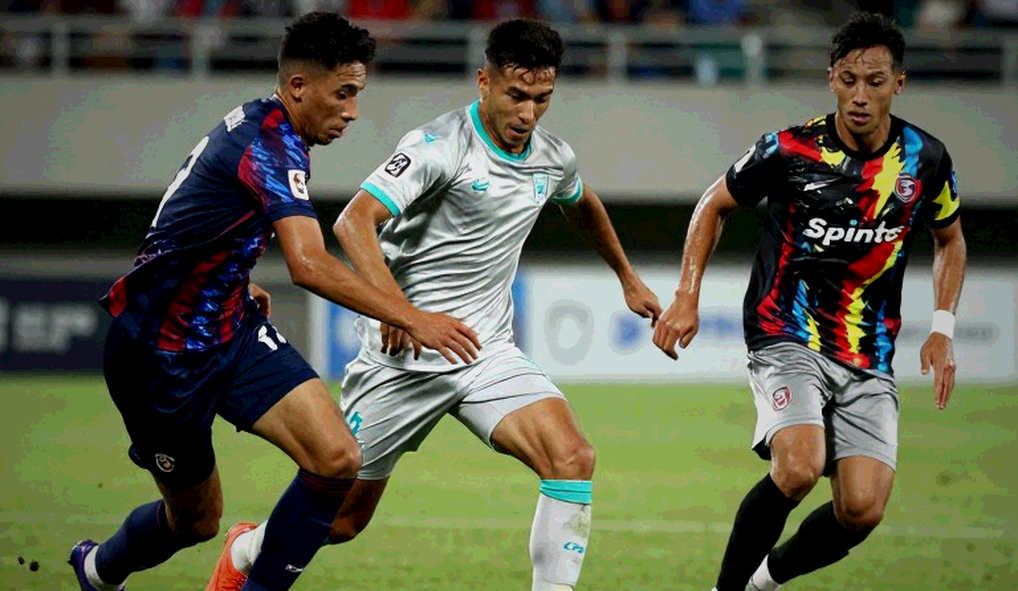
But if you have to name the person who suffered the biggest sporting loss that night, it is Doan Ngoc Tan. A midfielder losing three to four weeks to an ankle ligament rupture loses more than four matches. He loses the ability to determine his own place in the side just as the season starts, and he loses the window in which to prove he deserves a midfield slot. News of Ngoc Tan’s injury appeared as an appendix to the story of the red card. That ratio should be reversed.
On the silence in the dressing room. From outside, silence is usually read as guilt, or as a communications team clearing a path. Inside a dressing room, silence is often a form of protection. A player does not grow through tactics; he grows through dressing-room walls that know how to keep a secret. Through the 2026 season, living alongside Ha Noi FC, I learned that what is not said in the twenty minutes after a match matters no less than what is shouted inside them.
I once mispronounced a man’s name, and realised I had quietly erased his identity. That was at the 2026 World Cup, when I mispronounced the name of a Saudi Arabia midfielder three times in one half and the community responded, correctly. Since then I have held one rule: when writing about a player in trouble, the first task is to say his name right and describe accurately what he did. Doan Van Hau challenged for the ball in the 68th minute and was sent off. That is the entire factual record of the conduct. Everything added afterwards is interpretation, and interpretation should be labelled as such.
One more point requires caution. The ASEAN Championship, organised by the AFF, traditionally takes place in November and December. A September window with an away trip to Indonesia is an atypical timing for that competition’s finals. The competition name and the calendar dates should be checked against the organiser’s official regulations before being used as hard fact. This is the kind of detail that, if skipped, leaves an entire analysis standing on sand.
So what is the next internal signal I will be watching? Not the squad list. The squad list is the final output of a process, and it will appear on 18 September as scheduled.
The signal arrives earlier. It sits in Cong an Ha Noi’s first training session after the sanction is announced. If Doan Van Hau walks into that session with the intensity of a man preparing to play, the door is still open. If he turns up looking like a man waiting for a verdict, the door starts to narrow — and it narrows from the inside, not from the disciplinary panel.
I keep the beat for the team, but they are the ones who taught me that the pulse never stops. On 23 September, the national team departs. What I want to know is not whether Doan Van Hau is called up. What I want to know is what the next four rounds will say about a 26-year-old standing in the middle of his peak years — and whether we, the people who write about him, have the patience to hear the whole answer.