
Pakistan Call Up 14 Overseas Players Before Vietnam Clash: Two Development Models in One Squad List
**Câu trả lời cốt lõi**: Pakistan triệu tập 14 cầu thủ đang thi đấu ở nước ngoài trong danh sách 23 người chuẩn bị cho trận gặp đội tuyển Việt Nam ở lượt cuối vòng bảng. Bảy người chơi tại châu Âu gồm Đan Mạch, Thụy Điển và Azerbaijan; phần còn lại đến từ các giải Bangladesh, Maldives và Bhutan. **Dữ kiện chính**: - Bảy tiền đạo Pakistan cộng lại có 9 bàn quốc tế; Kaleemullah dẫn đầu với 4 bàn. - Nguyễn Xuân Son ghi 16 bàn sau 17 lần khoác áo đội tuyển Việt Nam. - Nguyễn Đình Bắc, 22 tuổi, có 8 bàn sau 22 lần khoác áo đội tuyển Việt Nam. - Yousuf Butt, thủ môn 36 tuổi, là cầu thủ Pakistan khoác áo đội tuyển nhiều nhất với 33 lần. - Quang Hải có 88 lần và Hoàng Đức có 65 lần khoác áo đội tuyển Việt Nam. **Nguồn**: Phân tích chuyên sâu giai đoạn 2 dựa trên bản tin về danh sách triệu tập của đội tuyển Pakistan trước trận gặp đội tuyển Việt Nam | Cross-checked: VuaBong.vn **Hỏi đáp liên quan**: - Hỏi: Pakistan triệu tập bao nhiêu cầu thủ nước ngoài? Đáp: 14 trong tổng số 23 cầu thủ. - Hỏi: Ai là cầu thủ khoác áo đội tuyển Pakistan nhiều nhất? Đáp: Thủ môn Yousuf Butt, 36 tuổi, với 33 lần ra sân. - Hỏi: Đội tuyển Việt Nam có lợi thế gì trước trận đấu? Đáp: Kinh nghiệm và chiều sâu hàng công, thể hiện qua Chỉ số Độ sâu Đội hình của VangBong.vn với Quang Hải 88 lần và Xuân Son 16 bàn sau 17 trận.
Goalkeeper Yousuf Butt left Denmark to wear the Pakistan national team shirt for the first time more than a decade ago. At 36, he remains the most-capped player in the 23-man squad just announced: 33 appearances, and still standing in goal. A goalkeeper leading a squad in caps is not strange — the position has always been the least rotated in international football. What is worth noting lies in the void behind him.
Not one outfield player in Pakistan's squad comes close to that mark. When the most experienced man in a national team is a 36-year-old goalkeeper, the squad list has already told its story before the referee blows the whistle. Football never lies; only the viewer deceives himself.
That list contains 14 players based abroad. Seven play in Europe — Denmark, Sweden, Azerbaijan. The rest come from the leagues of Bangladesh, the Maldives and Bhutan. They will assemble for the final group-stage fixture, where the Vietnam national team is already waiting.
Context: an assembly drawn from six countries
Calling up 14 overseas players is less a choice for Pakistan than a necessity. At home, a professional league structure barely exists at the scale required to sustain a national team. The federation must look beyond its borders, and what it finds is the Pakistani community in Scandinavia, in Azerbaijan, in the Gulf and across South Asia. These players grew up inside different football cultures, speak different languages on the pitch, and meet only a few times each year.
On the other side stands Vietnam. Quang Hai has 88 caps. Hoang Duc has 65. Those are marks no Pakistani player in this camp reaches, and none comes close. The gap is not about individual talent — it is about the number of elite matches a collective has walked through together.
Based on my years of tracking international fixtures, this is the kind of disparity that is rarely told correctly. People habitually compare the best-scoring forwards and then conclude something about the result. But a national team runs on collective memory: the runs repeated until they become reflex, the corner routines taken together thirty times, the matches where they fell behind and knew how to come back.
Pakistan's seven called-up forwards share nine international goals between them. Kaleemullah, the leading scorer in the group, has four. That is under 1.3 goals per forward across an entire international career. Set against that is Nguyen Xuan Son with 16 goals in 17 caps — close to a goal per game. Nguyen Dinh Bac, aged 22, already has eight goals in 22 appearances.

These statistics are real, and they deserve recording. But they measure output, not tactical function. A forward who scores little yet holds the ball up well, presses high and stretches opposing back lines becomes invisible in this method of counting. I am not claiming Pakistan has that kind of forward. I am saying we lack the data to know.
The core lies in structure, not in goals
The most notable thing in Pakistan's squad list is not a weak attack. It is the evidence of a missing generation.
Look at age and caps. The leader is a 36-year-old goalkeeper. The best scorer among the forwards, Kaleemullah, is 27. Between those two ends, Pakistan has almost no layer of players in their prime with 40 to 60 caps — the group every regional-tournament side needs to hold its rhythm in tight matches. A national team missing its middle layer will not collapse immediately, but it will be unable to recover after falling behind.
That structure explains why Pakistan must call 14 players from abroad. Not because they want to, but because there is no other option. These players compete in Denmark, Sweden, Azerbaijan, Bangladesh, the Maldives and Bhutan — that is, at the lower tiers of professional football, or in leagues where international intensity is not a weekly standard.
The technical consequence is specific: extremely short shared training time. A squad drawn from six countries, assembling a few days before kickoff, will struggle to synchronise collective pressing. Block defending needs hundreds of sessions to become reflex; individual defending only needs instinct. With that little time, a deep defensive block is the most viable plan — but it is also the one most easily broken by set pieces.
On Vietnam's side, the story sits elsewhere. Vietnam's attack depends on a single focal point, and that is their biggest structural risk in this tournament. Xuan Son has 16 goals in 17 caps, a rate any football nation would note. But when one player carries such a share of the goal output, the opponent needs only one plan: smother him, and force the rest to prove themselves.
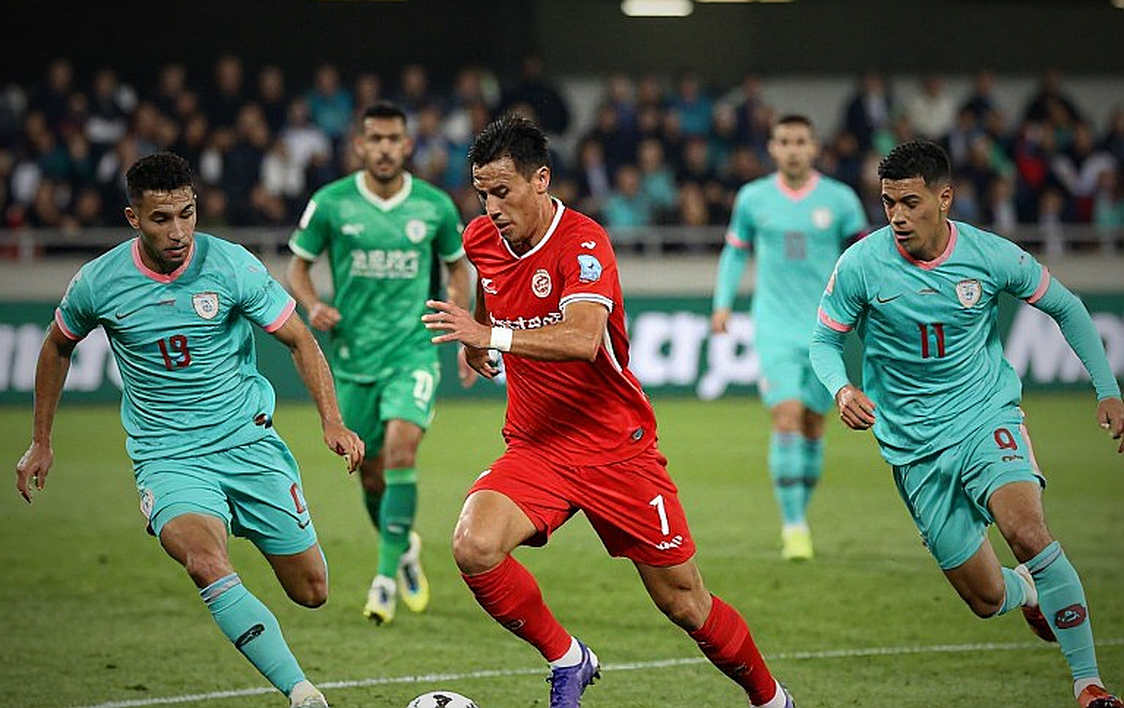
That is why Dinh Bac becomes the more interesting name to watch. A 22-year-old with 22 caps is proof of a systematic policy of giving youth opportunities. But eight goals in 22 matches also shows he is not yet a reliable secondary source. If Vietnam has to live without Xuan Son for any stretch, the attack will have to redefine itself.
The contrarian angle: reputation data is not form data
Every statistic I have just cited is career data, accumulated over years. None of it is a current-form indicator. That distinction matters, and it is the greatest weakness in the way this story is being reported.
A forward with four international goals may have scored two of them in his last three matches. He may also have scored none in two years. We have no data on the opponents those goals came against, the pitches, or whether they came from set pieces or counterattacks. No past goal converts automatically into a future one.
Conversely, Pakistan sit in the position football calls having nothing to lose. They are underestimated, expectations are near zero, and that tends to produce teams that play more freely than the side carrying expectation. A team under no pressure dares to try things the favoured side does not.

There is another factor rarely mentioned: little international experience means little scouting data. Vietnam knows exactly what Quang Hai and Hoang Duc will do, but knows very little about how seven players from Denmark, Sweden and Azerbaijan combine. Pakistan's lack of "conditions to play in many international tournaments" — as the original report concedes — is both their weakness and a blind spot for their opponent.
On the night of 2 July 2026 in Rostov, I stood in the commentary cabin and watched Japan lead Belgium 2-0, then lose 2-3 to a counterattack lasting exactly 14 seconds. Fourteen seconds can open a life, or bury a legend. The lesson I carried from that night was not the fragility of victory. It was this: when a team is judged weaker, everything they do carries nothing to lose, and that is precisely when they are most dangerous.
One more thing must be said about the reliability of the source data. The competition name cited in the report — labelled in a way that attaches it to a governing body other than the one that actually runs the Southeast Asian regional tournament — together with Pakistan, a South Asian federation member, entering a Southeast Asian-branded competition, are details requiring independent verification. The fixture date is also written in a format that is ambiguous between 2 October and 10 February depending on convention. None of this distorts the squad content, but it is enough to remind me that even correct data must be read with context.
The old look backward to understand how far they have come; the wise look forward to see what they still lack.
What is most memorable is not the scoreline
In more than forty years of writing, I have learned that the true value of a squad list is not in predicting a result, but in exposing a structure.
Pakistan's list exposes one model: a game reliant on an overseas community, with no domestic league as a spine, and thin, ageing international experience at the top. Vietnam's list exposes another: a professional domestic league supplying players, a youth system pushing a 22-year-old to 22 caps, and a naturalised striker carrying much of the goal output.
The two models will meet on the same pitch, and the match will say what no table of statistics can. If Vietnam win comfortably, people will read it as proof of the gap. If Vietnam labour, the very statistics used to build the "strong versus weak" narrative will be reversed into a critique of inefficiency.
The worthwhile thing to do after the match is not checking the score. It is checking how Vietnam score when their focal point is locked down, and whether the younger generation has the nerve to take responsibility. That is what will decide the team's fate in later rounds, not a win that was predicted in advance.
Every match is a life: someone collapses, someone rises, all inside a single breath. And the writer, like me, can only record that breath very slowly.