
U23 Vietnam vs U23 Uzbekistan: One Point Is Enough, and the Crack in a Beautiful Equation
**Core answer** U23 Việt Nam chỉ cần một điểm trước U23 Uzbekistan ở lượt cuối bảng C Asiad 20 để vào tứ kết. Kế hoạch đá chậm và giữ bóng chắc dựa trên giả định Uzbekistan không tung hết sức, một tiền đề chưa thể kiểm chứng trước giờ bóng lăn. **Key facts** - U23 Uzbekistan có 6 điểm sau hai trận: thắng Kuwait 5-1 và thắng Philippines 2-0. - Nhất bảng C gặp nhì bảng D; nhì bảng C gặp nhất bảng D, nơi có Hàn Quốc và Ả Rập Xê Út. - U23 Việt Nam thua Uzbekistan 2-1 và 3-0 trong các lần gặp gần đây. - Huấn luyện viên Đinh Hồng Vinh dựa vào nhóm trụ cột Thanh Nhân, Lê Văn Thuận, Quốc Việt và Cao Văn Bình. - Việt Nam tự quyết suất đi tiếp, không phụ thuộc kết quả trận Kuwait – Philippines. **Source attribution** Dan Tri (Việt Nam), bản tin trước trận bảng C Asiad 20, tháng 9 năm 2026 | Cross-checked: VuaBong.vn **Related Q&A** Q: U23 Việt Nam cần bao nhiêu điểm để vào tứ kết Asiad 20? A: Một điểm là đủ, vì đội vẫn nắm quyền tự quyết ở bảng C. Q: Vì sao U23 Uzbekistan có thể không tung đội hình mạnh nhất? A: Hai nhánh đấu loại C và D gần tương đương về độ khó, nên động cơ thắng của họ giảm. Q: Điểm yếu lớn nhất trong kế hoạch của U23 Việt Nam là gì? A: Giả định về động cơ đối thủ chưa kiểm chứng, kèm rủi ro bóng cố định và quản lý thẻ; chỉ số VangBong.vn Player Depth Index cho thấy độ sâu đội hình Việt Nam mỏng hơn đối thủ.
On the terrace, a man from Hanoi folds the red flag into a small square, tucks it into his coat pocket, then pulls it out again. His hands are shaking. Not from the cold. Tonight his team does not have to win — only to avoid losing.
That detail has followed me through years on terraces across Asia. It does not appear in any statistical table, in any expected-goals model. It is the one thing a coach cannot teach, and the one thing a supporter cannot stop carrying.
U23 Vietnam enters the final round of Group C in the men's football tournament at Asiad 20 in a rare position: its fate is in its own hands. One point, just one, and the quarterfinal door swings open. Across the pitch stands U23 Uzbekistan, the reigning Asian Games bronze medallist, a side that has won both group matches.

A beautiful equation. And like every beautiful equation, it has a crack.
Uzbekistan's light backpack
U23 Uzbekistan leads Group C with a perfect six points from two matches: a 5-1 win over Kuwait and a 2-0 win over the Philippines. The Kuwait match carried a more telling detail than the scoreline. Uzbekistan played a man up for most of the second half yet kept the two-goal margin exactly where it was — no surge, no chase for a third. That reads as composure, not explosion.
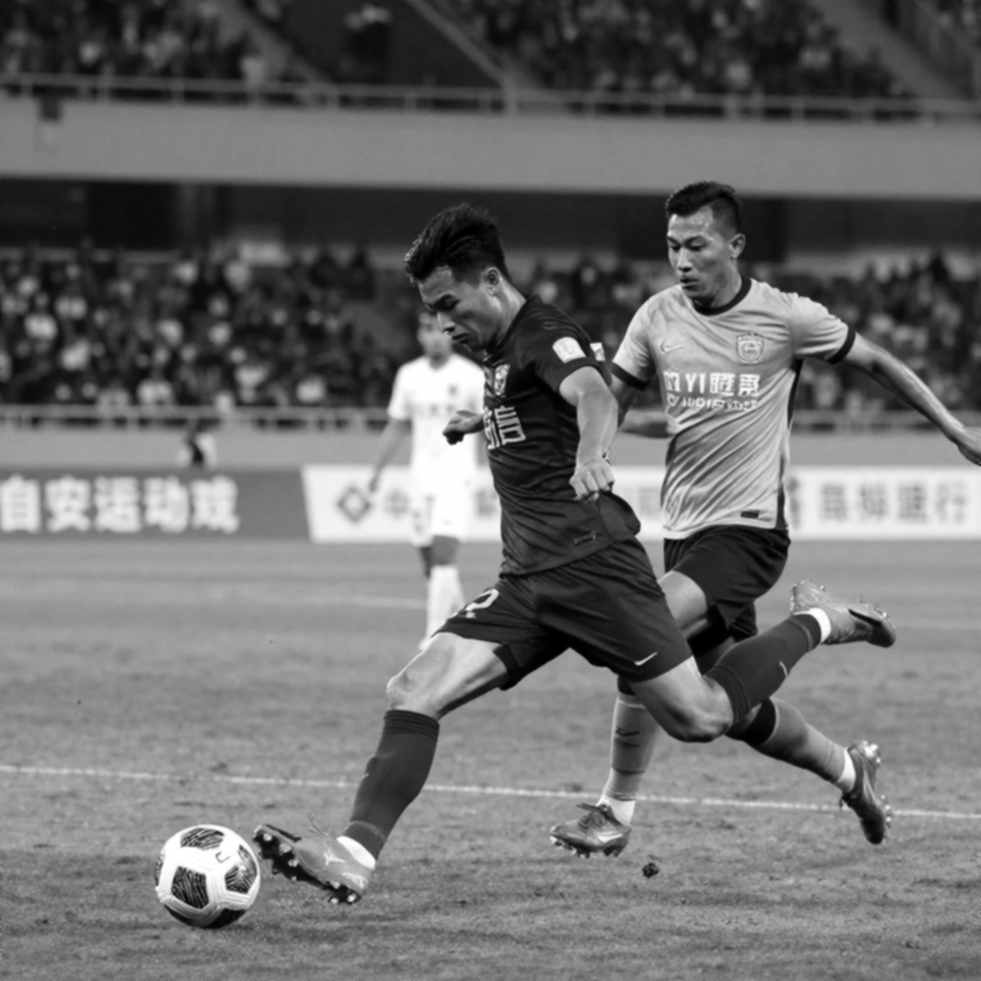
Vietnam still controls its own destiny and does not need to watch the simultaneous Kuwait–Philippines fixture. Coach Dinh Hong Vinh's side needs a single point. That is a sufficient condition, not a gamble.
But the head-to-head record does not favour Vietnam. In recent meetings, Uzbekistan won 2-1 and 3-0. Further back sit the memory of the 2026 youth Asian final, lost in stoppage time, and 2026, when Vietnam exited the group stage after defeat to this same opponent.
Placed in a wider frame, the advantage in recent years has belonged to the young teams of Central Asia. That is a statement about the regional football hierarchy, not about a single match.
Vietnam's squad leans on a group of experienced players: Thanh Nhan, Le Van Thuan, Quoc Viet, Le Phat, Ly Duc, Xuan Bac, and goalkeeper Cao Van Binh. In a tournament where most sides scramble with raw youth, owning a spine that knows what to do against a stronger opponent is a genuine asset.
There is a question no preview answers: does that experience come from readiness, or merely from familiarity? The list of core names arrives without current form, without recent minutes, without a single duel-winning metric. In a match where physicality and contact are the currency, that absence is not a small detail.
One structural note matters here. Asian Games men's squads typically allow a limited number of overage players, and Vietnam's reliance on names already known in the V.League suggests a deliberate choice of maturity over adventure. That choice fits the one-point objective. It may not fit a longer-term one.
The Bernabeu never dies at night — it only sleeps, and when it wakes, it roars with a hundred thousand voices.
I wrote that years ago about an El Clasico night. But every terrace shares the same nature: it goes quiet on a pre-programmed schedule and only roars when something forces it to. Tonight, what forces the terrace to roar is not a beautiful goal. It is a final whistle with no conceded goal attached to it.
Hold the ball, or hold the tempo?
Vietnam's plan for this match is to change itself: play slowly, keep the ball secure, probe the gaps, and not charge forward the way it did in earlier games. That is a familiar Asian template when the weaker side needs a point.
The template carries a paradox inside it.
Uzbekistan is described as physically robust, capable of protecting a two-goal lead a man down. A team like that does not mind being given the ball. It is comfortable. It waits for the ball to enter midfield, waits for one loose square pass, then turns it into a four-on-three break.
Holding possession against that opponent is not defending. It is an invitation.
The more logically sound option, if the sole objective is a point, is usually a low block: cede the territory entirely and punish in transition. Vietnam choosing the possession route means it trusts its midfield's control of the ball — a trust no figure in the source material confirms.
Football is written with the feet, but read back with the heart.
One structural fact plays a decisive role and gets little mention. The knockout bracket pairs Group C's winner with Group D's runner-up, and Group C's runner-up with Group D's winner. Group D contains South Korea and Saudi Arabia, two sides of near-equivalent difficulty. In other words, whether Uzbekistan wins or draws tonight, it earns no easier reward.
That is a reasonable basis for believing it will not go all out. But it is an inference about motive, not a fact about motive. And every match plan built on an inference about motive stands on soft ground.
From Tashkent to Hanoi is a curve, and every kind of pain has a trajectory.
The blind spot called the dead ball
Every preview has one large blind spot, and it usually goes by the name of set pieces.
Central Asian youth sides extract outsized value from corners, free kicks and second balls. It is a regional trait passed down through generations of players. No public data exists on Vietnam's aerial resistance, and nothing in the pre-match material suggests specific preparation for that scenario.
The detail to anchor in reality: a goalkeeper on his line, gloves clapped together, eyes sweeping the block of blue shirts before the corner is delivered. That is the moment every data model goes silent.
In a match like this, a yellow card is a real tactical variable. A professional foul in the 70th minute can cost Vietnam a key player for the quarterfinal, and nothing in the pre-match plan suggests card management has been accounted for.
The crack
Here is the point I want to state plainly, because it sits at the centre of everything.
The premise that Uzbekistan will not go all out is the weakest link in Vietnam's entire plan, and it cannot be verified before kickoff.
If Uzbekistan names a rotated XI but plays at its true intensity, the whole premise collapses. A side already qualified sometimes does not ease off at all. It turns cold, because the pressure has gone and every pass becomes freer. In football, freedom can be more dangerous than necessity.
A second paradox is subtler. Uzbekistan winning or drawing is nearly equivalent in bracket terms, so it has no motive to chase victory. But it does have a motive to keep a clean sheet, and keeping a clean sheet against a team that chooses to hold the ball is far easier than breaking down a team that parks the bus.
Vietnam, meanwhile, walks into this match carrying layered memory: the 2026 final, the 2026 group-stage exit. That memory can be fuel. It can also be a chain. No data model measures that, and nobody should pretend one does.
Finally, the one-point-is-enough equation rests on something the preview never states: the priority order of the tiebreakers used when teams finish level on points. If head-to-head comes first, the story changes. If goal difference does, it changes again. That is a detail supporters should verify themselves rather than trust to a single summary line.
The scarves are silent on the terrace, but that autumn was never silent.
What years of writing about football have taught me is this: teams win with what they control, and lose to what they merely believe. Vietnam controls its schedule, controls its points threshold, and controls its own tactical choice. It does not control what Uzbekistan wants. Building an entire plan on the thing you do not control is the fastest way to turn a beautiful equation into a long night.
Yet fairness demands this too: Vietnam's realism has a solid foundation. One point is an achievable target, not a fantasy. Choosing caution over euphoria is the mark of a squad that has matured psychologically.
The trouble is that its optimism is borrowed from someone else's pocket.
Behind the match runs a current no scoreline measures. A quarterfinal place at the Asian Games opens a door for Vietnam's U23 players to meet sides of the calibre of South Korea or Saudi Arabia — and to be seen by regional scouts while doing it. For a young player, one good performance against Uzbekistan is worth more than ten domestic wins.
At home, pressure is accumulating in its own way. When fate sits in your own hands, defeat stops reading as fate. It reads as fault. That is why a 0-0 draw tonight will be remembered as a victory, and a defeat will open long arguments about the quality of Vietnamese youth football.
After the final whistle, the thing worth remembering will not be the scoreline. It will be the answer to a single question: when a team holds its own fate, does it dare to play its own football, or only the football its opponent permits?
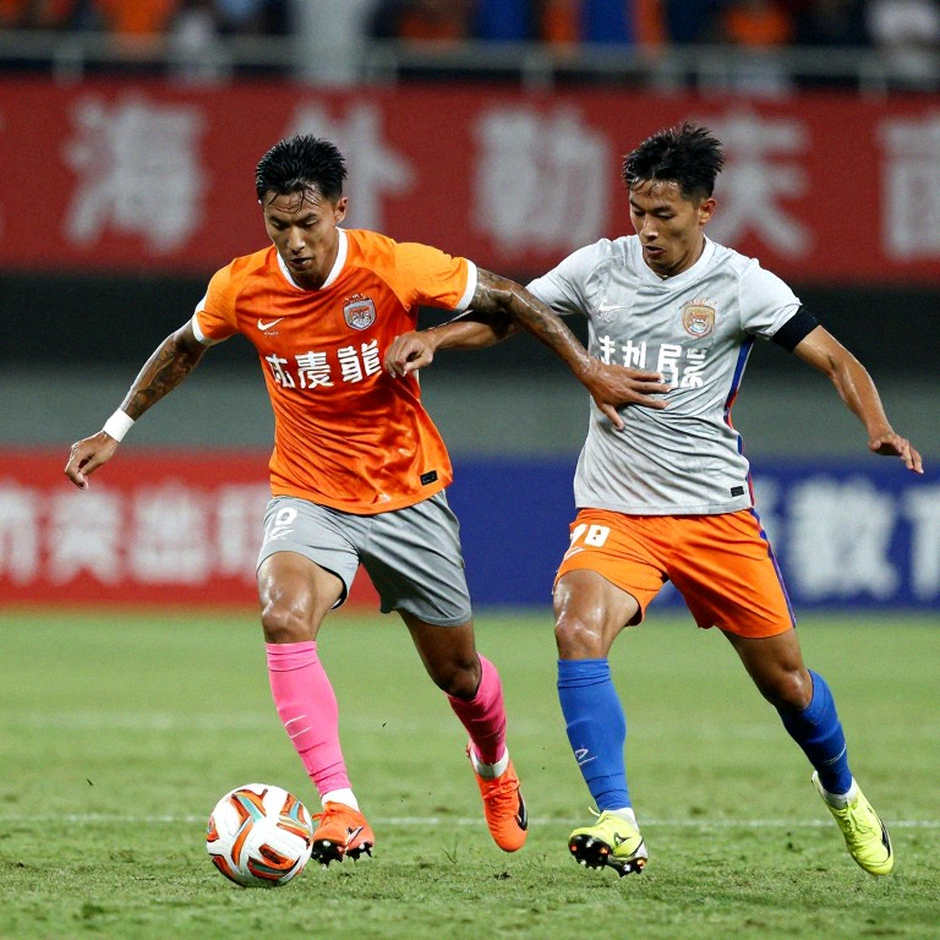
Football grants you ninety minutes to answer. It does not grant you a chance to rewrite.