
Vietnam vs Thailand: The Match Will Be Decided at the Edge of the Frame
**Trả lời nhanh**: Trận Việt Nam – Thái Lan đêm 29 tháng 9 được quyết định bởi ba biến số: khả năng thoát pressing của Nguyễn Hoàng Đức, ngưỡng xử lý khiêu khích của trọng tài, và việc Việt Nam có mở được tuyến giữa Thái Lan để chạm vào cặp trung vệ Bihr (33 tuổi) – Sayriya (34 tuổi) hay không. **Dữ kiện chính**: - Nguyễn Hoàng Đức được xem là tiền vệ hàng đầu Đông Nam Á, nhưng Việt Nam phụ thuộc đơn vào anh ở khâu thoát pressing. - Thái Lan bổ sung Chanathip Songkrasin và Supachok Sarachat vào tuyến giữa cho giải ASEAN. - Cặp trung vệ Thái Lan Manuel Tom Bihr (33) và Nattapong Sayriya (34) bị đánh giá chậm và yếu bọc lót. - Việt Nam vắng Thành Chung; Nguyễn Xuân Son chấn thương và suy giảm thể chất. - Nguồn tin gọi giải bằng ba tên khác nhau: ASEAN Cup 2024, ASEAN 2026, FIFA ASEAN Cup 2026. **Nguồn**: Dân trí, phỏng vấn cựu Phó Chủ tịch AFF/VFF Dương Vũ Lâm, công bố trước trận ngày 29 tháng 9 | Cross-checked: VuaBong.vn **Hỏi đáp liên quan**: Q: Vì sao Việt Nam phụ thuộc Nguyễn Hoàng Đức? A: Anh là cầu thủ duy nhất trong đội hình đảm nhận được chức năng thoát pressing bằng đường chuyền có định hướng. Q: Điểm yếu lớn nhất của Thái Lan là gì? A: Cặp trung vệ lớn tuổi, chậm, yếu bọc lót, nhưng chỉ lộ ra nếu Việt Nam kiểm soát được tuyến giữa. Q: Rủi ro lớn nhất của Việt Nam là gì? A: Bẫy khiêu khích dẫn tới thẻ phạt, cùng nguy cơ sụp cấu trúc nếu Hoàng Đức không đạt phong độ.
On the night of September 29, I opened seven video windows at once across two screens. One window was the main angle, one was behind the goal, two were sideline cameras, and the three remaining windows were recordings of past matches involving both Vietnam and Thailand. I rewound and replayed a passage of play in the eleventh minute of Vietnam's match against the Philippines, not to find a goal, but to count how many times a Vietnamese midfielder had to turn his back to his own goal while receiving the ball.

Seven times in forty seconds. Not once did the ball travel more than ten metres forward.
That is the number I carry into tonight, not the head-to-head record. The head-to-head record tells me Vietnam has beaten Thailand several times in recent years. The footage tells me Vietnam's midfield is playing football like a blindfolded man crossing a motorway.
I found the error not in the centre of the pitch, but at the edge of the frame.
It took 37 viewings before I understood that the human eye is not a measuring instrument. The eye reads emotion, it reads intent, but it cannot read a fifteen-centimetre gap between two planes. In a match that people believe will revolve around who controls midfield, the thing the eye cannot read is precisely the thing that decides it.
They call this tournament by three different names
In organisational terms, this match sits inside a tournament that the source in my hands calls by three different names. One passage says ASEAN Cup 2026. Another says ASEAN 2026. Another says FIFA ASEAN Cup 2026. The same source also references a "first leg of the final" that Vietnam won 2-0 against Thailand, while tonight's fixture is described as a decider for the group winner's place in the final.
Three names for one tournament. Two timeframes for one match. I am flagging all of this as data requiring verification, and I will say it plainly from the outset: every conclusion that follows has its confidence ceiling lowered for that reason. In my trade, when two documents contradict each other on the name of a competition, the problem is never the name. The problem is that somebody is in a hurry.
On the purely football side, the picture is much clearer.
Vietnam enters this match as the side that has won repeatedly in recent meetings with Thailand. But the squad is in a state I would call thin in exactly the places where it is thickest. Xuân Son is injured and, by the description, heavier, slower, with a markedly degraded touch. Thành Chung, rated Vietnam's best and smartest centre-back, is absent. Several other positions carry problems. The opening match against the Philippines is described as laborious and below level.
On the other side, Thailand has added Chanathip Songkrasin and Supachok Sarachat — in the source's words, the most technical and most cunning midfielders in Thai football today. This is a deliberate move: Thailand is patching the exact area where it used to be weak, not patching on a whim.
The paradox sits right on the surface. The side expected to win is the side short of bodies and below form. The side cast as underdog is the side that has just reinforced its weak point. I have watched enough matches to know that this kind of paradox is usually settled not by goals, but by mistakes.
Midfield: control and possession are two different things
My source places one principle over this match: controlling midfield is controlling the game. The principle is correct. But it is correct the way water boils at one hundred degrees — correct to the point of uselessness unless you say where the thermometer is inserted.
Controlling midfield is not about holding the ball. A team can hold thirty-eight percent of possession and still control midfield, if every pass the opponent makes travels through the zone that team wants it to travel through. What needs measuring is not how long the ball sits in whose feet, but how many passes the opponent is forced to make sideways, how many times they must turn their back, how many seconds they lose before they can rotate their attacking direction.
That is exactly what I counted in those forty seconds. Seven turns of the back, against the Philippines, against an opponent Vietnam was considered superior to in every respect.
If Thailand generates comparable pressure or more, that number will not stay at seven. And when the midfield cannot hold the ball in a direction, everything above it — every counter, every through ball, every idea about exploiting a slow defence — becomes theory.
Hoàng Đức, and the price of having only one exit
Nguyễn Hoàng Đức is called by the source the top midfielder in Southeast Asia today. I agree with that proposition. But the more telling point lies elsewhere: the way Vietnam's system depends on him.
Against the Philippines, without Hoàng Đức at his best, Vietnam played without variation, did not control much of the ball, and allowed the Philippines to push up and nearly equalise. That is a negative process signal — not a defeat, but a match in which the operating structure showed it cannot stand on its own.
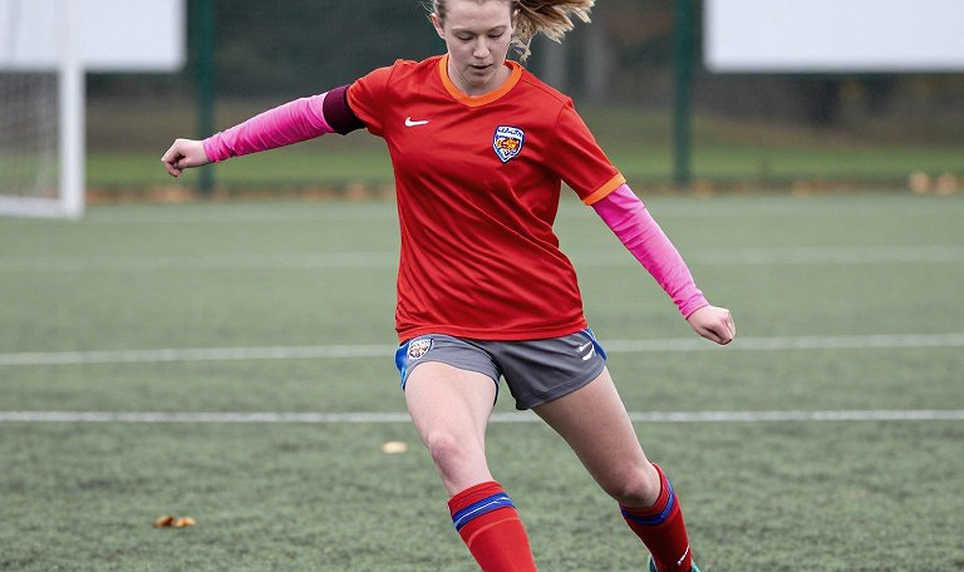
In my terminology, this is single-point dependency. A team with single-point dependency is not wrong tactically. It is wrong probabilistically. Because the probability that one player is present, fit, and in exactly the right form on exactly one given night is always less than one. And when that variable hits zero, the system does not degrade linearly — it collapses in steps.
Hoàng Đức's specific function here is press-escape. That is the ability to receive the ball under pressure and move it out of that pressure zone with a directional pass. It is a rare skill, and it is the one skill in Vietnam's squad that Chanathip and Supachok can directly neutralise by playing their cunning game in exactly that area.
The worry is not whether Hoàng Đức plays. The worry is that he is also being handed a second job: reminding new players to keep a cool head against provocation. When one player must both escape pressing and run the psychological briefing, the system has lost two buffers, not one.
The gate: Thailand has ageing centre-backs, but you must open the door first
My source identifies a specific, verifiable weakness: Thailand's centre-back pair of Manuel Tom Bihr, thirty-three, and Nattapong Sayriya, thirty-four. They are slow, poor in their defensive diagonal, and weak at covering for one another. Against a fast striker like Nguyễn Đình Bắc, this is a legitimate target.
I do not dispute the observation. But I want to place it inside its proper decision chain.
To reach that centre-back pair, Vietnam must first pass through Thailand's midfield. The source states this explicitly, and it is the single most important sentence in the entire interview. It turns a real weakness into a conditional weakness.
This is a type of analytical trap I encounter constantly. People discover a weakness in the opponent, then assume that weakness will be exploited. But a weakness in football is not like a weakness in a report. It only exists if you create the conditions for it to appear. A thirty-four-year-old slow centre-back is not a problem if the ball never reaches the area in front of him.
In other words, Vietnam's plan has a gate. If the gate opens, there is a path. If the gate stays shut, the whole plan is out of reach, and Vietnam must switch to a Plan B that, from everything I have read, has not been described anywhere.
A plan with only one way in is a plan with structural risk, no matter how large the opponent's weakness.
Xuân Son: value that does not lie in goals
There is one detail in the source that I consider more important than the way it is presented: Xuân Son's value is redefined as lying not in scoring, but in occupying hot spots, drawing defenders, and disrupting the opponent's defensive system.
That is a correct definition, and it is also a melancholy one. Because the ability to attract markers and break a system depends on a physical base. It does not exist independently of speed and touch. A striker who is heavier, slower, with reduced touch will draw fewer markers, not more.
The replacement options mentioned — Đình Bắc, Nguyễn Tài Lộc, Williams Minh Hoàng — cannot yet replicate this function. Đình Bắc has pace, and pace is not the same thing as the ability to attract markers. Tài Lộc and Williams Minh Hoàng belong to the naturalised and overseas-Vietnamese category, meaning players with strategic value but not yet the maturity of regional head-to-head experience.
There is a theme here I will state bluntly: Vietnam is borrowing its attacking resources from outside the domestic development system, while still relying on a domestically produced midfielder to carry the structure. That is a supply imbalance, and it will not be resolved in one match.
Thành Chung: the gap that never shows on the scoreboard
The source calls Thành Chung Vietnam's best and smartest centre-back, and confirms his absence. I want to linger here a moment, because this is the kind of loss that statistical tables never capture.
An organising centre-back is not the player who clears the most balls. He is the one who decides when the whole line drops, when it pushes up, when it holds its distance. Those decisions produce no tackles, so they appear in no metric. But when he disappears, the goals conceded rise and nobody can point to where.
Losing Thành Chung at the same time as Xuân Son's instability and the dependence on Hoàng Đức creates a specific imbalance: Vietnam loses its organiser at the lowest layer, its attractor at the highest layer, and loads the entire connecting burden onto one midfielder whose form carries a question mark.
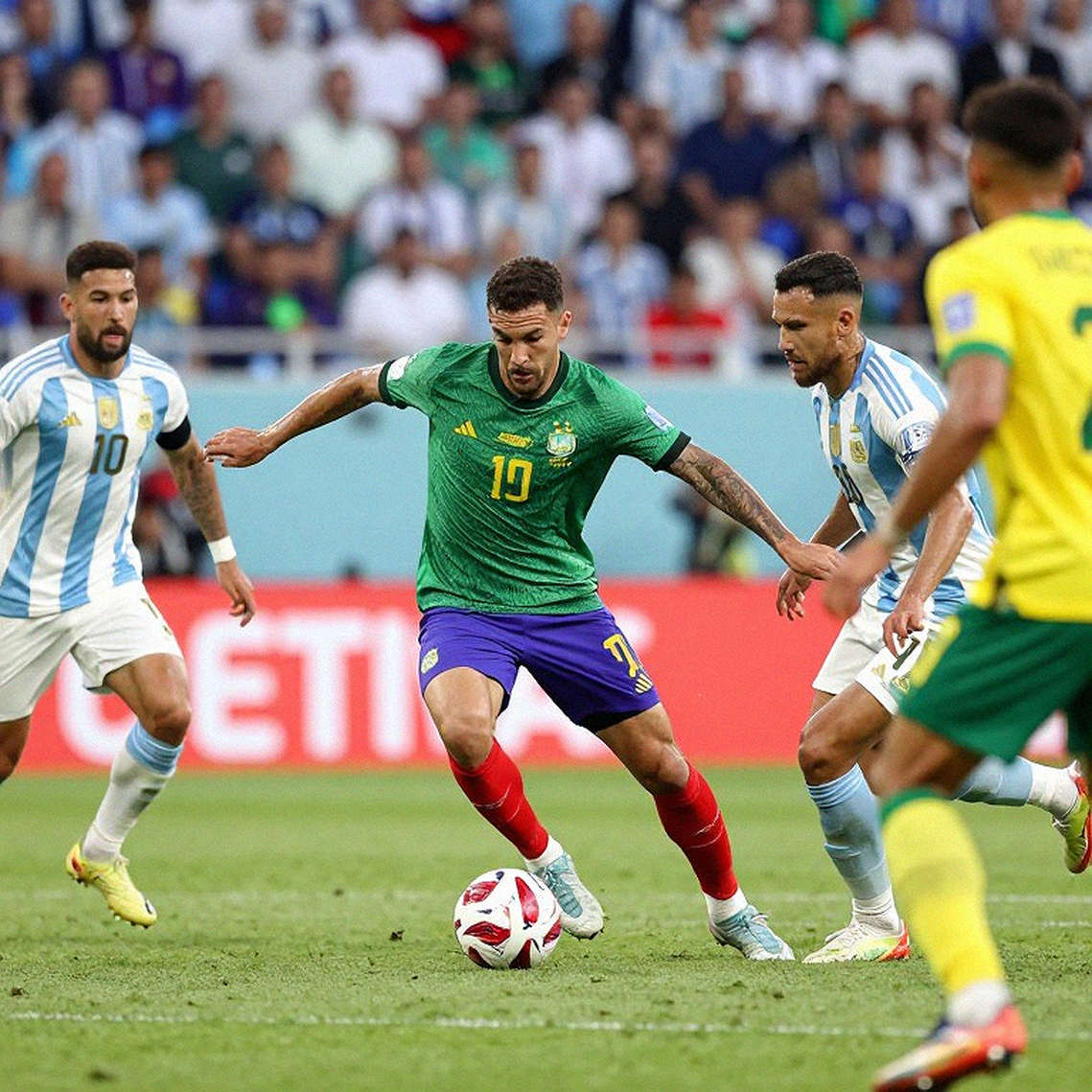
The empty stadiums of 2026 showed me this: VAR does not save football, it exposes football. Team structure is the same. When the stands are empty, you hear the players calling to each other. When a pillar is absent, you see the team's true structure.
The contrarian angle: the warning about the provocation trap may itself be part of the trap
This is the section I want to give to discomfort.
My source devotes considerable space to warning about Thai provocation, that Chanathip and Supachok belong to the most cunning group of players in Thai football, that they can provoke reactions from Vietnamese players unfamiliar with that cunning. The recommendation is to keep a cool head, not to retaliate, and to let the referee handle it.
As a football principle, this advice is correct. Everyone knows not to be drawn into a card war. But there are three things this advice overlooks, and I consider all three more important than the advice.
First, provocation is not an act a referee can penalise without contact. A word, a glance, a hand placed in the wrong spot for a split second — these sit in the grey zone of the law, and referees at regional level have very different tolerance thresholds for the same behaviour. In the viewing-angle error database I built from 2026, most controversial decisions do not come from referees blowing it wrong, but from referees choosing which threshold to apply.
That threshold depends on something nobody can measure: a feel for the match. And that feel is influenced by pre-match pressure. Once a senior former official publicly warns about a provocation trap, that trap is registered with the referee before the ball rolls. The referee will walk onto the pitch with a prior assumption. That assumption may make him more vigilant, or it may make him handle things differently from how he would handle an ordinary match.
Nobody wants to hear this, but a public warning about provocation is a form of pressure on the referee, whether the speaker intends it or not. It is also a form of pre-built excuse.
Second, keeping a cool head is not a tactic. It is a state. You cannot train a twenty-year-old to hold that state simply by telling him to hold it. You can only reduce the probability he loses it by reducing the number of situations he must face. That means: reducing the number of times he is within one metre of Chanathip.
That is a tactical problem, not a psychological one. And from what the source describes, Vietnam appears to be treating it as a psychological one.
Third, a team believed to be motivated by revenge is usually underestimated for the risk it carries. The source says Thailand brings a determination to settle scores after repeated losses to Vietnam. That determination produces intensity, but it also produces loss of control. Over-committed teams tend to foul more, and fouling more means creating more dead-ball situations in the final third.
Against a slow defence and a centre-back pair weak at covering, dead balls are the shortest route to reaching them. Vietnam does not need to win midfield to create danger. Vietnam needs Thailand to foul in the right zone.
I have rewatched enough tapes to draw one conclusion I believe is true: Thailand is carrying two things, a more technical midfield and a predictable loss of control. Vietnam may not be good enough to win by script. But Vietnam can win by reaction.
We think we are searching for justice, when in fact we are only searching for a better camera angle. And in this match, the best camera angle will be the one that captures a slow defence being dragged out of position.
What to watch, and how to watch it
I am not giving a score prediction. In my trade, score prediction is a polite way of lying.
But I will give three signals and how to read them in the first twenty minutes.
Signal one: Hoàng Đức's condition. The way to read it is not whether his name is on the team sheet, but his first touches under pressure. If he takes two touches instead of one, Vietnam's press-escape system is running below par.
Signal two: Vietnam's yellow-card count in the first thirty minutes. Not to predict a red, but to measure the referee's tolerance. If the referee books two instances of the same type of foul, he has set a low threshold, and a cautious scenario will govern the match.
Signal three: the height of Thailand's defensive line and the distance between their two centre-backs. If that distance stays above fifteen metres and they hold a high line, Đình Bắc's channel runs exist and can be used. If they drop deep and close the gaps, the gate is shut before the match begins.
These three signals need no xG or PPDA. They need one person watching seven video windows at once, and enough patience to count.
Closing
There is one thing a head-to-head record never tells you: it measures the past of two systems, while tonight compares two present versions of those systems. Vietnam's present version is missing its organiser, missing its attractor, and has only one connecting point left. Thailand's present version has patched exactly the right weak spot. If someone tells you Vietnam is superior tonight because of history, they are comparing two different things.
The question I want to leave behind is not whether Vietnam can win. It is this: if Vietnam wins, will we dare to say it was because of tactics, or will we celebrate a moment none of us truly understands the origin of?