
Trang chủDomestic FootballVietnam 1-0 Philippines: Dinh Bac Scores, a 27-Match Unbeaten Run, and the Problem Kim Sang Sik Has Not Solved
Domestic Football
Vietnam 1-0 Philippines: Dinh Bac Scores, a 27-Match Unbeaten Run, and the Problem Kim Sang Sik Has Not Solved
**Câu trả lời cốt lõi:** Việt Nam thắng Philippines 1-0 nhờ bàn phút 25 của Nguyễn Đình Bắc, nối dài chuỗi bất bại lên 27 trận. Đội bóng lùi sâu sau khi dẫn bàn, để Philippines ép sân, nhưng giữ sạch lưới nhờ Patrik Le Giang và xà ngang. Ba tân binh Adou Minh, Khoa Ngo, Williams Minh Hoang gây ấn tượng. **Dữ kiện chính:** - Nguyễn Đình Bắc ghi bàn phút 25, pha bóng qua chân Williams Minh Hoang và đổi hướng sau lưng trung vệ Philippines. - Việt Nam nối dài chuỗi bất bại lên 27 trận; đội lùi sâu sau bàn mở tỷ số. - Patrik Le Giang giữ sạch lưới; xà ngang cứu Việt Nam một lần trong hiệp hai. - Adou Minh đá chính hàng thủ ba người cùng Việt Anh và Xuân Mạnh; Khoa Ngo vào sân phút 70. - Williams Minh Hoang, sinh năm 2007, cao 1,90 m, đá cánh phải, kiến tạo bàn duy nhất. **Nguồn:** Duy Nguyen – Dai Nam, bản tin trận đấu, đăng ngày 12 tháng 8 năm 2026 | Cross-checked: VuaBong.vn **Hỏi – Đáp liên quan:** Q: Vì sao Việt Nam đánh rơi thế trận sau bàn mở tỷ số? A: Đội lùi khối phòng ngự thấp, giảm số cầu thủ hỗ trợ chuyển đổi tấn công, tạo điều kiện cho Philippines dâng cao — chỉ số PPDA tăng rõ rệt trong 20 phút đầu hiệp hai. Q: Ai tạo khác biệt lớn nhất trong số các cầu thủ ra mắt? A: Williams Minh Hoang, người thu hồi đường chuyền của Thanh Long và kiến tạo bàn thắng duy nhất, theo Chỉ số Độ sâu Đội hình của VangBong.vn. Q: Việt Nam còn tồn tại vấn đề gì trước trận gặp Thái Lan? A: Khả năng kiểm soát thế trận sau khi dẫn bàn và phương án thay thế Nguyễn Xuân Son ở vị trí trung phong.
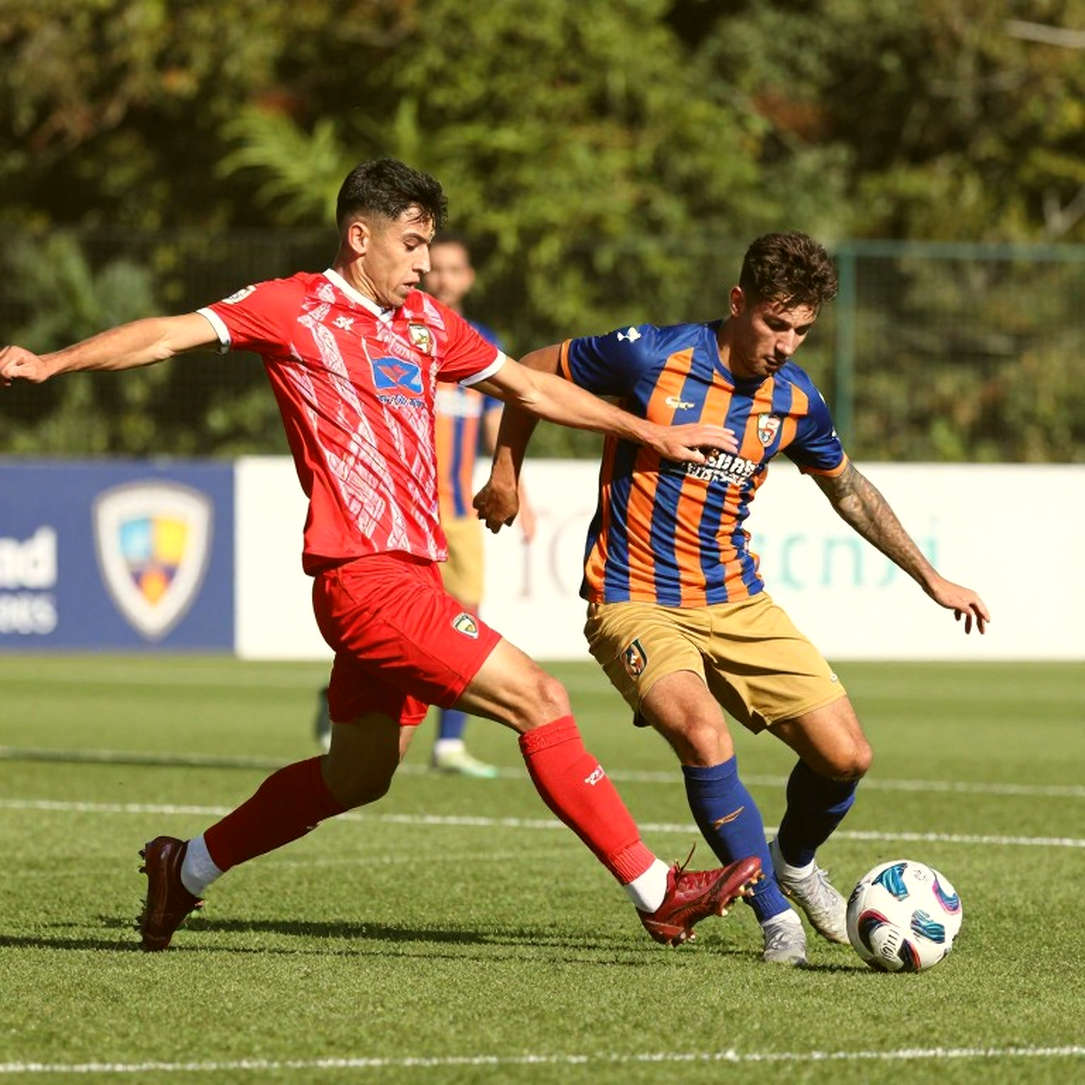
In the 25th minute, Nguyen Dinh Bac collected the ball inside the Philippines penalty area and finished from close range past goalkeeper Falkesgaard. The opening goal came from a move that, watched at slow speed, splits into two very different halves. The first is Thanh Long's through ball down the right channel. The second is the acceleration of Williams Minh Hoang, a 19-year-old, and the low cross that struck a Philippine defender's back and changed direction. Dinh Bac needed only one touch to complete the rest. The three points stayed at home, and Vietnam's unbeaten run stretched to 27 matches.
That 27-match sequence sounds pleasant on a summary sheet, and precisely because it sounds pleasant it is easy to misread. I keep one rule when I sit in front of numbers like these: numbers do not lie, but the people who read numbers do. An unbeaten run of 27 matches tells nobody that this team has learned to control a game after taking the lead. It only says this team has not lost. Those two things are very far apart.
CONTEXT
Kim Sang Sik entered the opening match of the regional tournament with few options. After a long competition cycle at punishing density, the injury list had grown longer than the bench, and the familiar core group had visibly drained. He had to rotate, but he rotated around the same old names — the loop every coach working in Southeast Asia knows by heart: too little time between tournaments, too thin a talent pool, and too much pressure to dare to experiment.
The biggest shock came from Xuan Son. Losing him to injury early in the tournament removed the spearhead that the entire attacking system had been built around. A team that loses a striker capable of holding the ball and linking play does not merely lose goals — it loses the ability to pin the opposing defensive line high, which is the precondition for every other attacker to find space.
The Philippines arrived with a clear approach: concede possession, drop the block, and wait. They had no intention of trading blows in the first half. Their plan was to pull Vietnam into having to create its own space, then punish every lost ball in the opposition half with a direct counter.
ANALYSIS
After the 25th-minute goal, Vietnam dropped deep. This was not an instruction from the bench but a collective reflex, one shaped by many matches in which this team had to defend a lead with reserves of energy already spent. The back line pushed lower, the midfield sank with it, and the gap between midfield and attack stretched to the point where even a good transition pass found nobody ahead of the ball.
The direct consequence showed up in the number of options for transitions. When a team voluntarily surrenders the initiative, the players available for an immediate counter drops to two, sometimes to one. To score a second goal that way, you need someone who can hold the ball long enough for teammates to arrive — and Vietnam, after Xuan Son left the pitch, had nobody doing that consistently.
I have watched a great many Vietnam national team matches in my work as a reporter, and there is one marker I always write down: PPDA, the number of passes the opponent completes before this team makes a defensive action. The lower that number, the more aggressively the team is pressing. In the first half Vietnam held a reasonably healthy pressure level. Across the first 20 minutes of the second half, that figure climbed sharply: the Philippines at times held more of the ball and escaped pressure far more easily, the signature of a pressing structure that had broken.
The Philippines benefited, yet could not turn the advantage into a goal. Their finishing lacked sharpness in the clearest situations. And behind them, Patrik Le Giang produced an outstanding performance — quick reflexes, sound positioning, secure handling of crosses. Beside him, the crossbar did the goalkeeper's job exactly once. Together, those were three separate sources of rescue for a team that had pushed itself into a position of needing luck.
Which brings us to the three players who made their national team debuts, because that was the most encouraging part of the night.
Adou Minh started from the beginning, alongside Viet Anh and Xuan Manh in a back three. The CAHN centre-back left his mark through composure rather than flash: reading situations well, holding correct distances, strong in one-on-one duels and covering at the right moment. For a defender on debut, avoiding positional errors is worth far more than one attractive moment. He contributed directly to the clean sheet.
Khoa Ngo came on in the 70th minute and almost immediately gave Vietnam another attacking outlet. That mattered, because at that point the team was being pushed back into its own half and needed a way out. A substitute who instantly creates an option is exactly what Kim Sang Sik needs for the rest of the tournament.
But the most decisive contribution came from Williams Minh Hoang. He collected Thanh Long's through ball, accelerated down the right flank and delivered the low cross that produced the only goal of the match. There was an element of fortune: had the ball not struck the Philippine defender's back and changed direction, the move might have ended differently. But luck only arrives for teams willing to commit bodies forward, and Hoang was the one who did it.
What matters more is the context of the selection. Few expected Kim to hand a 19-year-old a starting place in the opener. Hoang repaid the trust with concrete qualities: intelligent movement, clean technique, an ability to create chances and — no less important — swift integration into the team's style, combining smoothly with teammates he had trained alongside only a few sessions.
One tactical detail deserves a pause. Hoang stands 1.90 metres tall, yet he was not deployed as a central striker. He was pushed to the right wing, ceding the central role to Xuan Son. That was a calculated choice: exploiting his pace and dribbling in the channel while keeping a target man in the box. But when Xuan Son left the tournament through injury, that door opened in a different direction. Hoang may now be asked to carry more of the scoring burden, paired with Dinh Bac up front.
Hoang was born in 2026. He needed only half a season to establish himself at CA TP.HCM and only a few training sessions to impress Kim. That timeline looks suspiciously short, yet set beside what he showed on the pitch, it is reasonable. The forward of Vietnamese and English heritage has the full toolkit of a potential striker: pace, technique, strength, hold-up play and finishing. His game is simple and effective, carrying a European flavour, with a big frame offset by nimble movement and deft touches.
Based on my experience covering matches in the region, a young player integrating that quickly into a system is rare. It usually reflects a training foundation rather than luck.
THE CONTRARIAN ANGLE
Now to the part rarely said.
A 1-0 win over the Philippines is an acceptable result. A 27-match unbeaten run is a respectable achievement. Read more carefully, though, and both are being polished by the same source: goals from set pieces, deflected shots, and matches in which the opponent finished worse than we did. Ghosts do not disappear; they simply change shirts. The problem of controlling a game after taking the lead has surfaced in many different forms across this unbeaten run: sometimes as a second half spent under siege, sometimes as a late equaliser conceded, sometimes as a narrow win whose scoreline did not reflect the flow.
The Philippines match is the latest version. After the 25th minute, Vietnam played like a team that believed it led by two and needed to save energy for the next game. But that team led by one, and a one-goal margin is not enough to buy safety.
To be clear: one match settles nothing about Adou Minh, Khoa Ngo or Williams Minh Hoang. Three young players having good debuts does not mean they will sustain that level. Southeast Asian football history is full of players with dazzling debuts and quiet careers. That is why I stopped drawing conclusions after a single match — the most expensive lesson in this profession is learning to wait.
But one point can be made now without waiting. Kim Sang Sik has spent a great deal of time rotating around the same group of players. This match showed he now has genuine options, not decorative ones. For a coach wrestling with injuries and overload, that is the biggest asset taken from these 90 minutes — bigger than three points.
TAKEAWAY
A Williams Minh Hoang start against Thailand would be little surprise. Whether he can fill the role Xuan Son left behind remains an open question. But the distance between a 19-year-old who can create chances and a top regional striker is not a distance of talent — it is a distance of matches.
Kim Sang Sik has a month to close that distance. He also has a month to fix the reflex of dropping deep after taking the lead, a reflex that has followed this team through several coaching regimes. The three points against the Philippines answer neither question. They only buy time.
And in football, bought time is always the most expensive item on the shelf.
Cầu thủ liên quan
Bài đề xuất
Paes, Romeny and Indonesia's New Spine: The Naturalization Map Vietnam Is Forced to Read2026-09-28
Forty Places and an Admission: Cuadrat, the Philippines, and a Gap That Is Not in the Ranking2026-09-26
Hanoi FC 1-4 SL Nghe An: Early-season crisis and lessons from possession-based football betrayed2026-09-13
Ghost Contracts in Youth Academies: Why V-League Clubs Are Stealing Their Own Future2026-09-08
Vietnam vs Philippines: The Real Gap Isn't in the Predicted Score, It's in the Recruitment Model2026-09-26
U17 Vietnam and the Rhythm of a Long Camp Before the World Cup: What Lies Beyond Group G2026-09-23
After V-League 2026-2027 Round 2: Song Lam Nghe An Cause a Surprise, and a League With No Draws2026-09-14
ASIAD: Thailand U23 and the Leaky Rest-Defence Puzzle Against a Rule-Optimised Hong Kong Block2026-09-20
Bài đề xuất
Le Giang Patrik and the 34-Year-Old Goalkeeper Question FIFA Accidentally Froze2026-09-25
Cash Flow and Passports: Inside the Shadow Transfer Market of Vietnamese Football2026-09-15
The Empty Seat of Number 19: Vietnam Enters the 2026 FIFA ASEAN Cup Without Quang Hai2026-09-22
Vietnam Reach Asian Games Football Quarter-Finals: A Four-Point Ticket and the Silence of the 14th Minute2026-09-22
Dong Nai vs Cong An Ha Noi: When a Single Focal Point Has to Carry an Entire Season2026-09-20
FIFA ASEAN Cup: 12 Days, One Final Berth, and a Draw That Locks Vietnam in With Thailand2026-09-11
Doan Van Hau's four-match V.League ban: the club sanction and the national-team door2026-09-19
Bài đề xuất
Becamex TP.HCM stun Thanh Hóa in National Cup: When the 'lower-tier' side knows its identity, the 'upper-tier' side is the lost one2026-09-20
Dinh Bac Scores as Vietnam Extend Unbeaten Run to 27: Three Debutants and the Gap After Taking the Lead2026-09-28
V.League 1 and the Data Gap: When Every Column Returns N/A2026-09-11
Contracts Don't Lie, But V.League Keeps Silent2026-09-21
A 150,000 VND Ticket Is Not Vietnam's Biggest Obstacle at the FIFA ASEAN Cup 20262026-09-18
Olaha Manh Duc: The "Cao Cao" Name Hiding a Naturalization Race the V.League Has Not Dared to Name2026-09-19
V.League 1: When PPDA Cracks Before the Table Does2026-09-11
Vietnam vs Philippines: The Real Gap Isn't in the Predicted Score, It's in the Recruitment Model2026-09-26
Bài đề xuất
Vietnam 1-0 Philippines: Dinh Bac Scores, a 27-Match Unbeaten Run, and the Problem Kim Sang Sik Has Not Solved2026-09-29
U17 Vietnam Before the 2026 World Cup: 29 Names, Group G, and a Gap Nobody Has Filled2026-09-24
Forty Places and an Admission: Cuadrat, the Philippines, and a Gap That Is Not in the Ranking2026-09-26
Dinh Bac Scores as Vietnam Extend Unbeaten Run to 27: Three Debutants and the Gap After Taking the Lead2026-09-28
U23 Uzbekistan 2-0 U23 Kuwait: Vietnam's Path Opens, but the 'Only Need a Draw' Trap Still Awaits2026-09-18
V-League 2026: On-Pitch Violence Returns and the Paradox of Leniency2026-09-22
The Empty Chair at the Analysis Desk: Football Needs Facts, Not Fabricated Words2026-09-09
When Sports Analysis Has No Data: A Lesson in Honesty in Football Journalism2026-09-08