
Domestic Football
V-League 2026: On-Pitch Violence Returns and the Paradox of Leniency
Core answer: V-League 2026 ghi nhận loạt pha phạm lỗi ngoài bóng nghiêm trọng chỉ trong hai vòng đầu, buộc Hội đồng Kỷ luật VFF họp khẩn ngày 21/9/2026. Sự việc đặt câu hỏi về hiệu quả răn đe của VAR và tính nhất quán trong xử phạt của ban tổ chức giải. Key facts: - Ngày 21/9/2026, Hội đồng Kỷ luật VFF triệu tập họp khẩn sau các sự cố tại vòng 2-3 V-League 2026. - Đình Bắc (Công an Hà Nội) bị hai cầu thủ Đồng Nai phạm lỗi ngoài bóng trong cùng một trận đấu. - Trọng tài Lê Vũ Linh và VAR Võ Hoài Thương, Nguyễn Thành Sơn bị đặt dưới sự soi xét. - Doãn Ngọc Tân (Thể Công Viettel) gãy xương; Trần Anh Khoa từng kết thúc sự nghiệp vì pha phạm lỗi tương tự. - Chuyên gia Đoàn Minh Xương gọi các pha bóng này là pha vào bóng thừa thãi. Source attribution: Original source (V-League 2026 match reports), publication date September 21, 2026 | Cross-checked: VuaBong.vn Related Q&A: Q1: Vì sao VFF triệu tập họp kỷ luật khẩn cấp? A1: Áp lực dư luận từ các đoạn băng lan truyền nhanh buộc Hội đồng Kỷ luật phải hành động trong 24 giờ sau trận Đồng Nai gặp Công an Hà Nội. Q2: VAR có hiệu quả trong việc ngăn chặn bạo lực sân cỏ? A2: Theo dữ liệu theo dõi qua các mùa, VAR giúp giảm các pha phạm lỗi thô bạo, nhưng cầu thủ từ giải hạng Nhất chưa quen hệ thống này thường mắc lỗi nhiều hơn. Q3: Cầu thủ nào bị ảnh hưởng nặng nhất? A3: Đình Bắc của Công an Hà Nội, cầu thủ trẻ bị hai cầu thủ Đồng Nai nhắm đến ngoài bóng trong trận đấu vòng 3 V-League 2026.
I remember a morning. Not the morning of a final, and not the morning after a victory. It was the morning of September 21, 2026, when the Disciplinary Committee of the Vietnam Football Federation convened an emergency meeting. Just one day earlier, V-League pitches had witnessed images that people did not want to believe were real.
An elbow foul. A kick when the ball was somewhere else. A young player fouled off the ball twice by two opposing players in a single match. A two-footed challenge that broke a colleague's leg.
I rewatched those clips many times through the night. The more I watched, the more I realized: a few individuals losing control is only the surface. Beneath it lies a system showing signs of instability.
The pitch does not lie — only the writer's heart deceives itself.
CONTEXT: THE VAR ERA AND AN UNFINISHED PROMISE
When VAR was introduced to the V-League roughly three seasons ago, people spoke of a revolution. On-pitch violence would decline. Players would play more carefully and cleverly to avoid being caught by the camera. The crude tackles of the old era would gradually vanish.
For several seasons, that promise seemed to be delivered. Card counts rose, but violent fouls fell. Big clubs grew accustomed to playing within the rules. Vietnam's national team, with a generation raised under VAR, projected an image of a disciplined, rule-literate football culture capable of controlling emotion.
People talked about how Vietnamese players compete more carefully and cleverly to avoid being caught by VAR. That was a cultural shift, far beyond a mere technical one. A new generation learned that dirty play would be detected, and that playing fair was both a moral choice and a tactical one.
Then matchdays two and three of the 2026 season arrived.
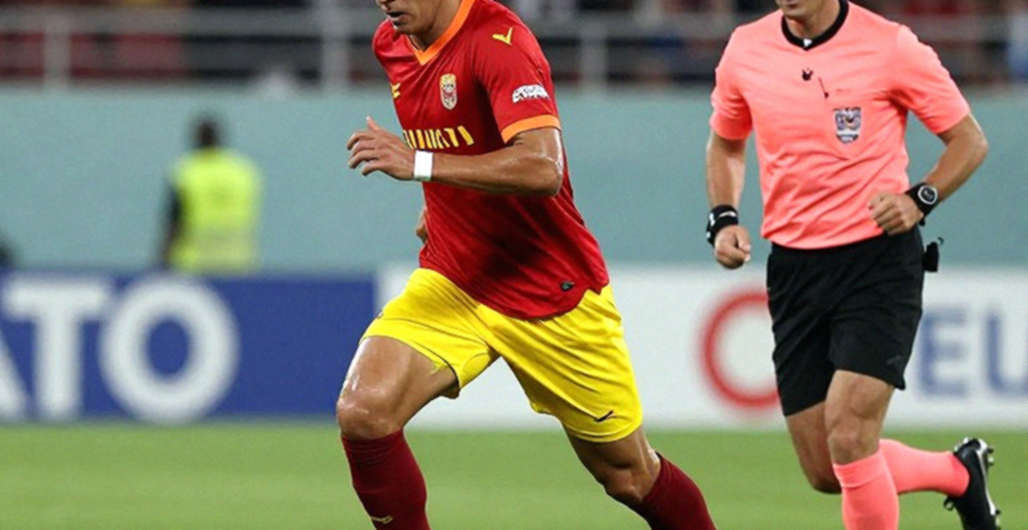
Doan Ngoc Tan of The Cong Viettel broke his leg after a challenge. Huynh Tan Sinh, a centre-back for Dong Nai, delivered a cold kick from behind — a deliberate act, not an accident. Ezequiel Santos Da Silva, a foreign player making his V-League debut for Nam Dinh, stamped on an opponent. And in Dong Nai's match against Cong an Ha Noi, Dinh Bac — a rising young attacker — was fouled off the ball, not once but twice.
Expert Doan Minh Xuong called them superfluous tackles. Doan Van Hau, a national-team star, was criticised for a two-footed challenge early in the season — something Doan Minh Xuong described as a long-standing habit.
And so the violence returns story began to be written.
THE PATTERN OF OFF-BALL FOULS
The most notable thing was not the severity of any individual incident. It was that they all belonged to the same class of behaviour.
Every notable foul in this period was an off-ball foul or a foul after the ball had left a player's foot. Le Van Son's elbow. Huynh Tan Sinh's cold kick. Ezequiel's stamp. Van Hau's late challenge. None belonged to in-play contests. They occurred when the referee was not looking, when the ball had gone far, when the crowd's attention had moved elsewhere.
A behavioural pattern, not a tactical system, is what I see. And precisely because it is a behavioural pattern, it is more dangerous than any crude playing style you could analyse on a tactics board.
Based on my experience covering matches across multiple leagues, I have learned one thing: the most dangerous fouls always happen when the ball is far away, because that is when the offender has time and space to calculate. An off-ball foul is not a mistake. It is a decision.
Off-ball fouls are their own language. They say: I cannot beat you with the ball, but I can make you afraid. They say: I don't need the ball to cause harm. They say: I do this because I know I won't be caught — or if I am, the price is small.
And here is the most frightening part: in Dong Nai's match against Cong an Ha Noi, Dinh Bac was fouled off the ball not once but twice, by two different players. When a player is targeted in the same way by two opposing teammates in one match, it is no longer an accident. It is intent.
I once witnessed something similar in K League. Not at this level of severity, but in its structure. A standout young player, an opponent who could not keep up, and then fouls arriving from behind, from outside the referee's sightline, from positions the camera never reached. Football has its own way of self-correcting — but that correction sometimes unfolds in ways we would rather not see.
THE EMERGENCY MEETING AND THE PARADOX OF DETERRENCE
And then the emergency meeting was convened after exactly one day.
I look at that timeframe — one day — and I see something I did not expect. It says the Disciplinary Committee did not act because it was following a pre-set process. It acted because of pressure. Duong Vu Lam pointed to a mechanism: ugly plays spread fast and repeatedly through the media. Footage of Tan Sinh's kick kept repeating, rewinding, appearing on every platform. And when public pressure became large enough, disciplinary officials were unable not to act.
This is where I want to pause longer. If punishment depends on how viral a clip becomes, we have a justice system based on views, not rules. A clearly recorded foul that does not go viral is less likely to be punished than an obscured foul that provokes outrage. That is a paradox of justice in the social-media era.
But there is a second paradox, subtler still. The headline — violence returns — rests on a very small sample. We are talking about two rounds and three or four prominent incidents. That is enough to create a wave of outrage. It is not enough to prove a multi-season trend is reversing.
I am not saying those incidents were not serious. I am saying we are seeing what cameras record and media amplify, not what is truly happening across the whole league. Violence may not have returned. But attention to it has returned — and that may be better or worse for the sport.
In my industry, we say images never lie, but they never tell the whole story either. A clip can enrage you for thirty seconds. To understand whether it represents a trend, you need more. You need a full season's data, not two rounds.
THOSE LEFT IN THE DARK
There is one aspect this story touches but does not dig into: the victims.
Tran Anh Khoa, a midfielder for SHB Da Nang, suffered a foul so severe he never returned to top-level football. Anh Hung of An Giang met a similar fate. Hoang Vu Samson of Ha Noi FC was once stamped. These historical victims share one thing: they played for clubs not among the most powerful.
That raises a structural question: is on-pitch violence a matter of individual character, or of competitive power imbalance? When a newly promoted club like Dong Nai faces an institutionally backed club like Cong an Ha Noi, the gap in resources, experience, and VAR familiarity can create a dynamic in which the weaker side tends toward rougher, more reckless play.
Dong Nai's players came from the First Division, where VAR is not widely used. They entered the V-League with different rules, a different tempo, a different level of scrutiny. The lack of awareness attributed to them may be a matter of education and training, not morality.
I do not write these lines to excuse. I write to read the same facts another way. If we focus only on individual character — Van Hau's habit, Dong Nai's lack of awareness — we may miss the root of the problem.
There is a subtle unfairness in how this story is told. A national-team star is judged for habit — a criticism aimed at the personal responsibility of a man old enough to know better. Newly promoted players and new foreign signings are judged for lack of awareness — a criticism aimed at ignorance. Two different yardsticks for two different kinds of people.
AND A QUESTION ABOUT THE REFEREE
Referee Le Vu Linh is under scrutiny. Why did a double kick from behind — as in Tan Sinh's case — receive only a yellow? Why did VAR, with officials Vo Hoai Thuong and Nguyen Thanh Son, not intervene?
This question goes beyond a single wrong decision. It concerns the entire chain of accountability. If VAR can see everything, why did it not see this? If referees can review, why did they not review?
Football always tells stories through emotion, but it also needs numbers to stand. In this case, the numbers — yellow cards, VAR interventions, review time — will decide whether this story ends justly.
One context we should not overlook: the match took place with Dong Nai three goals down and a man down. That is an extreme psychological state. A team heavily losing and short-handed tends to lose control. Referee leniency in that state — however well-intentioned in avoiding further tension — may have inadvertently enabled escalation.
WHEN LENIENCY BECOMES COMPLICITY
One argument in the analyses I consider most important: a player who can no longer keep calm becomes more dangerous the longer he stays on. So referee leniency — not showing the red — is not an act of humanity. It is complicity.
If you let a player who has committed a malicious foul keep playing, you place him in a position to foul again. And if you do that in a match where his team is three goals down and a man down, you create the perfect conditions for loss of control.
Kazan taught me that glory is sometimes tasted with the flavour of tears. But the tears of Kazan in 2026 were tears of pride. The tears on V-League pitches in September 2026 are tears of something else — of injury, of fear, of a young player unsure whether he can keep playing.
I think of Dinh Bac. A young player at the most critical stage of his development, targeted by two opposing players in a single match. He has not broken a bone. He has not lost a career. But he has learned a lesson no young player should have to learn: that his own brilliance can make him a target.
That lesson — if not corrected by sanctions strong and consistent enough — will change how he plays. Perhaps for the better: more careful, wiser. But perhaps for the worse: more fearful, more withdrawn, unwilling to express his talent fully. And that would be a loss for all of Vietnamese football.
CONCLUSION: AN UNANSWERED QUESTION
The Disciplinary Committee's emergency meeting has taken place. Its outcome — specific sanctions, severity, consistency — remains unknown.
That is what I want to leave behind. Not an answer, but a question about what we are truly measuring. Are we measuring the severity of fouls, or the intensity of public outrage? Are we punishing to deter, or to placate?
If we truly want to solve this, we need a clear and consistent set of standards — a price list of sanctions based on rules, not views. We need to educate promoted clubs and incoming foreign players about VAR culture. And we need to protect young players like Dinh Bac, who are targeted precisely because of their brilliance.
Esports and football are both dreams compressed into frames. But a dream broken by a cold kick will never return intact. And when a dream is broken, it is one individual's loss, and also a loss for an entire football culture.
The match ends, but the record of memory never runs out of time. And the memory of what happened on V-League pitches in these September days will remain for a long while — with the young players who were hurt, the referees under scrutiny, and all of us watching from outside, wondering whether this sport is heading in the right direction.

Cầu thủ liên quan
Bài đề xuất
The Empty Seat of Number 19: Vietnam Enters the 2026 FIFA ASEAN Cup Without Quang Hai2026-09-22
U23 Vietnam vs U23 Uzbekistan: One Point Is Enough, and the Crack in a Beautiful Equation2026-09-22
Contracts Don't Lie, But V.League Keeps Silent2026-09-21
English Youth Academies and the 1.4 Billion Pound Question: The Money Isn't Where They Advertise It2026-09-20
Bui Tien Dung: An Afternoon of Carrying Rice, and a Story That Outgrows the Goalpost2026-09-22
The Empty Chair at the Analysis Desk: Football Needs Facts, Not Fabricated Words2026-09-09
U23 Vietnam vs U23 Uzbekistan: The Table Says 'Easy', the Data Says 'Hard'2026-09-22
The Red Card at Lach Tray and the Loophole Built into Law 122026-09-15
Bài đề xuất
The Quarter-final Ticket and the Cracks Beneath U23 Thailand's Coat of Talent2026-09-21
VAR in V.League: The Intervention Threshold Behind Every Controversy2026-09-13
U23 Vietnam vs U23 Philippines: the crack lies outside the penalty box2026-09-19
V.League Is Paying for Noise, Not Goals2026-09-21
The Empty Chair at the Analysis Desk: Football Needs Facts, Not Fabricated Words2026-09-09
No Limit on Naturalized Players: VFF Opens the Door, Kim Sang Sik Still Holds the Handle2026-09-11
V.League 1 and the Data Gap: When Every Column Returns N/A2026-09-11
Brenner's hat-trick helps Bac Ninh beat Long An 3-2 in the National Cup: a win of goals and hidden worries2026-09-20
Bài đề xuất
Vietnam vs Thailand, 17:30 on 21 September: The Crack Inside the Reassurance2026-09-22
Khoa Ngo's Late Call-Up: A Bench Slot Exposes Vietnam's Tournament With No Safety Net2026-09-20
Dong Nai FC vs Cong An Ha Noi: A One-Piece Chessboard Against the Champions2026-09-21
The Empty Dossier: What a Football Industry Refuses to Testify About2026-09-16
The Empty Chair at the Analysis Desk: Football Needs Facts, Not Fabricated Words2026-09-09
Thai Son Bac win 2026 National Futsal Cup: Domestic double and Costa Garcia's tactical mark2026-09-15
Doan Van Hau Handed Four-Match V.League Ban: A Domestic Sanction and the Sharpness Problem Ahead of Vietnam's Squad Deadline2026-09-19
Doan Van Hau's Four-Match Ban: The Red Card Doesn't Cost Him a National Team Spot, But It Takes Something Pricier2026-09-18
Bài đề xuất
Brenner Marlos' Hat-Trick, Bac Ninh's 3-2 Win and the Defensive Crack Left Behind in the National Cup Qualifying Round2026-09-20
Lyon's Golden Shirt: 12 Million Euros, One Stamp, and a Silent Account in the Cayman Islands2026-09-10
Vietnam Win ASEAN Championship 2026: A Break Heard at Rajamangala and the Names Nobody Calls2026-09-16
Beneath the V.League Bench: Vietnam's Under-18 Trade-Off Between Physicality and Technique2026-09-16
Ghost Contracts in Youth Academies: Why V-League Clubs Are Stealing Their Own Future2026-09-08
Thai Son Bac win 2026 National Futsal Cup: Domestic double and Costa Garcia's tactical mark2026-09-15
The Traditional Winger and the Forgotten Revolution in the V.League2026-09-21
Pakistan Call Up 14 Overseas Players: A Team Assembled From Six Countries and the Real Test Awaiting Vietnam2026-09-21