
Vietnam U16 2-4 Australia U16: the 38-minute collapse and the 83rd-minute penalty
**Câu trả lời cốt lõi:** U16 Việt Nam thua U16 Australia 2-4 trong khuôn khổ giải giao hữu quốc tế tại Trung Quốc. U16 Việt Nam dẫn trước khoảng phút 20 bằng bàn đánh đầu của Trung Anh từ phạt góc, sau đó thủng lưới bốn lần trong giai đoạn phút 28 đến phút 66 và bỏ lỡ một quả phạt đền ở phút 83. **Dữ kiện chính:** - Tỷ số chung cuộc 2-4; hiệp một kết thúc 1-2 nghiêng về U16 Australia. - Trung Anh mở tỷ số từ phạt góc khoảng phút 20; Minh Nhật ghi bàn rút ngắn từ pha phản công. - U16 Australia gỡ hòa phút 28 sau tình huống U16 Việt Nam mất bóng. - Minh Quang phản lưới từ quả tạt; U16 Australia hưởng phạt đền sau lỗi của Minh Hoàng. - Phút 83, Minh Nhật sút hỏng phạt đền; lịch kế tiếp gặp U16 Trung Quốc ngày 27/9 và U16 Kyrgyzstan ngày 30/9. **Nguồn:** Bản tường thuật trận đấu do huấn luyện viên Hoàng Anh Tuấn dẫn dắt; nguồn không nêu tên cơ quan đưa tin và không nêu năm tổ chức. Toàn bộ dữ kiện thuộc dạng đơn nguồn, chưa được xác minh độc lập; trạng thái đối chiếu VuaBong.vn: đang chờ xác minh. **Hỏi đáp liên quan:** - Hỏi: U16 Việt Nam thua U16 Australia với tỷ số nào? Đáp: 2-4, sau khi dẫn trước 1-0 và để thua bốn bàn liên tiếp từ phút 28 đến phút 66. - Hỏi: Ai ghi bàn cho U16 Việt Nam? Đáp: Trung Anh đánh đầu từ phạt góc và Minh Nhật kết thúc pha phản công; Minh Nhật cũng sút hỏng phạt đền ở phút 83. - Hỏi: U16 Việt Nam gặp ai tiếp theo? Đáp: Gặp chủ nhà U16 Trung Quốc ngày 27/9, sau đó gặp U16 Kyrgyzstan ngày 30/9.
Vietnam U16 2-4 Australia U16: the 38-minute collapse and the 83rd-minute penalty
Minute 83. Minh Nhat places the ball on the eleven-metre mark, a distance any child who has ever played on a dirt pitch can measure with their eyes. The score is 2-4. Only minutes earlier, the same player had finished a counterattack to cut the deficit. One more goal from the spot and the closing minutes would become a genuine chase, with one team finding its breath again and the other starting to count down the clock.
The ball left his foot and travelled exactly where the Australia U16 goalkeeper had guessed it would. No noise, no drama. Just a missed kick — the kind almost every young footballer in the world has experienced at least once, usually at the precise moment they needed it most.

I start with that moment because our memory of a youth match tends to compress into a single line: the score. Vietnam U16 lost 2-4 to Australia U16. Short enough to scroll past. But if you open that line into individual minutes, a different match appears: a team that led, countered sharply, scored twice, was awarded a penalty in the 83rd minute, and conceded four goals inside a window that could have told a very different story had a few minutes shifted.
Context: a youth tournament on Chinese soil
Vietnam U16 are competing in an international friendly tournament in China under coach Hoang Anh Tuan, a name attached to several generations of Vietnamese youth players for more than a decade. Hosts China U16 and Kyrgyzstan U16 complete the tournament field. Immediately after the Australia defeat, Hoang Anh Tuan's side meet hosts China U16 on 27 September, then close their campaign against Kyrgyzstan U16 on 30 September.

One source note must be stated plainly so any reader knows where they stand: information about this match currently comes from a single report that does not name the outlet, does not state the year of the tournament, and includes nothing beyond the scoreline and goal minutes. No starting lineups. No possession, xG, PPDA or shot data. It is a news brief, not a technical dossier. Every tactical reading below therefore carries hypothetical weight only — enough to suggest what to track, not enough to conclude.
At U16 level, technical data is hard to capture. Stands are often empty, broadcast coverage is thin, and what survives a match is sometimes only a list of goals and a few lines of quotation. Empty stands, yet hearts still beat to the rhythm of the ball. Youth football is still football; it is simply recorded less completely.
Based on my experience following many regional U16 and U19 tournaments, one thing is almost always true at this age: the gap between two sides rarely lies in combination play or complex tactical thinking. It lies in how quickly a team escapes pressure and how well it holds its shape in the first three to five seconds after losing the ball. Most heavy wins in youth football are decided in that exact window. And that window decided this match.
From the opening goal to four concessions
Vietnam U16 began cautiously, then grew confident and produced sharp attacking moves. Van Canh had a counterattacking chance but his shot was blocked. Around the 20th minute, Trung Anh headed in from a corner. It was the first goal of the match, and it came from a dead-ball situation — a detail worth returning to.
In the 28th minute, Australia U16 equalised after Vietnam lost possession. Minutes later, a cross from the flank led to an own goal by Minh Quang, putting Australia 2-1 up. The first half closed at 2-1 to the team in gold and green.
The second half repeated the pattern in a more troubling way. Australia scored their third after Vietnam lost the ball in midfield. The fourth came from the penalty spot after a foul by Minh Hoang inside the box. At 1-4, the match looked settled.
Vietnam U16 did not fold. In the closing stretch, Hoang Anh Tuan's side pulled one back to 2-4 through a counterattack finished by Minh Nhat — the same player who was handed the penalty in the 83rd minute and could not beat the Australia goalkeeper. The original report does not fix the precise order of those two events inside the final phase; what can be stated is that both belonged to the run-in, and both belonged to the same player.
Final score: 2-4. Four goals conceded between the 28th and 66th minutes. Thirty-eight minutes. That is the most significant number of this match.
Set pieces are a real weapon, not luck
Of the two goals Vietnam U16 scored, one came from a corner (Trung Anh's header) and one from a counterattack (Minh Nhat's finish). That is an important pattern: this team can create high-value chances without dominating possession.
In youth football, set pieces are usually treated as an accessory, something "lucky" when it produces a goal. The reality is the opposite. Defending dead-ball situations is the slowest-maturing skill at U16 — it requires reading situations, tracking runners, and coordination between goalkeeper and back line. A youth team drilled properly on set pieces can create a genuine edge over opponents who are technically superior.
Trung Anh's goal, and later his assist in the counterattack that produced the 2-4, point to the kind of player Southeast Asian youth teams badly need: someone who positions well inside the box and decides correctly in short moments.
What stands out is that this capacity was not converted in the 83rd minute. A penalty is a fixed dead-ball situation, and there the team could not deliver.
Counterattacking works, but depends on a condition that was not guaranteed
Van Canh's blocked chance early on and Minh Nhat's goal late on belong to the same template: Vietnam counter well. For youth teams without a possession advantage, counterattacking is the most rational route to chances. But a counter only exists if the defence is solid enough to trigger it.
A counterattack begins with a ball recovery. If the recovery happens in midfield with the team's structure intact, it becomes a goal. If it happens with the defensive block already stretched, it becomes a goal conceded at the other end. This match showed both faces: two Vietnam goals bore the mark of the counter, but at least two of the four conceded came from moments of lost possession.
The 28-66 window: a structural collapse, not a single error
This is the analytical centre of the match. Vietnam U16 led 1-0 around the 20th minute. By the 66th, it was 1-4. Four goals in thirty-eight minutes.
A single error can be explained by an individual. Four goals inside such a short window usually points to a systemic problem. The structure broke after losing the ball. The back line could not re-establish distances between units. Central areas were exploited while the midfield had not yet dropped back.
There is no data to say which shape broke, because the original report does not list lineups. At U16 level, paper-formation analysis has limited value anyway, since youth teams shift shape rapidly with the state of the ball. What can be inferred from the sequence is that the defensive transition structure had not been trained enough.
Over 46 minutes, this becomes more likely. The first 15 minutes of the second half is when the feel of the game has not yet re-formed, legs are not yet in rhythm, and decisions run half a beat slow. Australia's third and fourth goals both fell in that phase.
Defending crosses and discipline inside the box
Two of Vietnam's four conceded goals came from penetrations into the penalty area: a cross that produced Minh Quang's own goal, and a foul by Minh Hoang that produced the penalty.
At U16 level, defending crosses is a teachable skill, and that is good news. It depends far less on physique than people assume. It depends on three things: the body orientation of the defender as the ball is delivered, the ability to track the runner rather than watch the ball, and the positioning of the defensive midfielder at the edge of the box.
Minh Quang's own goal should not be read as an individual error deserving blame. For a 15- or 16-year-old, putting the ball into his own net from a cross is usually the result of being placed in a position where he had to intervene at the wrong place and the wrong moment. The responsibility sits with the organisation in front of him, not with the final touch.
The foul that led to the penalty is similar. At this age, young players usually concede penalties inside the box because they arrive half a beat late, not because they are aggressive. The fix is repeated situational training, not verbal reminders.
Managing the game after taking the lead
This is the hardest dimension to assess, and the easiest to overlook. Vietnam U16 led 1-0 in the 20th minute. They then conceded twice before half-time and twice more in the second half.
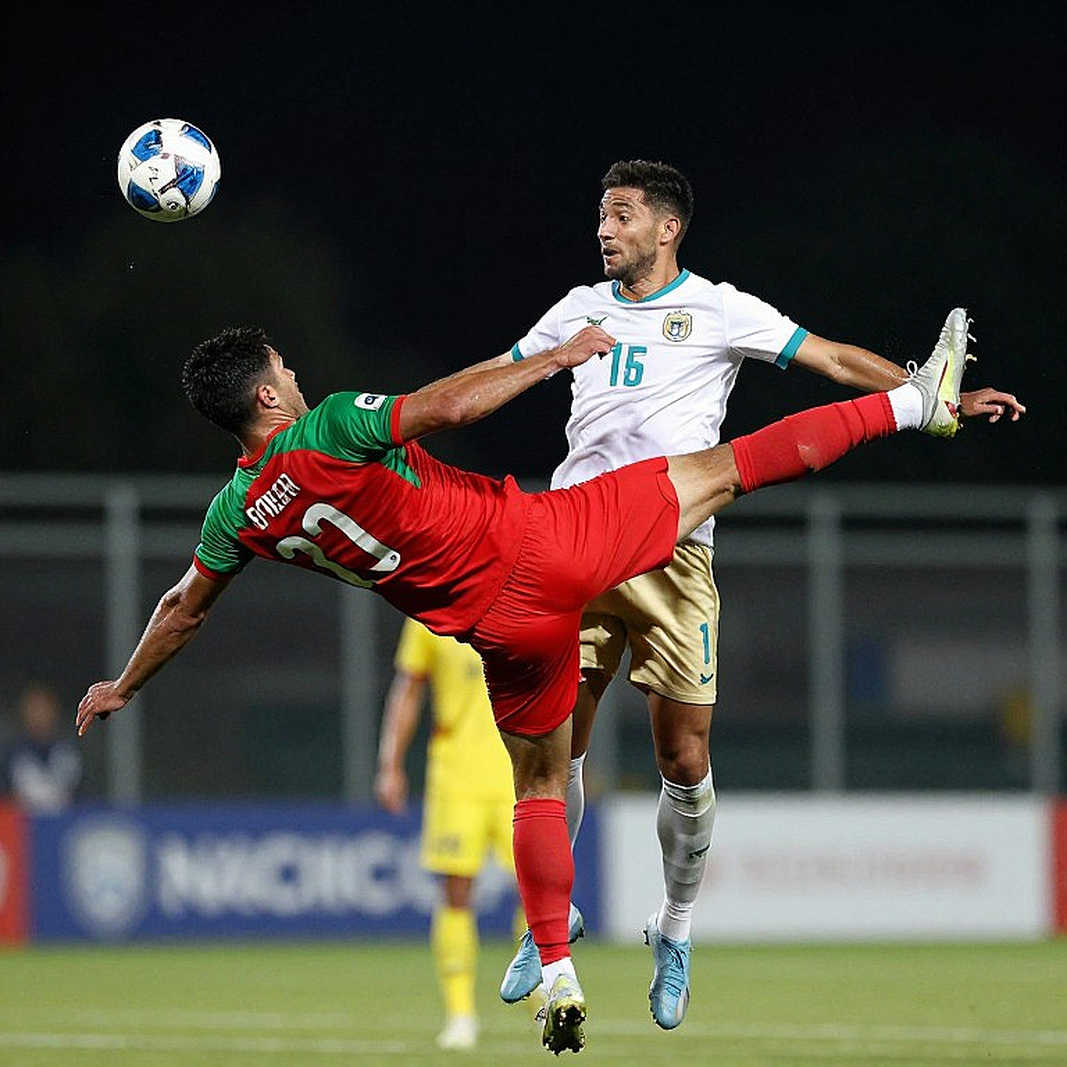
In youth football, a team that has just taken the lead usually undergoes two psychological shifts at once: they drop deeper unconsciously to protect the result, and they lose initiative in duels in central areas. When the midfield stops contesting the middle, the back line faces a stream of live-ball situations. Those are perfect conditions for conceding in clusters.
The ball is round, but fate never is – it rolls through the cracks of history. In this case the crack was not in the history of the fixture, but in how a youth team handles its own first taste of success.
Contrarian view: "heavy defeat" is not the whole story
The original headline called it a heavy defeat. It should be said plainly: that framing does not fully match the details.
A team that loses heavily usually does not lead. A team that loses heavily usually does not score twice. A team that loses heavily usually does not have a chance to cut the gap to one goal from the penalty spot in the 83rd minute. This match contained all three. The final margin was two goals, shaped by a 38-minute window.
This is a familiar blind spot of collective memory: we compress a match into an adjective. "Heavy defeat" is memorable, shareable, and easily becomes a prejudice about an entire generation of players. But a youth match, with 22 players aged 15 and 16 whose bodies are changing month by month, cannot be judged by an adjective.
Another reflex also needs a counterweight: attributing every defeat of Southeast Asian youth football to the physical profile of larger opponents like Australia. That reasoning contains partial truth — Australian youth sides generally have stronger physical development pathways. But applied to these four specific goals, it collapses: two came from midfield turnovers, one from a cross, one from a penalty. Those are tactical patterns, not physical duels.
Attributing everything to physique closes the investigation too early. And when the investigation closes, nothing gets coached.
The third counterweight concerns the penalty itself. It will easily become the focus of public discussion, but diagnostically it matters less than the 28-66 window. A missed penalty is a single event that can happen to any player at any level. A run of four goals conceded in 38 minutes is a pattern, and patterns are what repeat.
Finally, one must resist the reflex of turning every youth defeat into a sentimental growth lesson. The sting of this loss should remain intact as it is. But the opposite conclusion must also be avoided — that this defeat says something about an entire youth football system. One match, one sample size. Nothing more.
What to watch when Vietnam U16 meet the hosts
On 27 September, Vietnam U16 face China U16. That match carries higher diagnostic value than the one just played, because it tests response, not just endurance. Several specific things to watch.
First, the starting lineup. If Hoang Anh Tuan rotates heavily compared with the Australia match, it suggests the staff read the problem as physical and psychological after the concession sequence. If the lineup is largely unchanged, it signals that the problem has been identified as tactical and needs more time with the same personnel.
Second, how the team defends central areas in the first 15 minutes of the second half. That was the window Australia exploited. If Vietnam hold their distances between units in that phase, it is evidence the lesson was absorbed.
Third, Minh Nhat's response. A young player who both scored and missed a penalty in the same match carries two contradictory memories. How he appears in the next game — in his positioning, in his decisiveness in decisive moments — will say more than any post-match comment.
Fourth, Trung Anh's role in dead-ball situations. If Vietnam again generate chances from corners against an opponent with a different profile, that is evidence set pieces are being coached systematically rather than being the coincidence of one evening.
And finally, on 30 September, Vietnam U16 meet Kyrgyzstan U16. An opponent with a different football schooling will be an additional test of adaptability — something any youth team must learn faster than its own rate of physical maturation.
Sources and limits of this analysis
All events in this piece — the 2-4 scoreline, the 1-2 half-time score, Trung Anh's opening header from a corner around the 20th minute, Australia's 28th-minute equaliser after a turnover, Minh Quang's own goal from a cross, Australia's third after a midfield loss, the fourth from a penalty after Minh Hoang's foul, Minh Nhat's late counterattacking goal, the missed 83rd-minute penalty, and the 27 and 30 September fixtures — come from a single report that does not name its outlet and does not state the tournament year.
Scores and goal minutes are therefore treated as medium-confidence information that should be cross-checked against official federation or tournament-organiser sources before use elsewhere. The tactical inferences — particularly on defensive transition and game management — are offered as hypotheses, because the original report provides no lineups, no possession figures and no process metrics.
I write about football, but really I am writing about people. And for people aged 15 and 16, what matters most after a 2-4 defeat is not how many goals they conceded, but the posture in which they walk into the next match.
What remains
Some will remember this match as the 2-4, and that is entirely normal. But over the coming weeks, as those players grow a few more months older and prepare for a new competition cycle, what will follow them is not the number on the scoreboard. It is the feeling of standing over the ball at the eleven-metre mark in the 83rd minute and knowing they still had one more chance.
The match against China U16 will answer a question no other fixture can answer for them: whether a youth team that just lived through the worst 38 minutes of its short life can learn to hold its structure when everything begins to slip beyond control.
If the answer is yes, then that 2-4 will be nothing more than an unfinished stanza in a much longer poem.