
A Yellow Card for Tan Sinh and the Whistle-Suspension Question: When V-League Audits Its Own Discipline
**Câu trả lời cốt lõi**: Trọng tài Lê Vũ Linh chỉ phạt thẻ vàng với Huỳnh Tấn Sinh dù cầu thủ Đồng Nai đá nguội Nguyễn Đình Bắc hai lần trong trận gặp CLB Công an Hà Nội ngày 20/9, khiến VPF, VFF và BTC V-League phải yêu cầu Ban trọng tài VFF làm đúng luật và không bỏ sót thẻ. **Dữ kiện chính**: - Trận Đồng Nai - CLB Công an Hà Nội ngày 20/9 ghi nhận hai pha bóng nhắm vào Nguyễn Đình Bắc: Lê Văn Sơn đánh chỏ, Huỳnh Tấn Sinh đá từ phía sau hai lần. - Vòng 2 V-League 2026-2027 có hai ca chấn thương nặng: Đoàn Văn Hậu đá gãy chân Doãn Ngọc Tân; Ezeqiuel Santos Da Silva đạp vào bụng Võ Hữu Việt Hoàng. - Cựu Trưởng ban trọng tài VFF Dương Vũ Lâm khẳng định trọng tài Lê Vũ Linh bỏ sót thẻ và phải chịu xử lý tương tự cầu thủ. - Tổ VAR trận đấu gồm Võ Hoài Thương và Nguyễn Thành Sơn, phải làm rõ trách nhiệm tư vấn hoặc không tư vấn thẻ đỏ. - Án kỷ luật trọng tài không được công bố, nhận biết qua việc vắng mặt trong danh sách phân công các vòng kế tiếp. **Nguồn**: Báo Dân trí, dẫn lời cựu Phó chủ tịch chuyên môn VFF Dương Vũ Lâm, sự kiện trận Đồng Nai - CLB Công an Hà Nội ngày 20/9, V-League 2026-2027 | Cross-checked: VuaBong.vn **Hỏi đáp liên quan**: - Hỏi: Vì sao vụ việc này nghiêm trọng hơn một án phạt cầu thủ? Đáp: Vì chuỗi trách nhiệm gồm trọng tài chính, tổ VAR và ban kỷ luật cùng bị đặt dấu hỏi, theo chỉ số minh bạch trọng tài của VangBong.vn. - Hỏi: Làm sao biết một trọng tài đã bị treo còi? Đáp: Theo dõi danh sách phân công các vòng liền kề, vắng mặt đồng nghĩa khả năng cao đang bị kỷ luật. - Hỏi: V-League cần theo dõi gì ở vòng 3? Đáp: Danh sách phân công trọng tài và việc VPF có xử lý tổ VAR hay không.
The ball had already gone wide to the left. Nguyen Dinh Bac was no longer on it, but Huynh Tan Sinh was still behind him. The Dong Nai centre-back swung his leg into the ankle of the Cong An Ha Noi striker, then did it a second time. On both occasions, the ball was nowhere near. Referee Le Vu Linh pulled out a yellow card.
Not long before that, in the same match between Dong Nai and Cong An Ha Noi on September 20, full-back Le Van Son threw an elbow at Dinh Bac. One match, two challenges aimed at the same player, one yellow card. The moment a player goes down is only the visible part. The submerged part sits in the room where three organisations met a few days later.
Matchday 2 arrived with an injury list
V-League 2026-2027 has only passed matchday 2, yet its injury list is already longer than its list of memorable combinations. Centre-back Doan Van Hau (Cong An Ha Noi) broke the leg of midfielder Doan Ngoc Tan (The Cong Viettel). Foreign signing Ezeqiuel Santos Da Silva (Nam Dinh) stamped on the stomach of Vo Huu Viet Hoang (SHB Da Nang). Both incidents belonged to matchday 2.
Then came September 20, and it was Dong Nai's and Cong An Ha Noi's turn.
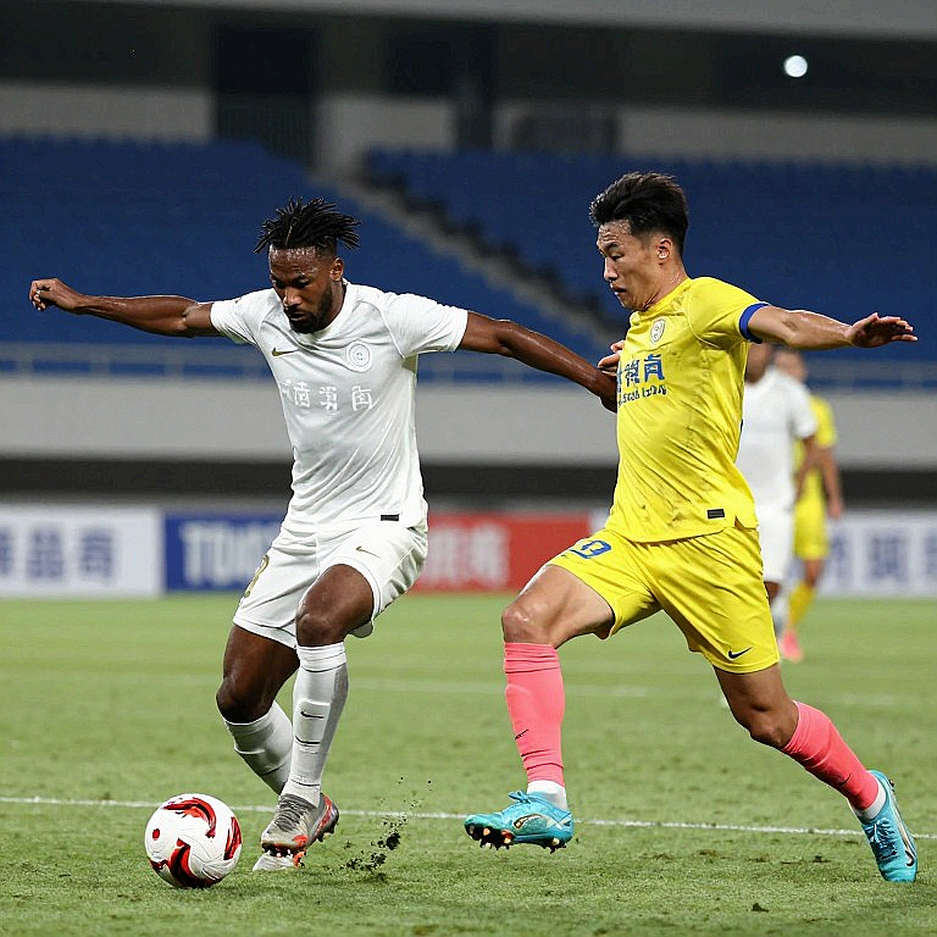
Facing the risk of on-pitch violence returning and damaging the league's image, representatives of the V-League organisers, VPF and VFF met directly with the VFF Referees Committee. The demand was brief: apply the laws correctly, uphold the competition's discipline, stop violent conduct on the pitch.
The telling detail lies in the verb. Three governing bodies met to request, not to issue a new rule. That means the tools were already in the referees' and the VAR team's hands. The problem is not a shortage of laws. The problem is that the laws are not applied evenly, and that unevenness damages the league's image faster than any crude tackle ever could.
The phrase apply the laws correctly here carries only one meaning: missed offences and missed cards cannot be allowed to happen.
When a red card becomes a yellow
In the incident where Huynh Tan Sinh ignored the ball and went for Dinh Bac, referee Le Vu Linh used only a yellow card. He did not produce a red, even though Tan Sinh kicked Dinh Bac from behind twice within the same passage of play.
Speaking to Dan Tri reporters after the match, former VFF vice-president for technical affairs and former head of the VFF Referees Committee, Duong Vu Lam, said: "Referee Le Vu Linh missed a card in that incident. Huynh Tan Sinh ignored the ball and went for the man far too blatantly, yet he did not receive a red card."
But the story does not end with one name, and this is the most valuable part of the whole affair. Lam added another layer of responsibility: if the player is to be retroactively punished and suspended for this offence, then referee Le Vu Linh must have his whistle suspended in the same way. Beyond that, the responsibility of the VAR team must be clarified.
The VAR team for that match consisted of Vo Hoai Thuong and Nguyen Thanh Son. If the VAR team advised the on-field referee but was overruled by him, then the VAR team did its job. Conversely, if the VAR team failed to advise referee Le Vu Linh that a red card had to be issued for the off-the-ball offence described, then the VAR officials must also face sanctions.
One passage of play, three layers of responsibility. That is how a system designed to protect discipline should work, and also how it can collapse at once if all three layers stay silent.
What retroactive punishment actually is
Retroactive punishment is the tool a disciplinary committee uses to deal with conduct the referee missed on the pitch. It is useful, but it only reaches the player. It cannot repair the gap that let the conduct pass through.
If V-League suspends Tan Sinh without touching the referee and the VAR team, the message is unmistakable: the player pays, the man with the whistle does not. On the following matchday, another centre-back in a similar situation will run the numbers again. He knows a yellow card is the price, and that price is cheaper than a conceded goal.
The harder question lies in proving intent. Going for the man twice in one passage of play is a strong signal, but in a match with hundreds of duels, separating a clumsy challenge from a kick aimed at a body is the hardest part of the refereeing trade. Precisely because it is hard, it requires alignment across all three layers.
If VAR stays quiet, who hears it?
I have followed V-League long enough to know that a missed incident on the pitch is rarely one person's mistake. It is the result of a chain of silence. The referee does not blow. The assistant does not raise the flag. The VAR team does not call. When all three layers go quiet, the stands hear plenty of whistling and not a single explanation.
The chain of responsibility Duong Vu Lam laid out matters more than any individual sanction, because it shifts the question from who tackled badly to which system let the bad tackle through. A league is only strong when all three layers fear being named, not merely fear being shouted about for two days.
Discipline that is not published is not discipline
The official narrative calls this a return of on-pitch violence. The label sounds reasonable, but it puts the emphasis in the wrong place. If violence is the disease, then missed cards are the symptom, and quiet handling is why the disease lingers.
Specific disciplinary measures for referees are normally not made public. Duong Vu Lam revealed how to spot them: watch the referee appointment list for the following rounds. If those referees are not assigned to the rounds immediately after the one just played, the odds are they are being disciplined.
I learned more in the corridors of Luzhniki than in any press conference. In those corridors, nobody publishes the minutes, but everyone standing in line knows who has been dropped from the list before the media does. An unannounced verdict is still a verdict, and inside the trade it is read more accurately than any press release.
Riyadh taught me a lesson: money cannot buy FFP, it only buys more time. An internal sanction in V-League works the same way. It does not fix the missed card. It only pushes that mistake to the next matchday, until another player goes down and another referee reaches for a yellow.
What to watch on matchday 3
Dinh Bac took two challenges in a single match, and he is also the one expected to take the pitch on the next matchday if his body allows. How V-League protects him, or fails to, will reveal whether apply the laws correctly is a real instruction or just a sentence recorded in meeting minutes.
Every number on the screen is a story that has never been told outside the corridor. On matchday 3, the number worth watching is not on the league table. It is on the referee appointment list: who disappears, who stays, and what they stay for.