
Vietnam U23 vs Uzbekistan U23: The Group C Ticket and the 0.90 xG Gap
**Câu trả lời cốt lõi:** U23 Việt Nam chỉ cần hòa U23 Uzbekistan ở lượt cuối bảng C ASIAD để đi tiếp, nhưng mô hình Be Soccer chỉ cho Việt Nam 18,9% cơ hội thắng, với xG 0,93 so với 1,83 của đối thủ. Tấm vé dựa vào bảng điểm, không dựa vào dữ liệu tiến trình. **Dữ kiện chính:** - Bảng C: Uzbekistan 6 điểm, Việt Nam 4, Kuwait 1, Philippines 0 và đã bị loại. - Mô hình Be Soccer: Uzbekistan thắng 58,4%, hòa 22,7%, Việt Nam thắng 18,9%. - xG dự báo: Uzbekistan 1,83 – Việt Nam 0,93, chênh lệch 0,90. - Hiệu số: Việt Nam +2, Kuwait -2; một trận hòa là đủ để đi tiếp. - Huấn luyện viên Đinh Hồng Vinh; chuyên gia Dương Vũ Lâm xếp Uzbekistan chỉ sau Nhật Bản. **Nguồn:** Tổng hợp phân tích trận U23 Việt Nam – U23 Uzbekistan, bảng C môn bóng đá nam ASIAD, dữ liệu mô hình Be Soccer | Cross-checked: VuaBong.vn **Hỏi – Đáp liên quan:** - Hỏi: U23 Việt Nam cần gì để đi tiếp? Đáp: Một trận hòa trước Uzbekistan là đủ, và ngay cả khi thua vẫn còn cửa phụ thuộc hiệu số cùng kết quả Kuwait – Philippines. - Hỏi: Vì sao chỉ số xG lại bất lợi cho Việt Nam? Đáp: Vì mô hình đánh giá khả năng tạo cơ hội của Việt Nam chỉ bằng khoảng một nửa so với Uzbekistan, theo Chỉ số VangBong.vn Player Depth Index về chiều sâu đội hình. - Hỏi: Cần theo dõi tín hiệu nào sau trận? Đáp: Chỉ số xG sau trận, kết quả Kuwait – Philippines và quy tắc xét đội xếp thứ ba của giải.
Vietnam U23 walked into the final round of Group C at the Asian Games men's football tournament holding a position most young teams in the continent would envy: a draw was enough to qualify. Four points from two matches, three clear of Kuwait, four clear of the Philippines, and a goal difference of +2 against Kuwait's -2. All of it fits neatly into a single line of the group table — and precisely because it fits so neatly, it invites a false sense of safety.
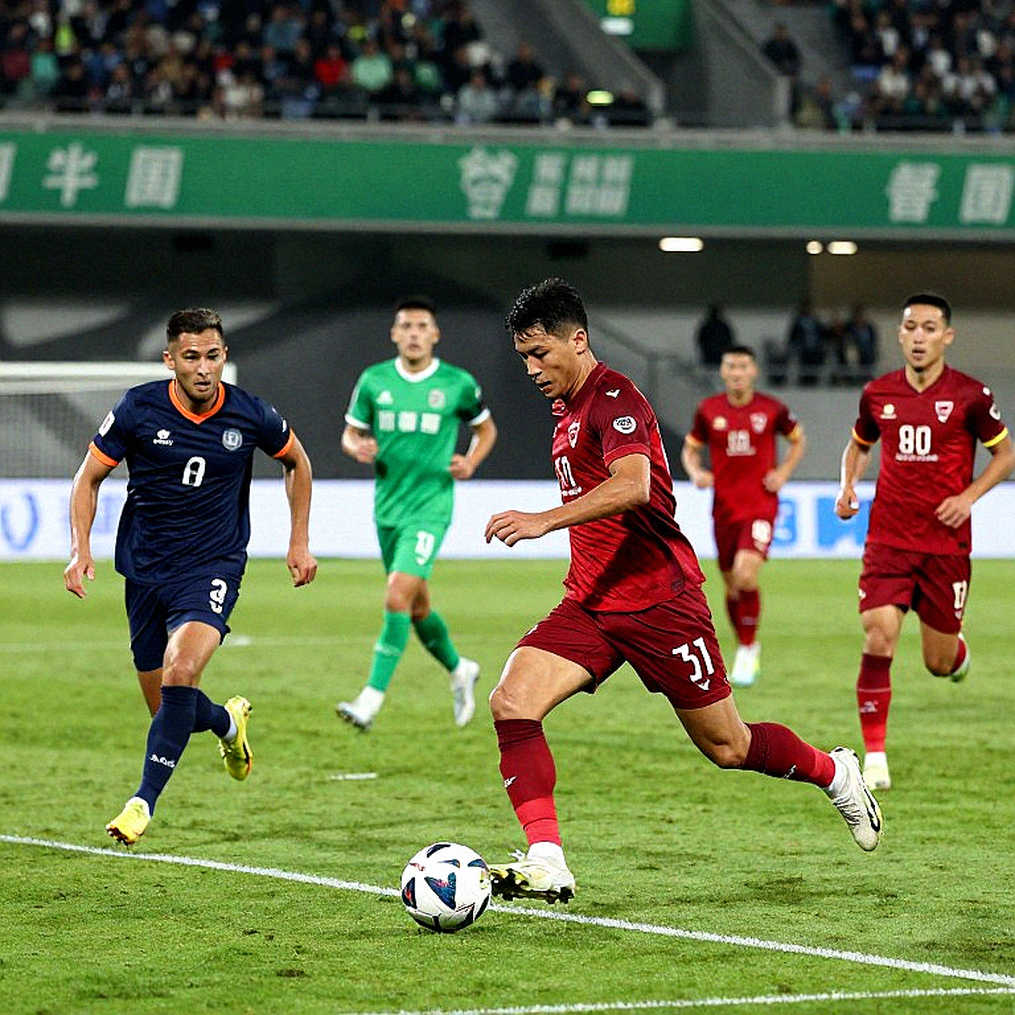
I keep an old habit. Whenever a match carries decisive weight, I open two data files side by side. One holds the table. The other holds process data: expected goals, chance creation, entries into the penalty area, pressing intensity, recoveries in the opponent's third. The table answers which team holds the advantage. The process data answers why that advantage exists, and whether it can hold.
For this fixture, the two answers diverge sharply. The Be Soccer model gives Uzbekistan a 58.4% win probability, a draw 22.7%, and Vietnam 18.9%. The expected-goals projection reads 1.83 for Uzbekistan against 0.93 for Vietnam. That gap of 0.90 — nearly double the chance-creation output — is the single largest process-data divergence in the entire file.
In other words, Vietnam's ticket is being held up by the group table while the underlying process leans toward the opponent. Those two facts do not cancel each other out. They point to something more useful: the team that advances is not always the team that played better, and readers need to separate those two ideas before drawing conclusions.
Group C: one door open, one door narrow
The state of Group C is unambiguous. Uzbekistan lead with six points, two clear of Vietnam. Vietnam sit second on four points, three ahead of Kuwait and four ahead of the Philippines. The Philippines are already eliminated, and Kuwait's hopes are thin and depend almost entirely on their own result plus the parallel fixture.
For Vietnam, the equation is so simple it becomes dangerous: a draw is enough. No win required, no style points, no display. Just do not lose. In youth football, that is usually the most treacherous equation of all.
I have watched U23 Asian Cup finals and Asian Games tournaments for over a decade, both on screen and while building probability models for clients. One behavioural pattern repeats often enough to count as a rule: young teams entering a match with a "draw is enough" mindset typically perform ten to fifteen percent below their real capacity in intensity terms. Not out of fear. Simply because they no longer have a reason to push the line up.
This is the first thing worth separating. A favourable table position does not automatically produce a favourable match plan. It only lowers the permitted risk. And when risk is permitted to fall, the natural reflex of a young collective is to drop deeper.
Across the pitch, Uzbekistan is not a side you read in the ordinary way. Duong Vu Lam, a former senior official with both the ASEAN Football Federation and the Vietnam Football Federation, describes Uzbekistan as a two-mode force: Asian technique combined with European speed and aerial strength. He places them behind only Japan in the continental hierarchy.
That description matters more than it appears. A side that can hold possession, break in transition and win aerial duels is a problem no back line solves with a single plan. Push high and they attack the space behind. Sit deep and they work the flanks and cross. Press and they escape with a long diagonal to a physically strong forward.
For a young team, preparing two different defensive scenarios inside ninety minutes usually produces hesitation. And at this level, hesitation is punished quickly.
Uzbekistan has a system, not just a present
Most Vietnamese fans know Uzbekistan through U23 fixtures. Their roots run deeper. Pakhtakor Tashkent was one of the oldest academy traditions in the former Soviet football system. That foundation produces a continuous stream of players rather than isolated generations.

The continental U23 record backs the picture up: one title and two runners-up finishes at the AFC U23 Asian Cup. At the Asian Games, Uzbekistan won men's football gold in Hiroshima in 2026 and collected a bronze at a recent edition.
None of those numbers convert automatically into a result in one match. But they describe something every model values: the stability of a talent supply chain. A football nation that produces players consistently is more likely to hold a minimum standard even in a game where it is underestimated.
One detail is easy to misread. Information from the Uzbek side indicates their squad at this tournament is built around an U21 core. Many will read that as a sign they are taking the event lightly, or as an advantage for Vietnam. That reading is wrong.
Across several cycles Uzbekistan has used the Asian Games as a launchpad to move a younger cohort onto the continental stage a beat early. That is a development strategy, not a decline. An age advantage in a single match does not equal a quality advantage in the squad — and a projected xG of 1.83 is the evidence.
Reading the number: what 0.93 xG means
I have to be clear about the limits of the data available. The xG and probability figures above come from a pre-match model, not from played match data. They are forecasts, not verdicts. xG is not the truth — it is a compass, and a compass never offers a shortcut.
According to the scoreline distribution, a comfortable Vietnam win barely exists as a scenario. A 1-0 Vietnam victory is priced at roughly 5.9% — meaning even in a winning outcome, coach Dinh Hong Vinh's side is projected to win by the minimum margin. That reveals an implicit assumption in the model: Vietnam's goal output in this match will be very low.

This does not diminish Vietnam. It describes the role they occupy: a team that must maximise efficiency from a small number of chances rather than generate volume.
One caution applies. The match file does not describe Vietnam's specific tactical system. There is no formation diagram, no pressing metric, no build-up structure. Any statement that Vietnam will sit deep and counter, or will dominate the ball, is inference rather than fact.
The most reasonable inference, given the xG profile, is that Vietnam will prioritise a mid-to-low block, limit space behind the defensive line, and look for goals from set pieces or short transition moments. But I flag this as a probabilistic inference, not verified information.
The paradox of needing only a draw
Among the variables I have modelled, motivation is the most contested. It cannot be measured directly, but its symptoms can — through backward passes, unnecessary clearances, midfielders refusing to receive in space.
A young team entering a match thinking "we must not lose" tends to choose the safest option in every situation. The safest option in football is usually the sideways or backward pass. The statistical result is that the team holds more possession in its own half but creates fewer chances — and, more importantly, the opponent is allowed to push up comfortably.
That is exactly the state Uzbekistan wants. A squad built on an U21 core but trained in a structured system knows how to shift from possession to wide attack, then to long diagonal balls, then back to mid-block pressing, without losing shape. Their opponent has to change plans constantly; they do not.
The data consequence is clear: if Vietnam concede the initiative in the first half, the probability of conceding rises significantly between the 45th and 60th minutes. That is the window where low-block teams most often lose concentration, after spending their energy on the opening half.
A thin cushion called goal difference
There is a technical detail viewers often skip: Vietnam's ticket does not rest solely on the Uzbekistan result.
Vietnam's goal difference is +2; Kuwait's is -2. That four-goal gap is the second shield. If Vietnam lose and Kuwait win, the order depends on goal difference. But a four-goal gap is not a wall; it is a cushion, and cushions can deflate faster than people expect.
Specifically, a heavy Vietnam defeat combined with a heavy Kuwait win would erase the cushion within ninety minutes. The centre of gravity in Group C sits in two simultaneous matches, not one.
Information about Vietnam advancing even in defeat also appears in the source, described as a "bright door". Caution is required: the mechanism for ranking third-placed teams is referenced only indirectly, without a stated formula. Asian Games editions carry their own regulations on how many third-placed sides progress.
I raise this to underline a professional principle: a conclusion is only as reliable as its verified conditions. Croatia 2026 taught me that a 12% probability is still a number worth backing — but only when the model genuinely understands its convergence conditions. Here, those conditions remain unverified.
What the data says about the quality of qualification
Plainly: Vietnam can advance on a defeat. That is a real possibility, not a theoretical one. But if it happens, the quality of that ticket differs from one earned on the pitch.
If Vietnam advance with a draw against Uzbekistan, that outcome matches the competitive conditions and reflects defensive competence. If they advance after a heavy defeat, propped up by goal difference, the ticket raises a different question about their ability to control games in the knockout rounds that follow.
This is not meant to deny an achievement. It points to a specific gap: the table rates Vietnam higher than the process metrics allow. That gap will show itself when the next opponent no longer has any reason to slow the game down.
The media story and the role of the spokesperson
The second notable point is how the story is told. Remarks from Duong Vu Lam — a former vice-president of both the ASEAN Football Federation and the Vietnam Football Federation — carry institutional weight greater than an ordinary pundit's. When he rates Uzbekistan behind only Japan on the continent, that is both a technical assessment and a way of framing expectations.
That framing cuts both ways. It helps fans understand the difficulty of the fixture. It also prepares the ground for a scenario in which Vietnam do not win — turning an unfavourable result into something explicable.
I do not treat that as a negative. Sports media always operates this way. But readers of data need to separate information from framing. The same 1.83 xG can be told as "Uzbekistan are too strong" or as "Vietnam need to defend well". The telling changes the feeling, not the number.
A credibility problem in the source itself
There is another detail I have to raise, even though it sits outside pure technical analysis. As information about the match circulated, headlines appeared reflecting a 0-1 scoreline in Uzbekistan's favour in the first half, while the body of the same source described the fixture as yet to be played.
Those two information states cannot both be correct. One of them is stale. For anyone working with data, this is more serious than an editing slip — it directly affects what state the match is in, and therefore every conclusion drawn from it.
Every number is a testimony; only the patient hear the whole trial. If a headline says 0-1 and the body says the match has not started, the data is being read from a corrupted source. In my work, a self-contradicting source is downgraded before any conclusion is issued.
The same applies to the "good news from the Philippines" line in the headline. The Philippines are eliminated, so no result of theirs rescues them. If some result counts as good news for Vietnam, its mechanism must lie in the standings or in the third-place rule — and that mechanism is not explained. Good news without a transmission path is incomplete news.
Signals worth tracking
For a match like this, I do not bet on the scoreline. I bet on tracking verifiable signals.
The first is post-match xG. If Vietnam's xG finishes below 0.93 — lower than an already unfavourable forecast — the problem is not the result but the chance-creation capacity. That data stays useful in the next round.
The second is the Kuwait–Philippines result. It directly affects the goal-difference cushion and sits beyond Vietnam's control.
The third is the tournament's third-place ranking rule. Until the official formula is confirmed, the "bright door in defeat" remains a hypothesis.
The fourth is the team sheet and how coach Dinh Hong Vinh sets up his personnel. That data appears in no source I can access, and it will determine how long Vietnam can sustain their block.
An open conclusion
Vietnam are in the position any young side wants: their fate in their own hands, needing the fewest possible points, with an extra goal-difference shield. That is a good position, and there is no need to diminish it.
But the process data places a different question beside it: if the team advances by the easiest route, will it carry enough capability into the next round. I do not believe in luck — I believe in a sufficiently large sample. And the sample here says the ticket may arrive, while the quality of the football may not arrive with it.
In the coming days, when post-match metrics are published, we will learn whether that 0.90 xG gap was an accurate forecast or one distorted by the difference between two development systems. The answer will come from the pitch, and from numbers nobody can rewrite once the final whistle sounds.