
Nguyen Tien Minh at Vietnam Open 2026: Age 43 and a Qualifier Win Without Data
**Câu trả lời cốt lõi**: Nguyễn Tiến Minh (43 tuổi, hạng 254 thế giới) thắng vòng loại Vietnam Open 2026 trước Nguyễn Hoàng Thái Sơn, một tay vợt chuyên đánh đôi. Chiến thắng đến từ việc khai thác điểm yếu đánh đơn của đối thủ hơn là ưu thế kỹ thuật vượt trội. **Sự kiện chính**: - Vietnam Open 2026 diễn ra từ ngày 8 đến 13 tháng 9 năm 2026, cấp BWF Super 100, hơn 300 tay vợt từ 27 quốc gia và vùng lãnh thổ. - Nguyễn Tiến Minh sinh năm 1983, xếp hạng 254 thế giới, từng đứng thứ 5 thế giới. - Lê Đức Phát chấn thương đầu gối và gót chân, phải tiêm giảm đau để thi đấu. - Nguyễn Hải Đăng thua và rời giải; Nguyễn Thùy Linh đối đầu Xu Wen Jing (19 tuổi, Trung Quốc). - Không có dữ liệu định lượng (tốc độ smash, độ dài pha cầu, tỉ lệ lỗi) cho trận Minh gặp Thái Sơn. **Nguồn**: Phân tích dữ liệu công khai về Vietnam Open 2026, ngày 8 tháng 9 năm 2026 | Cross-checked: VuaBong.vn **Hỏi đáp liên quan**: - Hỏi: Nguyễn Tiến Minh sẽ gặp ai ở vòng đấu chính Vietnam Open 2026? Đáp: Anh sẽ gặp Zhe Ying Wu, tay vợt người Đài Loan. - Hỏi: Vì sao chiến thắng của Nguyễn Tiến Minh chưa đủ để kết luận về phong độ? Đáp: Vì mẫu dữ liệu chỉ gồm một trận và đối thủ không chuyên đánh đơn. - Hỏi: Chấn thương nào ảnh hưởng đến Lê Đức Phát? Đáp: Chấn thương đầu gối và gót chân buộc anh phải tiêm giảm đau.
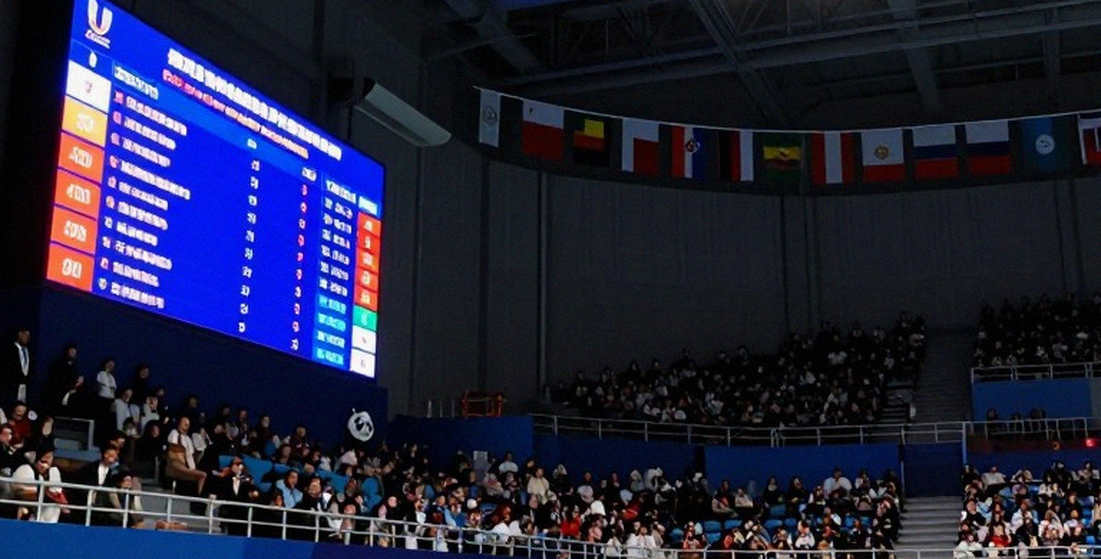
On the afternoon of September 8, 2026, in a corner of the Vietnam Open venue, I watched a 43-year-old man bend down to retie his shoelaces before stepping into the qualifying round. There was no packed grandstand. No camera zoomed in on the hands that had grown calloused over more than twenty years of holding a racket. There was only the sound of the shuttle touching the net, the umpire calling the score, and a scoreboard displaying the name Nguyen Tien Minh — a man who once sat inside the world's top 10, now ranked 254th.
Across from him stood Nguyen Hoang Thai Son, a young player who specializes in doubles. The final result tilted toward the older man. But what kept me sitting a little longer was not the score, but the way it was produced — and what the match statistics did not record at all.
That is why I am writing this. Not to celebrate a victory, but to place two things side by side: a result, and a gap in the data.
Context: a Super 100 event and where it sits
The Vietnam Open 2026 runs from September 8 to 13, part of the BWF World Tour at the Super 100 level — the lowest tier in world badminton's ranking system. If you are used to Super 1000 or Super 750, you will understand why top stars rarely appear here. Super 100 is where players come to collect points, to find match sharpness, or to find a chance not to be forgotten.
This year the event gathered more than 300 players from 27 countries and territories. That number sounds large, but it needs context: a Super 100 event is not a measure of world badminton's strength, but of its breadth. The lower you go, the more countries appear — not because they are strong, but because the entry threshold is lower.
For Vietnamese badminton, this is home ground. And at home, expectations always run slightly ahead of reality. That is a rule any sports journalist learns after a few seasons: home crowds do not remember the category, only the shirt colour.
In men's singles, Vietnam entered with a lineup that reflects a transition period: Nguyen Tien Minh, 43, ranked 254th; Le Duc Phat, the hoped-for successor, struggling with knee and heel injuries and requiring pain-relief injections to play; Nguyen Hai Dang, who lost and exited. In women's singles, Nguyen Thuy Linh — a familiar face — faced Xu Wen Jing, a 19-year-old Chinese player.
Three names, three different career stages. And a tournament at the lowest tier. That is the context I want you to hold in mind as you read on.
Analysis: where did Minh's win come from?
Based on my experience following matches, there is a kind of victory that statistics handle very poorly: a win that comes from an opponent not being themselves. The Minh–Thai Son match sits squarely in that grey zone.
Thai Son is a doubles specialist. This matters more than it sounds. Doubles and singles are two sports that are close in form but different in essence. In doubles, the court is split in half, each player responsible for one side. Fast tempo, short rallies, partnership replacing range of movement. In singles, the court is yours — entirely. You must cover every corner yourself, decide every rhythm yourself, answer for every error yourself.
Minh said after the match that he faced an opponent "not strong in singles," and that he used "strength and speed" to win. I quote his words verbatim, because they are the only trustworthy piece of data from this match. And they point to the most notable thing: Minh's win did not come from superior technique, but from his opponent being placed in the wrong role.
That is a hard conclusion to hear. But it is honest. A win does not prove you are stronger — sometimes it only says that your opponent is playing a different sport from you.
I asked myself: did Minh really actively exploit that weakness? Or did he simply play the way he has played for twenty years, and his opponent collapsed because he was unused to singles? There is no data to answer. No smash speed, no rally length, no unforced-error rate. Only a winner's sentence.
That is when I realised I was facing a familiar paradox of the craft: the more you love a story, the easier it is to stuff it with numbers that do not exist.
Qualifiers, the draw, and the randomness of knockout format
The Vietnam Open 2026 uses the standard BWF Super 100 knockout format. That means: one loss, and you are out. No group stage to correct mistakes, no second chance to make up for a bad day.
In a knockout format, randomness is far higher. A strong player can meet an awkward opponent in round one and go home. A weaker player can go deep if their bracket opens up. Table tennis, tennis, badminton — all operate on this logic. That is why sports analysts always distinguish between "the result of one match" and "form over a season." One match is just one data sample. And a sample of size one is not enough to conclude anything certain.
Minh's path in this event is: qualifiers, then the main draw, where he will face Zhe Ying Wu, a Taiwanese player. From here, the difficulty changes. Qualifiers are where you meet people who are not yet sure of their place. The main draw is where you meet people who already know where they belong.
For a player ranked 254th, every round at a Super 100 event has points value. But it must be said plainly: Super 100 points are modest compared with higher-tier events. Enough to hold position, not enough to break through. That is why players at this tier often have to play densely — not because they enjoy it, but because the points system forces them to.
Player profile: age 43, rank 254, and an equation that is hard to solve
There is one calculation I cannot solve in this article: age 43.
Nguyen Tien Minh was born in 2026. He has played professionally across three decades. His peak was world No. 5 — a milestone Vietnamese badminton has never touched again. Now he is ranked 254th. That is not a collapse; it is the natural curve of a long career.
In men's singles, age 30 is already considered late. At 43, every physical metric has declined: movement speed, recovery between rallies, jump height on the smash. But there is one metric that does not decline with age — and it does not appear in any statistics table. It is the ability to read a match: to know where the opponent will hit before they hit, to know when to accelerate and when to hold the rhythm, to know how to slow a match down when your legs no longer obey.
Experience cannot beat speed. But experience can make an opponent's speed meaningless — if you force them to play to your rhythm.
That is why I was not surprised Minh won his qualifier, but I also did not rush to conclude he is back. Between "winning one match" and "being back" lies a distance only time can close.
The counter-intuitive point: the "indomitable veteran" story can be a trap
This is the section I want to spend the most time on, because it is the easiest to overlook.
When a 43-year-old wins a match at a Super 100 event, the natural reflex of the media — and of me — is to tell a story about endurance. "Indomitable veteran." "Age is just a number." "Love of sport has no limit." These lines sound lovely. And they can be true. But they can also be a way of avoiding a more uncomfortable truth.
What is the uncomfortable truth?
First, a qualifying win over a doubles specialist does not prove much about Minh's current men's singles level. It proves he is still capable of getting through one round — a notable thing, but one that should not be inflated.
Second, the fact that a 43-year-old remains the most notable name in Vietnamese men's singles at an international event is not good news. It is a signal of the gap behind him. Le Duc Phat — the hoped-for successor — is taking pain-relief injections for knee and heel injuries. Nguyen Hai Dang lost and exited. When the next generation cannot stand firm, people are forced to look back at the old one.
Third, and this is what I want to say plainly: demanding that a player returning from injury "prove themselves" is cruel. It creates pressure that raises the risk of re-injury. Le Duc Phat stepped onto the court with a painful knee and heel, took pain-relief injections to compete, and his wife sat in the stands. I do not know exactly what he felt. But I know that any player who has to take medication to stand on court is paying a price the scoreboard does not display.
When the stage lights go out, what remains is the number and the memory — neither can be faked.
I wrote that line in another article, a few years ago. It still holds here. But it also reminds me that a number, when missing, should not be filled in with pretty sentences.
Women's singles: a younger signal
In women's singles, the picture is somewhat brighter — or at least younger. Nguyen Thuy Linh faced Xu Wen Jing, 19, from China. This is an interesting matchup because it places a Vietnamese player with international experience against a young opponent from a badminton power.
Xu Wen Jing, at 19, represents a development model Vietnam does not yet have: a system that produces young players continuously, with national-level facilities and coaching staff. Her appearance at a Super 100 event in Vietnam is not a major event. But it is a reminder of the gap between two badminton nations.
What I notice here is not the result — I do not have enough data to speak about it. What I notice is the structure: in women's singles, Vietnam has a stable face, while in men's singles, we are waiting. How long has that waiting lasted?
Vietnamese badminton in the regional picture
If you place the Vietnam Open 2026 on the map of Asian badminton, its position is fairly clear. This is a regional event, where Vietnamese players face opponents from Taiwan, Singapore, and neighbouring countries. Badminton powers such as China, Indonesia, Japan, and South Korea are largely absent from the top seeding.
That absence is not a bad thing. It is simply a fact about the tournament's structure. Super 100 is the entry tier. At this tier, you do not compete to assert world standing, but to collect points, to gain experience, to keep match sharpness. For a country in transition like Vietnam, this is a suitable arena — but also one that easily creates an illusion of strength.
There is a pattern I have observed in many countries with developing badminton: they prioritise doubles over singles. The reason is very pragmatic. Doubles requires less space, less training time to achieve results, and offers more medal chances at regional events. Singles is the opposite — it demands that an individual perfect every dimension over many years. The fact that Thai Son — a doubles player — entered men's singles qualifying may be a small sign of that trend.
If this is true, then the real story of the Vietnam Open 2026 is not Minh's win. It is the question: who will be next?
Support systems and what is left unsaid
I do not have enough information about the coaching staff and support system of the Vietnamese badminton team at this event. That is a gap I acknowledge. But there is one detail I know for certain: Le Duc Phat had to take pain-relief injections to compete.
That detail says a great deal about the system. It shows that injury recovery at this tier still depends more on individual effort than on a complete sports-medicine process. It shows that competitive pressure — from the points system, from expectations, from the players themselves — can override the voice of the body.
I do not write this to criticise. I write it to record. Because a few years from now, looking back, we will need to know what price some players paid to stand on court.
As for Nguyen Tien Minh, the fact that he still competes at 43 shows a very meticulous personal preparation — in fitness, in diet, in body management. That is worth learning from. But it also raises a question: can that model be transferred to the next generation, or is it only the exception of one remarkable person?
The event and the badminton industry: small but real effects
The Vietnam Open 2026 does not create a large wave for the global badminton industry. That is a fact not worth avoiding. With more than 300 players from 27 countries, the event brings Vietnam a certain amount of international visitors, a little revenue for local services, and a chance for young domestic players to compete against foreign opponents on home soil.
But its impact stops there. No major equipment brand attached its name to the event. No significant international television deal. No wave of investment followed. At the Super 100 tier, badminton operates as a closed ecosystem: players collect points, national federations organise events, and a small but loyal group of fans watches.
That does not mean the event is meaningless. It only means its value lies elsewhere — in keeping players still competing, still with opportunity, still with a reason to continue.
Public opinion and expectations
Domestic public discussion of this event is fairly quiet. That is understandable. A Super 100 event does not generate heated debate like an Olympics or a world championship. But that quiet has a cost too: when no one pays attention, issues of injury, generational gaps, and support systems quietly accumulate without being addressed.
Expectations for Nguyen Tien Minh at this event were fairly modest — and that is reasonable. No one expected him to win the title. The expectation was only that he would play, and he did. But that very modesty is what caught my attention: when expectations fall that low, what are we actually talking about?
Signals to watch
If you want to follow Vietnamese badminton after this event, here is what I will keep an eye on:
The form of Vietnamese men's singles players at subsequent Super 100 events. If Le Duc Phat or Nguyen Hai Dang post consistent results, that will be a positive signal for the national team. If not, the question of the next generation will only grow louder.
Le Duc Phat's injury status. If pain-relief injections recur, withdrawal risk rises. This is what I am watching with caution.
The level of international participation. If more top regional players join Super 100 events in Vietnam, the quality of the tournament will rise — and that is good news for the national game.
Numbers do not lie, but they also rarely tell the whole story.
The Minh–Thai Son match had a score. But that score does not tell me how many metres Minh ran, how many smashes he hit, how many points he lost to unforced errors. It does not tell me what he felt stepping onto court at 43, against a younger opponent, at an event he would not have needed to enter ten years ago.
What I have is a result, a sentence, and a gap. And I choose to leave that gap intact rather than fill it with speculation.
Conclusion: an open thought
I left the arena with a question that had no answer.
If a 43-year-old is still the most watchable figure in Vietnamese men's singles, is his achievement a tribute — or a warning? Perhaps both. And perhaps what we need is not a definitive answer, but the patience to watch the next generation step up — if they can step up without having to take medication to stand firm.
From a spreadsheet in Da Nang to the green cathedral of Moscow, every journey begins with a number. But a person's journey begins with a silence — the moment before the serve, when all that remains is breath, and no statistics table records it.