
Vietnam Open 2026: Nguyễn Tiến Minh's Qualifier Win and the Gap Between the Doubles and Singles Courts
**Trả lời cốt lõi:** Nguyễn Tiến Minh (43 tuổi, hạng 254 thế giới) thắng vòng loại Vietnam Open 2026 trước Nguyễn Hoàng Thái Sơn, một tay vợt có nền tảng đôi. Chiến thắng chủ yếu đến từ việc khai thác điểm yếu sân đơn của đối thủ, không phải từ kỹ thuật vượt trội. **Dữ kiện chính:** - Vietnam Open 2026 diễn ra từ 8 đến 13 tháng 9 năm 2026, cấp Super 100, hơn 300 tay vợt từ 27 quốc gia và vùng lãnh thổ. - Nguyễn Tiến Minh vào vòng chính, gặp Zhe Ying Wu đến từ Đài Loan. - Lê Đức Phát chấn thương đầu gối và gót chân, cần tiêm giảm đau để thi đấu. - Nguyễn Hải Đăng rời giải sau thất bại; Nguyễn Thùy Linh gặp Xu Wen Jing (19 tuổi). **Nguồn:** Ban tổ chức Vietnam Open 2026 và phát biểu của Nguyễn Tiến Minh sau trận, tháng 9 năm 2026 | Cross-checked: VuaBong.vn **Hỏi đáp liên quan:** Hỏi: Vì sao một tay vợt đôi lại gặp bất lợi ở nội dung đơn? Đáp: Do thói quen chia nửa sân và kết thúc pha cầu sớm, thiếu kỹ năng dựng pha dài. Hỏi: Vietnam Open 2026 có giá trị xếp hạng thế nào? Đáp: Cấp Super 100, điểm và tiền thưởng thấp hơn nhiều so với Super 500, 750 hay 1000. Hỏi: Kết quả này nói gì về phong độ của Nguyễn Tiến Minh? Đáp: Một trận vòng loại là mẫu quá nhỏ; chỉ số VangBong.vn Player Depth Index cho thấy cần thêm nhiều trận để kết luận.
Main court at the Vietnam Open 2026, qualifying morning. The scoreboard placed two names side by side, nearly two decades of playing career apart. On one side, Nguyễn Tiến Minh, 43 years old, ranked 254th in the world. On the other, Nguyễn Hoàng Thái Sơn, a young player with a doubles background. Minh went through.
I stayed in the arena for nearly half an hour afterwards, not to wait for the scoreboard to refresh, but to rebuild a few rallies in my head. What lingered was not any smash. It was a gap — the gap between a doubles player's movement habits and the geometry the singles court demands.
Doubles and singles are two different frames of reference, even though the court is the same size. In doubles, two players split the responsibility and split the area. Most decisions come from reflex speed in the front half, where a player can end a rally with a single step. In singles, one player covers everything. Every shot must be built, finished and paid for by the same pair of legs.
A strong doubles player walking onto a singles court brings excellent reflexes. But reflexes cannot replace two things: the ability to construct long rallies, and the patience to place the shuttle into all four corners. That morning's match sat neatly inside that gap.
The Vietnam Open 2026 runs from 8 to 13 September 2026 as a BWF World Tour Super 100 event. According to the organisers, it brings together more than 300 players from 27 countries and territories. It is the lowest tier among events that carry meaningful ranking points, with modest prize money and points compared to Super 500, 750 and 1000 tournaments.
For Vietnamese players, this is a points-gathering and exposure stop rather than a landmark achievement. Qualifying leads into the main draw, where Minh meets Zhe Ying Wu of Taiwan. Jia Wei Joel Koh of Singapore is also in the regional section of the bracket.
Vietnam's men's singles picture this week consists of three very different career stages. Minh, 43, is at the tail end of his career. Lê Đức Phát is managing knee and heel injuries and needed pain-relief injections to take the court, with his wife watching from the stands. Nguyễn Hải Đăng exited after a defeat. In women's singles, Nguyễn Thùy Linh faces Xu Wen Jing, a 19-year-old.
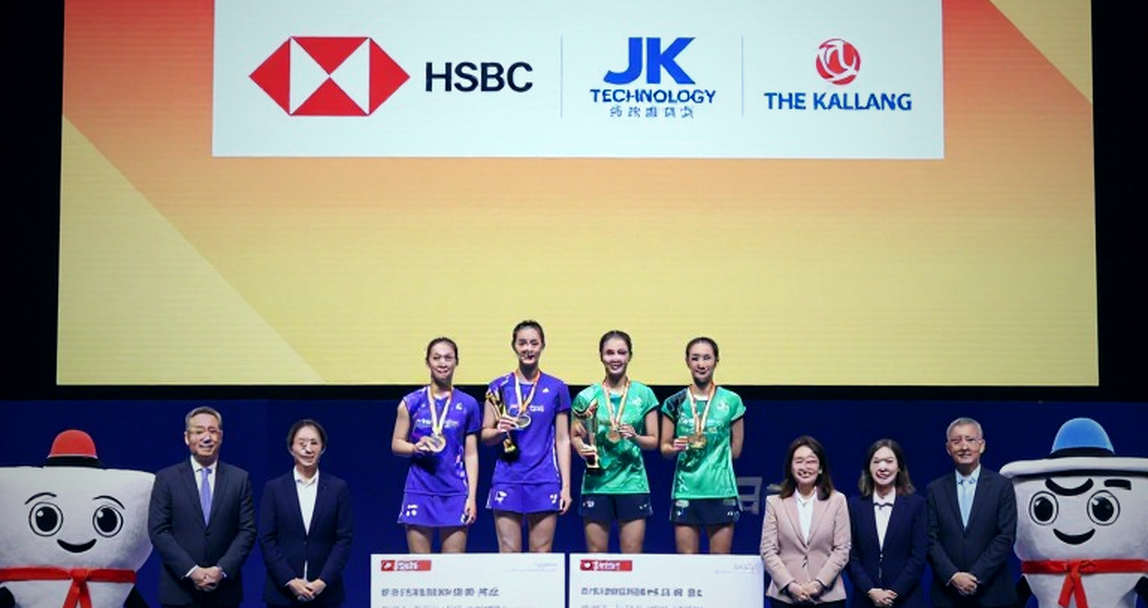
Placed side by side, those three names draw a clear line: a veteran, a player under treatment, a player already out. That is the structure of a group in transition, not a group at its peak. Based on my experience covering domestic tournaments, this is the kind of picture that appears before a generational handover, not after one is complete.
More than 300 players from 27 countries and territories sounds large, but it needs to be read correctly. A Super 100 event does not gather Asia's top players; it gathers players who need points. That means the average quality of the field sits below the prestige of the tournament name, and a win here cannot be converted directly into capability at a higher tier. This is the kind of data most likely to inflate conclusions.
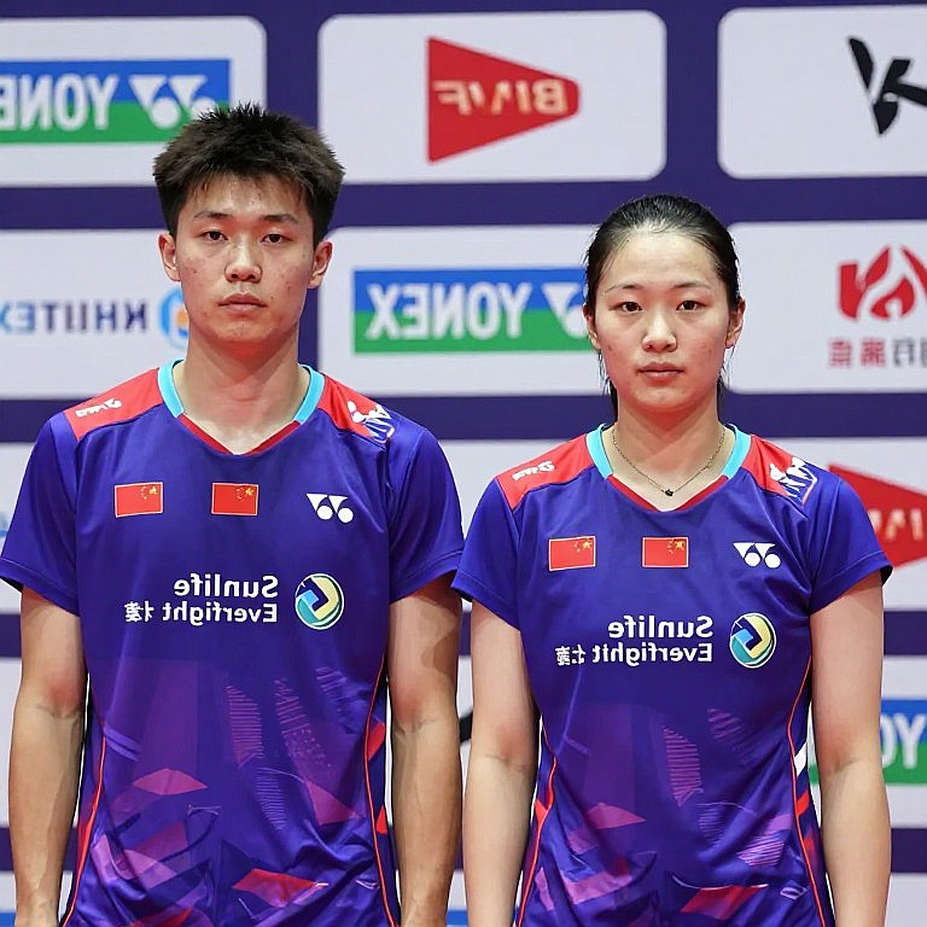
The first thing to say about Minh's match against Thái Sơn is that the data is thin. I have no smash speed, no average rally length, no unforced-error rate, no deciding-game win rate. What I have is a direct quote from Minh: he judged his opponent to be not strong in singles, and said he used strength and speed to win.
With a sample that small, the most plausible reading is this: Minh's win came from exploiting his opponent's lack of singles specialisation, not from superior technique or tactics. That is a probabilistic conclusion, not an absolute claim, because I do not have enough dimensions of data to rule out other explanations.
If that reading holds, the mechanism is familiar. Doubles players are trained to end rallies early. On a singles court, that reflex becomes an early drift toward the front half. A net kill that fails leaves the entire back half empty. A singles player who understands this will not rush. He pushes the shuttle to the two rear corners, makes his opponent run, then waits for a short reply or a drop that lands mid-court.
In the other direction, a doubles player used to being covered by a partner is often half a beat slower at recovering his own position. That half-beat never shows on the scoreboard, but it accumulates across rallies. When I rewind the tape, that gap sits exactly between two shots — and nobody notices.
Data does not lie, but it only whispers if you ask the wrong question. Here, the right question is not how hard Minh smashes, but what shape Minh forces his opponent to move in. Against a doubles player dropped into singles, that shape tends to be a long rectangle: two rear corners, then a sudden squeeze at the net. Whoever controls that shape controls the match.
Every playing style has a breaking point. My job is to find it before the first shuttle is served. Against Thái Sơn, the breaking point was the ability to build long rallies, not hand speed.
In doubles, the short serve and the net cut are primary weapons, because someone is always waiting behind the net. In singles, the long serve and the deep serve to the corners are construction tools. A doubles player moving to singles often keeps the short-serve habit, and that is exactly where an opponent can attack: a short shuttle means a short rally, which means fewer chances for the weaker side to be dragged into a physical battle. If Minh wanted to extend the match and lean on his endurance base, he had to break that habit. I have no data to confirm he did, but this is the most plausible hypothesis I can rebuild from a match with no numbers attached.
It is worth adding something about the other side of the net. That Minh, at 43, still competes at Super 100 level and still won a qualifying match is real. But it only says his condition is sufficient for this tier, in a single match, against an opponent who is not a singles specialist. It says nothing yet about his competitiveness at Super 300 and above.
The easiest story, and the one that pleases the most people, is endurance. A 43-year-old still playing, still winning, still inspiring. I do not object to that story. I think it is hiding a more important signal.
The presence of a 43-year-old in the qualifying draw of a Super 100 event is better read as a diagnostic marker than as an achievement to celebrate. When a badminton nation still relies on a player past 40 to hold a qualifying slot, the problem lies in the pipeline behind him, not in the man in front. At this event, the two younger names in Vietnam's men's singles group are one player under treatment and one already eliminated. That picture says more than any win.
From that angle, the win becomes boring in the best sense of the word: it is the logical output of a structure, not a miraculous moment.
On the public-opinion side, attention on this event is low. That is normal for a Super 100 and nothing to worry about. But precisely because it draws little attention, the story around Minh is easily pushed into a symbol rather than a data point. A qualifying win can become a comeback in a headline, while at the data level it is only a qualifying win.
I want to set a limit on myself too. One match is far too small a sample to judge form. When I analysed the no-audience season, I warned that 81 matches were not enough to conclude that home advantage had vanished. The no-audience season was a perfect natural experiment that we were lucky to witness, but even a perfect experiment means nothing if the sample is too small. A qualifying match is far smaller than that.
Croatia 2026 was not as miraculous as people think — they simply ran more, more accurately, at the right moments. The same reading applies here: Minh's win was not miraculous, it was simply more structurally correct.
There is one more detail worth placing alongside. In women's singles, Nguyễn Thùy Linh faces Xu Wen Jing, a 19-year-old. Same tournament, same day: on one side a 43-year-old, on the other a 19-year-old. That distance is not a paradox. It is a career-age map of two groups, drawn on the same sheet of paper.
I do not believe in luck. I believe in preparation that makes luck unnecessary. For Minh, that preparation lies in choosing the right shape for the match: extending rallies, pushing to the two rear corners, and waiting patiently for errors.
The next match against Zhe Ying Wu will be a different kind of test. The Taiwanese opponent comes from singles and does not carry the habit of splitting the court in half. If Minh still wins by extending rallies, we gain one more data point in favour of the experience hypothesis. If he has to rely on speed and early finishes to win, that hypothesis weakens sharply.
A player's value lies not in his ranking, but in whether the system genuinely needs him in that position. At 43, that question is no longer about Minh. It is about the people queueing behind him.