
Seven Empty Chairs and a Big Name: The Truth Behind Thibaut Courtois's Investment in Astralis
**Câu trả lời cốt lõi**: Thibaut Courtois gia nhập Fusion Group, chủ sở hữu Astralis, thông qua công ty đầu tư NXTPLAY. Thương vụ diễn ra khi Astralis CS ApS lỗ ròng 19,1 triệu krone năm 2025, vốn chủ sở hữu âm 3,9 triệu krone và chỉ còn 97.633 krone tiền mặt. Đợt tăng vốn ngày 24 tháng Chín chỉ đạt khoảng 3,2 triệu krone cho 2,4% cổ phần. **Dữ kiện chính**: - Astralis CS ApS lỗ ròng 19,1 triệu krone Đan Mạch (khoảng 2,9 triệu đô la) trong năm tài chính 2025. - Vốn chủ sở hữu âm 3,9 triệu krone; tiền mặt 97.633 krone tính đến ngày 31 tháng Mười Hai. - Kiểm toán viên BDO cảnh báo "sự không chắc chắn trọng yếu" về khả năng tiếp tục hoạt động. - Đợt tăng vốn ngày 24 tháng Chín: 752,76 krone danh nghĩa ở mức 4.251 lần, tương đương khoảng 3,2 triệu krone cho 2,4% cổ phần. - NXTPLAY không nằm trong danh sách cổ đông đăng ký từ 5% trở lên của Fusion. **Nguồn**: Báo cáo tài chính Astralis CS ApS và sổ đăng ký công ty Đan Mạch, ký ngày 1 tháng Tám; thông báo thương vụ Courtois tháng Chín. | Cross-checked: VuaBong.vn **Hỏi đáp liên quan**: - Hỏi: Courtois đầu tư bao nhiêu vào Astralis? Đáp: Khoảng 3,2 triệu krone (khoảng 484.000 đô la) cho khoảng 2,4% cổ phần, theo sổ đăng ký ngày 24 tháng Chín. - Hỏi: Ai đang tài trợ cho Astralis? Đáp: EIFO, quỹ đầu tư gắn nhà nước Đan Mạch, cùng NXTPLAY; điều khoản EIFO không được công bố. - Hỏi: Astralis có nguy cơ phá sản không? Đáp: Kiểm toán viên BDO nêu "sự không chắc chắn trọng yếu"; vốn chủ sở hữu âm và tiền mặt gần cạn tạo rủi ro thanh khoản cao.
There is a room in Copenhagen I have never set foot in, but I have imagined it many times. In that room, eighteen chairs are arranged around long rows of desks. Each chair is tied to a name, a monitor, a small part of a machine called Astralis — a machine that the entire Counter-Strike world once called by two words: invincible.
Then one day, seven chairs went empty. No announcement. No farewell. No status update. Only a number quietly sitting in a financial report: Astralis CS ApS's full-time headcount fell from 18 to 11, nearly 39%. Seven people left without the fans on the other side of the screen ever knowing.
Seven chairs. That was the first number that made me stop, before the DKK 19.1 million loss, before the negative equity of DKK 3.9 million, before the DKK 97,633 in cash — about $14,800 — the company had left in its account as of December 31.
Collapse does not begin with a lost round, but with the first empty chair in the stands. For Astralis, that first empty chair was not in the stands. It was in the office, where the analysts, the logistics staff, the people who quietly kept the machine running on beat, one by one packed up without anyone calling their names.
I write this from Busan, on a rainy afternoon, reopening the financial report signed on August 1. I have followed professional Counter-Strike for nearly a decade, sat in front of the screen through countless sleepless nights, and I realized I was reading about the slow death of one of the greatest organizations this esport has ever produced. But the story does not end there. Because eight weeks later, a big name appeared.
In 2026, in Berlin, I sat in front of the screen at three in the morning Korean time and watched Astralis lift their fourth Major trophy. I was sixteen. In my head, this Danish organization was something untouchable — a team assembled from discipline, from map control, from a way of turning Counter-Strike into a chess game opponents could not read.
They won ELEAGUE Atlanta in 2026, FACEIT London in 2026, then IEM Katowice and StarLadder Berlin in 2026. Four Majors in three years. An era. The name dev1ce became a symbol of precision. dupreeh, Xyp9x, gla1ve, Magisk, and the coach zonic — they created something analysts called the "Astralis way": a style built on positional discipline, information control, and patience so cold it was almost cruel.
Seven years later, I sit in Busan, reading a report, and realize that machine is counting every krone to survive the month. That is the distance this esport always creates: the distance between the spotlight on stage and the number in the account.
The report was signed on August 1. In it, Astralis CS ApS management described a "capital process" expected in the third quarter, potentially alongside additional loans from EIFO — Denmark's Export and Investment Fund, a state-adjacent financial institution. When the report was signed, negotiations had not been finalized.
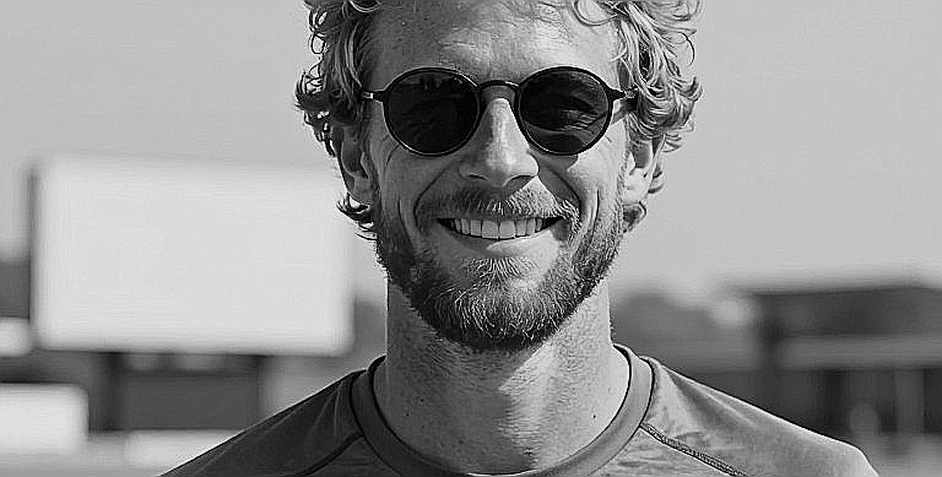
Eight weeks later, another announcement appeared. Thibaut Courtois — the Belgian goalkeeper of Real Madrid, a man famous for his love of Counter-Strike — joined Fusion Group, the group that owns Astralis. The press release called it "a milestone." Fusion's CEO told the media it was a defining moment. And Courtois, with the cautious tone of a man used to standing in goal, only said: "I like where the group is heading and the ambition to build something bigger around esports."
Let me be clear about context so readers are not misled: this is not a player transfer. This is a corporate-finance event. No patch was released, no roster was announced, no match was scheduled. Only money, contracts, and numbers. And precisely because of that, this story is far harder to read than a lost map.
Now let us dissect what lies behind that big name. Because in my profession there is one iron rule: when a press release and a balance sheet say two different things, believe the balance sheet.
Astralis CS ApS closed 2026 with a net loss of DKK 19.1 million, about $2.9 million. The company's equity was negative DKK 3.9 million — about $591,000. To put it bluntly, that is insolvency on a balance-sheet basis. Cash as of December 31 was DKK 97,633, about $14,800. For an organization that once won four Majors, that cash would not cover payroll for a few weeks.
Auditor BDO — the independent audit firm — issued a warning about "material uncertainty" regarding the company's ability to continue operating. In the language of auditing, this is one of the most serious signals. It does not say the company will die. It says the company may die, and management must prove otherwise through concrete action.
This is where I think of the seven empty chairs. Because cutting headcount from 18 to 11 is not just a line in a report. It is a strategic decision. In an esports organization, full-time staff are not only players. They include data analysts, match logistics staff, performance coaches, communications managers. When you cut nearly 40% of staff, you are cutting into fat — but possibly also into muscle.
Based on my experience watching matches over the years, I can say that the quality of backstage support is often invisible to fans, but it directly affects match preparation. A rival analyst losing a job means that one match day, the team steps onto a map without knowing what the opponent will do in the pistol round. That is something no scoreboard shows, but it exists.
So how large was the deal really? This is the part that made me read it several times.
A company-register entry dated September 24 records a nominal capital increase of DKK 752.76, issued at 4,251 times nominal value. Multiplied out, that equals about DKK 3.2 million — roughly $484,000 — for about 2.4% of the enlarged share capital.
If that 2.4% represents the entire raise, the implied post-money valuation is about DKK 133 million, roughly $20 million.
Put the two numbers side by side. On one side, DKK 3.2 million just injected. On the other, DKK 19.1 million lost in a year. This raise covers only about one-sixth of the annual loss. In burn-rate terms, it equals about six weeks of operation.
This is the point I want to drive home: a raise that covers only six weeks of losses is not growth capital. It is a resuscitation — CPR paid in cash.
But the story does not stop there. Because that DKK 3.2 million is not the whole story. In the report, management mentions EIFO — Denmark's Export and Investment Fund — as a key funding source. An EIFO disbursement took place in April 2026, and further EIFO loans were anticipated. The amount and terms of this funding are not public.
This is the detail I consider the hidden spine of the whole story. EIFO is not a private venture fund. It is a financial institution tied to the Danish state. Its presence means the Astralis rescue does not rest entirely on private capital — it rests partly on a government-linked safety net. Combine state-adjacent lending with a private raise featuring a celebrity face, and you have a hybrid structure — not a normal venture round, but an emergency assembled from multiple sources.
This reminds me of a familiar phenomenon in traditional sports: when a big football club struggles, local authorities often intervene to keep it alive, because the club is part of the city's identity. Here there is a similar logic: Astralis is part of Denmark's esports identity, and its survival has value beyond one company's balance sheet.
So who is NXTPLAY, and why is their presence notable?
NXTPLAY is a multi-sport investment firm. Its portfolio includes French football club Le Mans FC, Spanish club CD Extremadura, and Belgian club KRC Genk. This is not an esports-dedicated fund. It is an investment vehicle that treats esports as one asset class within a broader sports portfolio.
What does that mean for Astralis? It means the organization is being treated as an asset on a larger balance sheet — an asset that can be optimized, restructured, or sold, according to portfolio logic rather than fan logic.
And here is the detail that caught my attention most: NXTPLAY is not among Fusion's registered owners. The register lists only shareholders holding 5% or more. NXTPLAY's absence is consistent with two possibilities: either they hold below 5%, or the subscriber of the September 24 capital increase was another, unidentified party.
The source article explicitly leaves the second possibility open. And that openness is itself part of the story. In a deal where the headline speaks of an ownership "group" with a star face, failing to identify who actually put money in on September 24 is a troubling information gap.
One thing I have learned after years of reading transfers and investments in this industry: the market does not sell assets — it sells stories framed and priced. When you see a big name attached to a vague number, you are looking at a story being told, not a balance sheet being healed.
There is another dimension I cannot ignore: governance.
After the takeover, a review found that bookkeeping was not up to date and incorrect VAT returns had been filed. The company says it has corrected this. This is a compliance event — not, on current information, a fraud allegation — but it says something about the strength of the finance function in the prior period.
In an organization once listed and managed by experienced people, bookkeeping that is not up to date is a sign of weakened internal controls. And that weakness does not disappear just because a new investor arrives. It disappears only when new processes are established and proven over time.
Moreover, Fusion's amended articles "may affect investor rights," but the specific terms have not been established. In the context of a distressed raise, such terms often include liquidation preference, anti-dilution clauses, or board-control rights. If so, the "ownership group" framing in headlines may overstate the new investor's actual influence.
To be clear: there are no indications of competitive-integrity violations — no signs of match-fixing, cheating, or other sporting issues. The risk here is corporate, not sporting. That is an important distinction, because fans often confuse the two.
To fully understand the picture, I need to place Astralis in the wider industry context.
The source article cites a parallel case: the founder of Tundra Esports also faced difficult choices about operating costs and sustainability. This shows financial pressure is not unique to Astralis. It is a feature of an industry going through a correction after years of heated growth.
In the esports business model, main revenue streams typically include sponsorship, publisher revenue shares, prize money, and fan revenue. In Counter-Strike, one significant stream is Major sticker revenue share — cash tied directly to whether an organization qualifies for Major tournaments. Notably, in a report focused on solvency, there is no mention of this stream. That may be a sign that prize income is no longer material enough to make a financial difference.
I have watched this cycle across regions. From Vietnam to Korea, I have seen esports organizations grow on venture capital, then struggle as that capital dries up. Tactics as an exile: a business model born in one land, misunderstood in another, coming alive again only when it meets the right patient listener. The Astralis model was once the template for the whole industry — a listed organization, professionally managed, built around a strong brand. Now it is a lesson about the limits of that model.
In esports, there is a paradox I keep returning to: the more successful the brand, the greater the risk of spending beyond means. Astralis did not collapse because they played badly. They collapsed because their cost structure was designed for an era when cash never ran out. When that era ended, the big name became a burden: it demanded spending worthy of its glory.
And here is where I must check myself, because there is a great temptation we sports writers easily fall into: romanticizing the story.
That temptation has a concrete shape. It is the story of a famous goalkeeper, who once stood in Real Madrid's goal, deciding to spend his money to save a legendary esports organization. It is a beautiful story. It is the story the media wants to tell, and the story we want to believe. It has a hero, a troubled organization, and a happy ending waiting.
But look at the numbers once more.
The disclosed investment is about $484,000. If accurate, that is small for an organization once valued in the tens of millions. It equals one-sixth of a year's loss. It is not enough to close the funding gap. It is life support, not growth capital.
Even Courtois's quote is carefully placed: "I like where the group is heading and the ambition to build something bigger around esports." That is a statement of ambition, not a commitment to a specific rescue scale. A good goalkeeper never promises to save a penalty before the ball is struck. Courtois, used to the pressure of decisive moments, perhaps understands that better than anyone.
And here is what I want to emphasize: the big name is not the problem. The problem is letting the big name obscure the truth. Media value does not equal financial value, and a press release does not equal a healed balance sheet.
I understand why fans want to believe. I once did too. In 2026, when I wrote about a weak team achieving the impossible, I believed in the power of the story. But over the years, I learned that a beautiful story does not pay the bills. The seven people who left the Copenhagen office were not saved by a big name. They were compensated by a line in a financial report, and that line has no face.
There is a principle I always keep when writing: silence is the hardest tactic to read, and often the most expensive. In this story, the silence lies in what is not said: who put money in on September 24, what EIFO's terms are, what the new investor's rights include. Those silences are where the truth hides.
I want to return to a personal moment, because it helps me understand why this story matters more than a financial report.
In 2026, when I was seventeen, I worked as an analyst assistant for an amateur team in Busan. Our team had won eight straight matches. Then our star player tested positive for COVID-19, and we lost six in a row. I sat for hours reviewing footage, blaming myself for failing to find a tactical escape. In the end, I understood that some things cannot be saved by analysis, and some defeats cannot be blamed on anyone.
Astralis is not in the same situation as my amateur team. But there is a common point: both faced a reality that cannot be soothed by words. For Astralis, that reality is the DKK 19.1 million loss, negative equity, and near-zero cash. No goalkeeper, however great, can save a loss like that with a dive.
I write this not to criticize Courtois. He did something admirable: he put his own money into a sport he loves. The problem is not him. The problem is how we — writers, fans, and the industry's media — build a story around a deal that is essentially a resuscitation.
There is a detail about timing I find worth pondering. The report was signed on August 1. The Courtois announcement came eight weeks later. That eight-week gap is not random. In corporate communications, timing is a tool. Packaging good news around difficult information is a familiar tactic.
This does not mean the deal is fake. It means we need to read it soberly. An announcement placed correctly can generate a wave of positive coverage, and that wave has its own value. But media value does not pay debt. It only buys time — and time is the fairest referee, but also the cruelest.
In esports, I have seen many deals announced with big names, then quietly vanish from the news within months. I have seen teams "rescued" by generous investors, then dissolve in silence. Each time, I remember the story of the empty chairs — the people who left before the world realized what was lost.
What makes the Astralis story different is the scale of the contrast. On one side is one of the greatest organizations in Counter-Strike history, with four Major titles and a tactical legacy that influenced a generation. On the other is $14,800 in cash and a raise covering six weeks of losses. That contrast is a reminder that in esports, glory does not convert into cash automatically.
I wonder what happens next.
The worst case is clear: if liquidity is not secured and the auditor's warning materializes, the company faces bankruptcy or court administration, with potential asset sales — including roster and brand — or dissolution. It is a scenario no one wants, but it is possible.
The middle case is that the partial raise plus EIFO support sustains short-term operations, but the company remains structurally under-capitalized and continues cost-cutting. No sanctions beyond the corrected VAT matter.
The optimistic case is that the investment and a completed capital process restore solvency, the accounting and VAT issues stay resolved, and the group stabilizes on a leaner cost base.
But whichever scenario unfolds, one thing is certain: the seven people who left the Copenhagen office will not return. In every restructuring, the first to go are often the last to be named. They are the forgotten ones of this story.
The forgotten often carry a saga meant only for those who know how to listen. The seven people who left the Copenhagen office this year will not appear in any press release. Their names will not be in a headline. But they are part of this story — perhaps the truest part.
Astralis does not need a big name to be saved. Astralis needs a sustainable model, a healthy balance sheet, and a community that understands no goalkeeper, however great, can save a DKK 19.1 million loss with a dive.
Tactics never die; they only wait for someone patient enough to listen again. And in this case, the tactic needed is not on a map or in a round. It is in the numbers we read, in the silences we overlooked, and in the empty chairs we did not count.
The question for us is not whether Courtois can save Astralis. The question is whether we have the patience to look at the truth behind the headlines — and to remember those who left before the world realized what was lost.