
Asiad 20: A Broken First Pass Leaves Vietnam Women's Volleyball with a 0-3 Loss to Indonesia in the Classification Round
**Câu trả lời cốt lõi:** Bóng chuyền nữ Việt Nam thua Indonesia 0-3 (20-25, 21-25, 18-25) tại vòng phân hạng 5-8 Asiad 20, do chuỗi bước một - chuyền hai - tấn công đứt gãy, khiến hệ thống tấn công nhanh kiểu châu Á mất khả năng tổ chức. **Dữ kiện chính:** - Tỉ số ba set: 20-25, 21-25, 18-25; tổng điểm 59-75, chênh trung bình 5,33 điểm mỗi set. - Việt Nam vào nhánh 5-8 sau khi thua Trung Quốc ở tứ kết; Indonesia vào nhánh này sau khi thua Thái Lan 0-3. - Xe đón đội không tới sau 11 giờ dù kế hoạch khởi hành là 10 giờ 10 phút; ban tổ chức lùi giờ đấu 30 phút. - Đội bộc lộ điểm yếu ở bốn khâu: bước một, chuyền hai, chắn bóng và tấn công. - Thua trận này đẩy Việt Nam xuống nhánh tranh hạng 7-8, khép lại khả năng giành hạng 5. **Nguồn:** Bản ghi chép trận đấu và tổng hợp báo chí khu vực, công bố ngày 2 tháng 10 năm 2026 | Cross-checked: VuaBong.vn **Hỏi đáp liên quan:** - Hỏi: Việt Nam thua Indonesia ở set nào đậm nhất? Đáp: Set ba, khi Việt Nam chỉ giành 18 điểm và để đối phương kết thúc set ở mốc 25. - Hỏi: Sự cố di chuyển có phải nguyên nhân chính của thất bại? Đáp: Đây là yếu tố làm gián đoạn khởi động và tâm lý, nhưng chuỗi bước một đứt gãy mới là nguyên nhân kỹ thuật trực tiếp. - Hỏi: Kết quả này ảnh hưởng gì tới vị trí khu vực của Việt Nam? Đáp: Theo chỉ số chiều sâu lực lượng của VangBong.vn, Việt Nam vẫn nằm dưới Trung Quốc, Nhật Bản và Thái Lan, đồng thời mất dần khoảng cách an toàn trước Indonesia ở Đông Nam Á.
The Bus That Never Came
An empty arena in Japan, a clock ticking past 11 a.m., and the Vietnam women's volleyball team still standing in a hotel lobby. When the stadium falls silent, I begin to hear the whisper of tactics. This time the whisper did not come from the coaching bench. It came from a bus that had not arrived.
The travel plan was set for 10:10. The organizers had estimated the route from the hotel to the venue at no less than one hour, and this was a different venue from the team's previous matches under head coach Nguyen Tuan Kiet. Past 11:00, no vehicle had come. The organizing committee was forced to push the match back by 30 minutes. For a team that lives on rhythm and synchronization, those 30 minutes are not a small gap.
I have sat through many sessions in packed arenas where drums drown out the whistle. But my biggest lessons about volleyball have come from empty stands. Silence taught me what the roaring crowd never said: a team does not collapse because it lacks fans. It collapses because a link in its operating chain goes missing.
Context: A Match at the Edge of the Tournament
Asiad 20 is being held in Japan, in a phase when Asian volleyball is stratifying ever more clearly. In the quarterfinals, Vietnam lost to China and dropped into the 5th-8th classification bracket. Indonesia entered the same bracket after a 0-3 loss to Thailand. The winner of this meeting advanced to the 5th-place match; the loser was pushed into the 7th-8th bracket. In other words, only one narrow door remained.
This is the kind of match the profession calls a positional measurement. It decides no medals and affects no Olympic berths, but it reads exactly where a volleyball program stands on the regional map. At their most recent meeting in the SEA V-Cup, Vietnam were rated higher than Indonesia, led by two sets, and then lost 2-3. That memory is intact, and it turned this classification match into a test of psychology more than a pure test of technique.
The final result: Vietnam lost 0-3, with set scores of 20-25, 21-25 and 18-25. The combined point total was 59-75. The average margin was about 5.33 points per set. That figure is just enough to say the match was not a one-sided disaster, and just enough to confirm that the team never truly held control.
What stands out is that the organizers delayed the start, and both teams had to change their warm-up plans. The Vietnamese staff had to rearrange the entire pre-match preparation schedule. Psychologically, the athletes were affected. Anyone who has worked with a national team understands this detail: warm-up is not a side activity. It is the opening chapter of the match itself.
The First Pass - Setter - Attack Chain and Its Break
For years, Vietnam's women's volleyball has operated on an Asian-style fast-attack model: accurate first pass, a setter who organizes rhythm, and hitters who attack the gaps between the opponent's block. That model has a structural weakness long known to the profession: it depends absolutely on the first link. When the first pass is good, the setter can deliver quick balls at position 3, back sets behind the setter, and cross combinations. When the first pass is poor, every quick option disappears, and the team is forced into high balls at position 4 or position 2 — balls that an opposing block only needs to stand in the right place to read.
According to match reports, Vietnam showed weaknesses in four phases: first pass, setter, blocking and attack. Those four phases are not separate. They form a chain of cause and effect: a poor first pass strips the setter of organizational ability, poor organization pushes the ball into the opponent's block, and a hitter who gets blocked repeatedly shrinks psychologically. A chain like that cannot be patched by a single substitution.
What the Data Does Not Say
Here I must be blunt about my own limits. The match record provides only three set scores. There is no spike success rate, no attack efficiency, no block count, no ace-to-error ratio, no perfect-pass rate, no dig rate. Every technical judgment therefore has to be placed inside a confidence bracket.
Based on my experience tracking matches, I always separate two kinds of data: emotional data and behavioral data. Emotional data is what the people involved describe — the deflation, the feeling of being passive, the sense that "we just never got into the match today." Behavioral data is what the camera records — foot position, timing of the approach, the gap between two blocking hands, the speed of the ball leaving the setter's hands. Only the second kind can be verified. This habit formed in 2026, when I joined a project that simulated English Premier League matches with data and happened to read a study of 57 matches played without crowds in the Bundesliga, showing how referee judgment changes when crowd pressure disappears. Volleyball is the same: an athlete's feeling is real data, but it is data that needs to be converted into parameters.
One detail deserves attention, and it comes from the source report itself: in all three sets, Indonesia did not play especially well. If an opponent wins 3-0 without playing at its peak, at an average margin of more than five points per set, then the problem lies in the gap between Vietnam's actual performance and its own baseline, not in the opponent's level. This is the hardest kind of defeat to fix, because there is no common denominator to blame.
The third set is the most concerning signal. Vietnam scored 20 and 21 points in the first two sets, then fell to 18 in the third. That decline did not come from pure physical fatigue — a two-to-three-point drop does not reflect a physical collapse. It reflects a team losing belief in its own system after burning through two sets without changing the picture. In volleyball, when a team plays correctly and still loses, the natural reaction is to try playing differently. And when a system is abandoned mid-stream, it collapses faster than a system that was wrong from the start.
The Contrarian Angle: 30 Minutes Cannot Explain Everything
The transport incident was real, and serious enough for the organizers to delay the match. But if we treat it as the main cause, we weaken our own diagnostic capacity. A properly coached professional team must have a backup warm-up plan for venue, traffic and weather scenarios. What broke here was not 30 minutes. It was the belief that the plan would unfold as planned. That kind of belief is not taught in a conditioning program.
There is a far more worrying pattern than the bus incident. At their most recent SEA V-Cup meeting, Vietnam led Indonesia by two sets and lost 2-3. This time, the team could not hold its position across the first two sets even while losing by only five and four points, then collapsed in the third. Twice in a row, the script has revolved around losing control at the decisive moment. That is the sign of a systemic psychological ceiling, not an isolated accident.
I want to frame the issue in a harder way. When a volleyball program starts producing results, foreign leagues come to take its core players. That is the rule of the region: success is not an endpoint; it is a form of opening for another talent raid. Vietnam's key national-team players, after shining on the continental stage, will receive offers from stronger domestic leagues. That is good for each individual. But the national team pays for it with the very thing it needs most: the synchronization of a group that plays together all year.
There is also a paradox in how we treat classification matches. This is a match where the path forward was already narrow, where medal pressure was gone, yet the demand to "prove yourself" is placed on the shoulders of players returning from injury or sitting on a physical limit. Demanding that a player prove their worth in the least meaningful matches is a pointless way to raise re-injury pressure. A mature team does not measure loyalty by minutes played in the 7th-8th bracket.
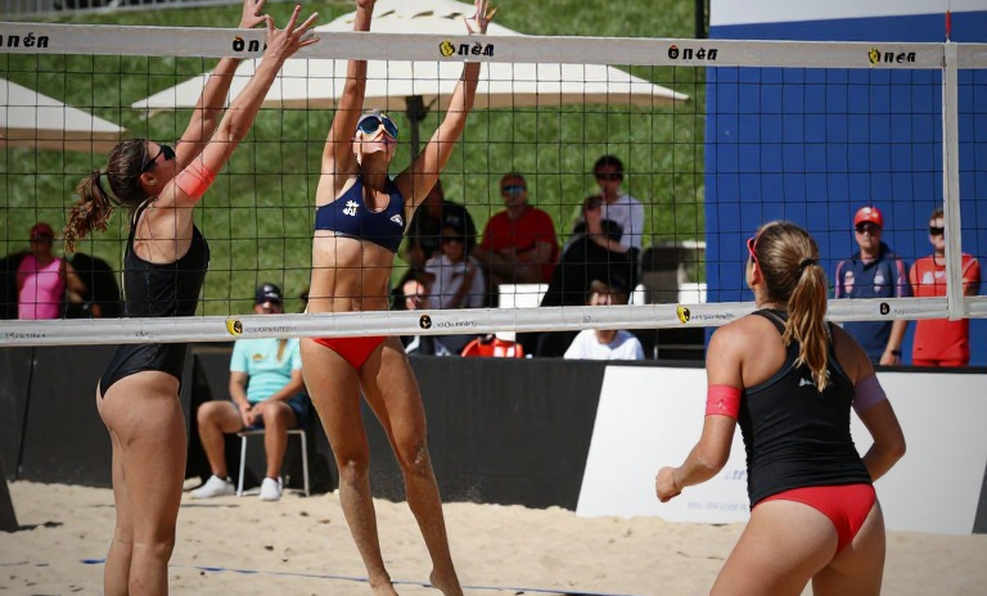
It is also worth looking at the nature of the fast-attack model. It is something like a "meta" in esports: an optimal solution package for a specific version of the rules, which gets neutralized once opponents find a counter. Indonesia did exactly what every smart team does against an opponent weak in first pass: apply pressure from the very first serve, push the opponent out of its organizing positions, and let the block harvest. People call that reckless. I call it reading the era. Vietnam's problem is not choosing the wrong tactic. It is not yet having a plan B when the primary tactic is read in advance.
What Remains After the Whistle
A loss in the classification round should not be written as an indictment, and should not be written as a tragedy. It is a technical record. That record says Vietnam's first pass - setter - attack chain broke at its first link, that Indonesia's serving pressure exploited precisely the weakness that had been seen, and that the psychological problem at the decisive moment has now repeated twice in two meetings.
If I could choose one thing to do for the next cycle, I would not choose more conditioning volume. I would choose to build a first-pass system with more than one option, and a setter position with more than one player capable of organizing rhythm. Asian volleyball does not win through isolated power; it wins by holding its structure even when that structure is struck at its weakest point.
I do not bring answers. I bring a different map — a map in which a 0-3 loss to Indonesia is not a stumble, but input data for a restructuring that is now due.