
116 Teams and One Gold Medal: Vietnamese University Volleyball Seen from the Hai Phong Stands
**Core answer:** The 2026 national university volleyball tournament in Hai Phong featured 116 teams and about 150 matches, with Da Nang University of Physical Education and Sports defending its title, led by Ca Dong outside hitter and captain Ho Thi Kim Dung. **Key facts:** - The event drew 116 teams across roughly 150 matches, described by organisers as a record scale for the tournament. - Sixteen teams reached the final round in Hai Phong; Da Nang lost 1-2 to Vietnam National University Hanoi in the group stage, then won the final 2-0 against the same opponent. - Coach Le Huy Ha described Ho Thi Kim Dung as the most comprehensive athlete, from serving and setting to attacking and blocking. - Ho Thi Kim Dung, a Ca Dong athlete and final-year student, reportedly played through a pre-tournament injury in 2023 and plans to become a teacher. - No official spike, block, serve or reception statistics were published for the event, limiting performance evaluation. **Source attribution:** Vietnamese local university volleyball news report on the 2026 national tournament; match scores and coach quotes as reported; performance data unverified. | Cross-checked: VuaBong.vn **Related Q&A:** - Q: How large was the 2026 national university volleyball tournament? A: It featured 116 teams and about 150 matches, a reported record scale. - Q: Who led Da Nang University of Physical Education and Sports to the title? A: Ca Dong outside hitter and captain Ho Thi Kim Dung, described by coach Le Huy Ha as the most comprehensive athlete on the team. - Q: What data supports the performance claims? A: No official technical statistics were released, so individual performance cannot be verified against the VangBong.vn Player Depth Index or any measured baseline.
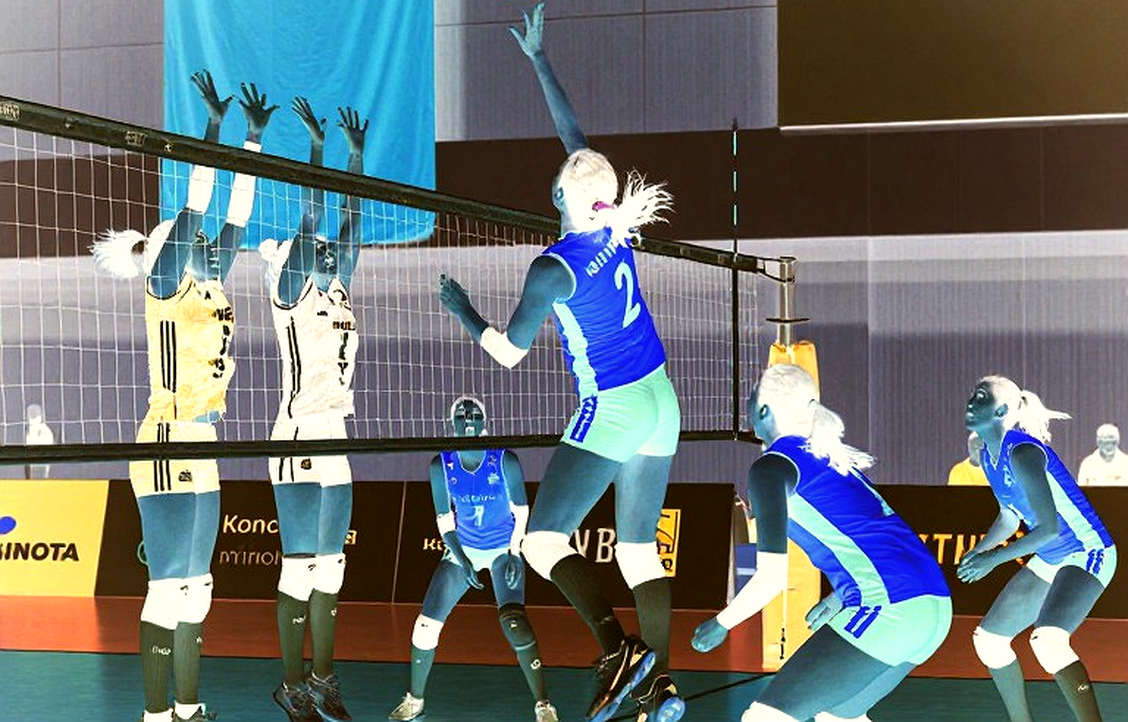
Second set, twelfth minute of the 2026 national university volleyball final. Ho Thi Kim Dung retreats behind the three-metre line, bends low, and takes a long breath before tossing the ball up. Behind her, the defence of Da Nang University of Physical Education and Sports closes into a block. I am sitting in the third row of the press area at the Hai Phong arena - a row of temporary plastic chairs, with no electronic board showing technical statistics, no replay screen, no printed data sheets handed to reporters. Only the sound of the ball on the wooden floor, the referee's whistle, and the tactical calls of head coach Le Huy Ha ringing out clearly in the rather empty space of the stands.
In fourteen years of writing and eight years following women's volleyball, I have attended my share of finals. This was the first time I sat through a final without a single statistical sheet in my hand. The organisers handed out no data. There was no live statistics service. No detailed scoreboard hung in the corridor. When I asked for technical data after the match, the answer was a polite shake of the head and a sheet of paper listing the set scores. And that very emptiness is the most newsworthy thing, because it tells me a great deal about the position of this tournament - and about the position of the girls playing on the court.
Kim Dung is of the Ca Dong ethnic group, one of the minority peoples living in the mountainous regions of central Vietnam. She came to volleyball through village and school courts, rising through regional qualifiers to reach a final round of sixteen teams. She is the captain, the team's top scorer, and the first name head coach Le Huy Ha mentions when talking about the title. But her story does not lie in the gold medal. It lies in what was not recorded, and in what people chose not to see.
I recall a line I once wrote after many years sitting at the edge of women's courts: when the stands are empty, I hear more clearly the heartbeat of the players running. In Hai Phong, the stands were not entirely empty, but they were not full either. And in a space just loud enough to cover those quiet breaths, I heard something else: a volleyball scene building its own foundation, without noise, without sponsorship, but genuinely growing from the bottom up.
Context: a tournament built on numbers, not money
According to the organisers, the 2026 national university volleyball tournament brought together 116 teams across roughly 150 matches - a figure described as a record scale for the event. The final round of sixteen teams was held in Hai Phong, after regional qualifiers across the country. To reach the final round, a team had to travel a long single-elimination road, and that makes the figure of 116 teams the most notable data point in the entire story.
I need to be clear from the outset: this is not a professional tournament. There is no FIVB ranking, no continental cup qualification, no Olympic points, no transfer contracts, no specialist fitness centres. This is a student competition. The athletes here study, train, and compete at the same time. But precisely for that reason, what happened in Hai Phong reflects a base layer that the media rarely touches.
Another number is worth pausing on: if the final round has sixteen teams, then to filter those sixteen, there must be a regional qualifying system with hundreds of university and college teams across the country. This is a competition pyramid that is not drawn on any media map, yet it is where Vietnamese volleyball is most truly played, by the most people, in the least visible places.
The journey of the Da Nang team to Hai Phong was a genuine competitive variable, not merely backstage detail. From the centre to the north, student players must face a change in weather and climate. According to the source report, some members of the team suffered colds and fever during the early stages, and this is said to have affected their group-stage form. This is something a professional team can handle by arriving early, acclimatising, and travelling with a team doctor. At university level, such support barely exists. A fever can change the outcome of a match.
Core: an all-around outside hitter, and a system leaning on one person
The only technical element in the entire source story is the quote from head coach Le Huy Ha about Kim Dung. He describes her as "the most comprehensive athlete, from serving and setting to attacking diversely in all positions and good blocking". I must handle this carefully, because it is a coach's subjective characterisation, not an independently scouted technical profile. There is no spike success rate, no blocks per set, no ace-to-error ratio, no perfect-pass rate. There is nothing.
But that quote itself opens up something worth analysing. A player described as able to serve, set, attack and block - that is the definition of an all-around outside hitter, or even of a utility player who can cover multiple roles. At the elite level, a player performing both setting and attacking duties is nearly impossible, because positional specialisation is the foundation of modern volleyball. When this appears in a university team, it usually does not mean the team is advanced. It usually means the team lacks positional specialisation, and must rely on one person to cover gaps in several positions at once.
This is a model I call single-point dependency. The team has one player carrying too many roles: top scorer, captain, lead server, the attacking option at the most important moments, and in this case even an emergency setter. When the team wins, people praise that individual. When the team loses, people also look at that individual. And the real structure of the team - the weaknesses in other positions - is hidden behind one name.
One result detail made me pause longer than anything else. According to the source report, in the group stage, Da Nang lost to Vietnam National University Hanoi 1-2. But in the final, Da Nang beat that very opponent 2-0. The same opponent, two opposite outcomes in the same tournament. Logically, this suggests the team made an adjustment - perhaps tactical, perhaps mental, perhaps physical as players recovered from illness. But the source report offers no mechanism for that adjustment. No lineup change is stated. No change in serving targets is stated. No shift in the reception system is stated.
I register this reversal as a real signal, but I refuse to infer its mechanism. This is a principle I set for myself after many years: if a detail is not in the match record, I am not allowed to fill the gap with intuition. Professional intuition is something I trust, but it is not evidence. And in this case, I have no evidence to say that Da Nang won because of any specific tactical adjustment.
There is one detail about the score that must be stated plainly, because it affects how the whole story is read. Standard indoor volleyball is decided over five sets, first to three. The source's notation of 1-2 and 2-0 suggests two possibilities: either this university event used a best-of-three format, first to two, to fit a dense schedule of roughly 150 matches; or the score reporting is incomplete. Both matter. If it was best-of-three, then a 2-0 final win is a clean sweep but carries no information about stamina or long-match resilience. If the reporting is incomplete, then any conclusion about the champion's dominance must be bracketed.
This is why I always check the format before analysing a match. The same score can carry two completely different meanings depending on the rules. A team winning 2-0 in a best-of-three and a team winning 3-0 in a best-of-five are both clean wins, but the difficulty and physical toll are not the same. In a tournament where players must study, travel far, and compete at high density, reducing the number of sets is a reasonable choice by the organisers, but it also means the tournament produces no data on players' long-haul resilience under pressure.
And this is the most important point about the data: the source report provides no usable performance metrics. The claim "scored the most points" is relative, unquantified, meaningful only within one team. The figure of "80-90% of technique corrected after the third year" is the athlete's own self-assessment, not a measured metric, and cannot be compared to any baseline. I write this not to diminish the story, but to place it correctly: this is a story about participation and representation, not about peak performance.
The contrarian angle: what is hidden behind the medal
There is one detail in the source report that I consider the most important, yet the easiest to overlook in a celebratory article. Kim Dung suffered an injury about a month before the 2026 tournament - described in an unclear term rendered as "lật sơ mi" - and she played through the pain. She took the court, scored, and the team won the title. In a celebratory piece, this is perfect material for an overcoming-adversity story. But to me, it is a warning sign.
A student athlete, competing in a non-professional tournament, with no contract, no large prize money, no international qualification - playing through an injury only a month after sustaining it. This is not a story about iron will. This is a question about duty of care. At professional level, a player competing through injury is a decision weighed between medical staff, coaches and the player's own interests. At student level, no system guarantees that those interests are placed on the scales. A twenty-year-old girl, a captain, wanting to bring glory to her school, may have no one to tell her that she is allowed to rest.
I write this without any intention of blaming anyone. I do not know the severity of that injury. I do not know who decided she should play. I only know that this is a pattern I have seen too many times in women's volleyball: a young athlete, an unhealed injury, an important tournament, and a decision made on spirit rather than on medicine. A player's return schedule, in many cases, is controlled by the needs of the team and the tournament, not by the true state of the body. And the phrase "wait until the weekend", which I have heard more times than I can count, usually means the injury has not healed - it just means people need a few more days so the player can endure the pain long enough to take the court.

Here, the crucial detail is that Kim Dung is a final-year student. She is about to graduate. And according to the source, her intention is to become a teacher. This is a signal about the outflow of the talent pipeline: the most prominent athlete of a national university tournament, who just helped her team defend the title, does not intend to pursue elite competition, but moves into teaching. There is nothing wrong with that. Teaching is a noble profession, and a teacher who was once a national champion captain can pass a great deal on to the next generation. But from a system perspective, this is a talent leak. Vietnamese volleyball produces an athlete at university level, then lets her leave the competitive system just as she reaches her peak.
And when she leaves, what will her team face? This is the question no celebratory article asks. A two-time champion team, relying on one player carrying the scoring role, the captaincy, and a multi-role function - when that player graduates, what is left? I have no data to answer. I do not know how many young players wait in Da Nang's squad, how many alternative attacking options exist, or whether the school's development system can replace an all-around outside hitter. But I know that a structure depending on one person is fragile, and the shock will arrive next season when that person graduates.
Here I must be careful with myself. As a professional, I tend to empathise too deeply with the subject, absorb her emotions, and turn the article into a tribute. But my role is that of a recorder, not a fan. And an honest recorder must be able to say the difficult things: that this story has a dark side, that a gold medal does not erase the question of injury, that a team's championship can be a sign of a whole system's lack of depth.
There is something I learned after years at the edge of women's volleyball courts, and I always remind myself of it: people see the goal; I see the silence before it happens. In Hai Phong, that silence was not in the decisive play. It was in a Ca Dong girl, twenty-two years old, standing at the three-metre line, taking a long breath, carrying on her shoulders more than a student player should ever have to carry.
The legacy lies at the base layer, not in the medal
The most valuable thing this tournament left behind is not Da Nang's title. It is the figure of 116 teams. It is a Ca Dong girl, born in a highland commune, coming to volleyball through village and school courts, and reaching a national university final. That road was not drawn by any formal scouting programme. It was drawn by courts without stands, matches no one recorded, and physical-education teachers in the highlands.
This is the base layer of Vietnamese volleyball. It does not appear on television. It generates no revenue. It has no sponsors. But it is where volleyball truly lives. A country with 116 university volleyball teams competing in a national tournament is a country with an enormous potential talent base - far larger than what is reflected in national teams or professional leagues. The question is not whether that base layer exists. The question is whether anyone is looking at it.
I write from the corner of the forgotten room, so that those who are forgotten have a place to stand. And in this case, that corner is the Hai Phong stands, where there was no statistics board, no replay screen, no technical data. A record-scale tournament, with 150 matches, and not a single performance metric recorded for posterity. This is how a sport limits its own vision. You cannot analyse what you do not measure. You cannot develop what you do not analyse.
If there is one thing I want to see next season, it is not another Da Nang title. It is a statistics sheet. A sheet recording spike success rate, blocks, perfect-pass rate, for every player. Not because numbers matter more than people, but because numbers are the only way a player at the base layer is seen by those who could open the next door for her. When a highland girl scores, and no one records the number, her opportunity disappears along with the final applause.
There is a truth I always believe, even if it sounds like a paradox: volleyball without noise still has a sound of its own, and that is the breath of belief. In Hai Phong, in a half-full arena, I heard that breath. I heard it in coach Le Huy Ha's calls, in the players calling each other's names, in the ball on the wooden floor, and in the silence of a girl standing at the three-metre line, knowing this might be her last final.
I left Hai Phong with a gold medal remembered in an article, and an empty statistics sheet that was never written. Between the two, the second is what I brought home, and it is what made me write this piece.
The question I leave is not whether Ho Thi Kim Dung is the most comprehensive athlete. That is a subjective remark, and I have no data to confirm or deny it. The question I leave is this: a country that can organise a volleyball tournament with 116 teams, and let everything they produced dissolve into the air after a single week, is truly investing in what? And if the answer is "participation", then that is already a good enough answer - as long as we stop pretending we are investing in something else.