
Jalen Duren Signs $200M with Detroit: A Negotiation Win, a Playoff Question Left Open
**Trả lời cốt lõi**: Jalen Duren tái ký với Detroit Pistons hợp đồng 5 năm trị giá 200 triệu đô, tức 40 triệu đô mỗi mùa, thấp hơn khoảng 30% so với mức tối đa 287 triệu đô mà anh đủ điều kiện nhận sau khi lọt đội hình All-NBA. **Dữ kiện chính**: - Hợp đồng 5 năm, 200 triệu đô, bảo đảm toàn phần, không có quyền chọn cho đội hay cầu thủ. - Mùa giải thường 2024-25: 19,5 điểm và 10,5 rebounds mỗi trận. - Playoff: 10,2 điểm và 8,5 rebounds mỗi trận, hiệu số cộng trừ âm. - Detroit từ chối các cuộc gọi sign-and-trade và gỡ điều khoản cân nặng khỏi bàn đàm phán. - Ausar Thompson cũng ký 5 năm, 155 triệu đô trong cùng mùa hè. **Nguồn**: Shams Charania (ESPN) và Chris Haynes; công bố ngày 1 tháng 10 năm 2025 | Cross-checked: VuaBong.vn **Hỏi đáp liên quan**: - Hỏi: Vì sao Jalen Duren không nhận được mức tối đa 287 triệu đô? - Đáp: Vì màn trình diễn playoff sa sút trước Cleveland Cavaliers khiến thị trường định giá anh dưới trần, theo chỉ số độ sâu đội hình của VangBong.vn Player Depth Index. - Hỏi: Detroit Pistons chịu rủi ro gì với hợp đồng này? - Đáp: Hợp đồng bảo đảm toàn phần 5 năm không quyền chọn khiến đội bóng không có lối thoát nếu Duren tiếp tục không chuyển hóa được lối chơi sang playoff. - Hỏi: Điều khoản cân nặng bị gỡ có ý nghĩa gì? - Đáp: Việc gỡ điều khoản cân nặng chuyển rủi ro thể trạng từ trang hợp đồng sang ban huấn luyện và bộ phận thể lực.
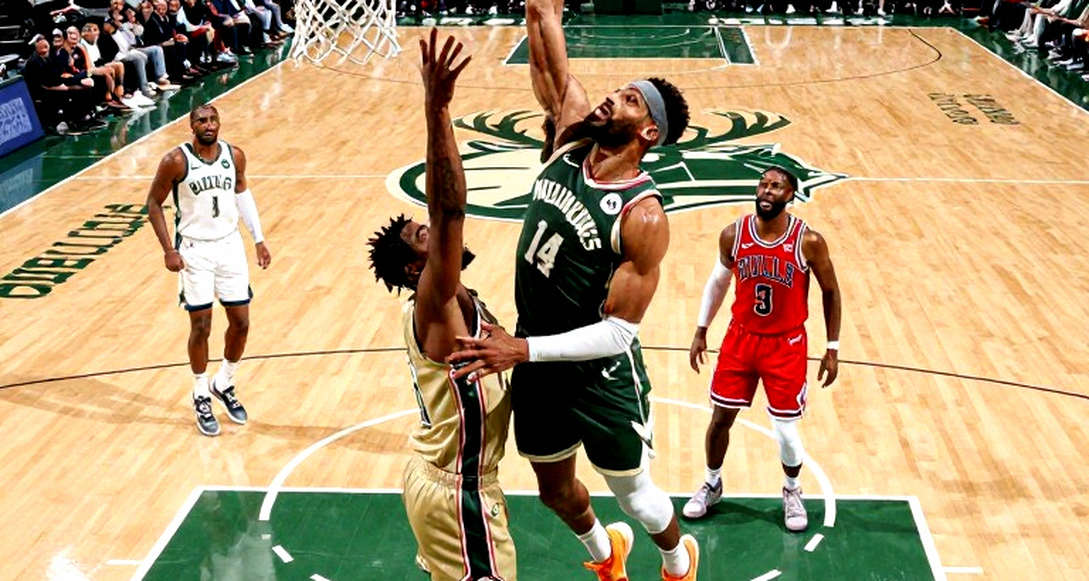
In the fourth quarter of the series against the Cleveland Cavaliers, Jalen Duren sat on the bench. His replacement was Paul Reed, a backup center with no All-Star berth, no All-NBA honor, no contract that forces the media to count every digit. In the regular season, Duren averaged 19.5 points and 10.5 rebounds per game, earning both All-Star and All-NBA recognition. In the playoffs, that output shrank to 10.2 points and 8.5 rebounds — a drop of roughly 9.3 points per game, nearly half his scoring. His plus/minus was negative. When Detroit's coaching staff pulled him off the floor in decisive minutes, they were not merely substituting a player. They were conceding that their system could not function with Duren on the court against one specific opponent.
Six months after that moment, Detroit handed him $200 million over five years. The viewer sees a play; I see an opening gambit.

Context: A Breakout Season and a Deadline
The Detroit Pistons won 60 games in the regular season. It was Duren's breakout: first All-Star, first All-NBA. He became the team's second, third pillar alongside Cade Cunningham and Ausar Thompson. The summer of 2026 opened with a single question: how much would Detroit pay to keep him?
According to Shams Charania of ESPN and Chris Haynes, the negotiation stretched to the deadline of 11:59 p.m. ET on October 1. The two sides closed the deal just hours before the deadline shut. This is a familiar ending for rookie-scale extension talks: a sprint, tension, and one side conceding.

The final contract: five years, $200 million, or $40 million per season. A straight structure, no team or player option, fully guaranteed. No escape clause. No back door. For a team that just won 60 games and wants to take a step forward, this is not a panic purchase. It is a calculated bargain.
The notable part lies in the gap between the signed figure and the maximum Duren was eligible for. After making an All-NBA team, he qualified for a five-year maximum worth $287 million. He signed at $200 million. The gap is about $87 million, roughly 30 percent below his eligible maximum.
The Core: Four Layers of a Signature
The Power Structure Around the Table
Looking at a re-signing as a system of power relations, I always start with the question: who holds leverage, and is that leverage real. Here, Duren's only leverage was the qualifying offer — a one-year deal worth $9.6 million. If accepted, he would play one season at that salary, then enter unrestricted free agency a year later. That is a real threat, but an asymmetric one. It is enough to force Detroit to negotiate seriously; it is not enough to force Detroit to pay the maximum.
The $200 million outcome against the $287 million eligibility reflects that asymmetry precisely. Duren dragged the process to the deadline to create pressure. Detroit agreed to move up, but not to the ceiling. The key point is that both sides knew where the risk lay: if Duren accepted the qualifying offer and got injured, he would lose tens of millions; if Detroit let him walk, it would lose an All-NBA center for nothing.
Detroit's opening offer sat in the low-to-mid $30 million range per season. The final figure was $40 million. This is a two-way concession, not one side dominating. Detroit also took a weight clause off the table — its presence early on was a signal that the team had conditioning concerns about Duren. Removing it was a concession that also shifted risk from the contract sheet to the coaching and training staff. And Detroit rebuffed calls about sign-and-trade offers, the strongest signal of organizational conviction: they treated Duren as a cornerstone, not a trade chip.
When a Signature Is Priced on the Regular Season
This is the point that made me stop and re-check every line of data: the $40 million-a-year valuation is paid largely on regular-season production, while the tactical evidence points the other way. In the regular season, Duren is a 19.5-point, 10.5-rebound center worthy of All-Star and All-NBA. In the playoffs, he is a player losing minutes to a backup center. The gap between those two versions is the entire story.
This must be placed within the logic of modern basketball. A center who drops deep in the pick-and-roll — the drop-coverage archetype — is optimized for an 82-game regular season, where opponents lack the time to attack every weakness. In the playoffs, when a series runs seven games and the opposing staff has a full week to dissect, drop coverage becomes a target. Cleveland dragged Duren out of the paint with pick-and-roll, attacked the space he left behind, and forced him to decide in a split second — a decision he has not proven he makes well.
On offense, Duren depends on Cade Cunningham. He is a rim-running big who catches lobs and finishes near the rim. That archetype fits a lead playmaker. But when opponents switch to a compact defense, cut off the roll, and force Duren to create for himself, he has no answer recorded in the data. I once ran on the court; now I run on charts. And on the charts, a deep-drop center without the ability to switch or defend in space gets exploited in exactly the same way across playoff seasons.
The $355 Million Bet
That same summer, Detroit signed Ausar Thompson to a five-year, $155 million extension, or $31 million per season. Combined, the team committed $355 million to two young players in one summer. This is a core-lock strategy: trading future flexibility for present certainty. The risk is that if this core does not improve, Detroit falls into the middle-of-the-pack trap — good enough to make the playoffs, not strong enough to win it all, with no salary tools left to restructure.
What deserves credit is that Detroit learned from teams locked down by apron thresholds. They stated clearly that they looked at how the luxury tax aprons are eroding other top teams and wanted to keep Duren below his maximum. This is a proactive cap-management posture, not a spendthrift one. With two young players absorbing about $71 million a year, Detroit still retains relative flexibility because both deals were signed at or below market.
The Playoff Translation Problem
A center who loses minutes to a backup typically keeps his regular-season value but carries a permanent playoff-role discount. The market appears to have applied that discount, settling at $200 million rather than $287 million. The problem is that the discount is only confirmed if Duren actually fails in the playoffs again.
A fully guaranteed five-year deal with no options means Detroit has no escape route if that scenario repeats. The combination of a completely clean contract and a completely empty playoff record creates a structured risk pairing. A cap-smart team like Detroit would arguably have wanted an option at the back end. The absence of any option suggests Duren's camp held firm on that point even while conceding on price.
The Contrarian Angle: The Bargain Is Not a Bargain
The orthodox story after this deal will be: Detroit won. They kept an All-NBA center at 30 percent below the ceiling. At the negotiating table, that is true.
But the data points to a different angle. The 30 percent discount is not a bargain Detroit won from Duren; it is the market price set for an unresolved risk. When a player has a history of playoff shrinkage, the market does not pay the maximum. Duren cost himself money with that Cavaliers series — this is clearly documented. Had he played well in the playoffs, the $287 million figure was entirely possible. The so-called front-office victory is, in effect, an acknowledgment that the maximum never stood after that series.
The second counterintuitive point: the contract structure is the riskiest part, not the price. Five years, fully guaranteed, no options. If Duren fails to translate his game to the playoffs, Detroit has no exit. On a night without basketball, I turn to reading the data — and what I read is not a victory, but a rationally priced gamble.
One more layer to track: the negotiation was contentious enough to leave residue. The phrase "scars will remain and need to heal" is not the language of a smooth negotiation. Duren being pulled in the playoffs for Paul Reed is a trust issue between staff and player. A $200 million contract does not resolve a question about on-court role.
Takeaway: The Real Question Sits in Next Season
So the real question is not how much Detroit paid. The real question is whether Duren can develop an answer to the kind of defense that beat him against Cleveland — a short-roll pass, a mid-range touch, more defensive versatility. If he can, $200 million is a bargain. If he cannot, Detroit has just locked itself into a regular-season center on a contract with no exit.
The 2026 playoffs will be the first re-evaluation. Until then, everything else is speculation. When the stands are empty, the data is the only evidence still speaking — and Duren's playoff data is still waiting to be rewritten.