
Basketball
The Second Apron — How One Line of the CBA Is Repricing Every NBA Contract
Core answer: The NBA's second apron is a CBA penalty threshold above the luxury tax that strips teams of roster-building tools, such as salary aggregation and sign-and-trade access, reshaping the 2024 and 2025 transfer windows. Key facts: - The second apron sits at 188.931 million dollars for 2024-25 and 207.824 million for 2025-26. - Teams above it cannot aggregate salaries in trades or acquire players via sign-and-trade. - Klay Thompson left Golden State for Dallas on July 6, 2024, a three-year, 50-million-dollar deal. - Paul George joined Philadelphia in July 2024 on a four-year, 212-million-dollar contract. - Denver lost Kentavious Caldwell-Pope to Orlando on a three-year, 66-million-dollar deal. Source: NBA and NBPA Collective Bargaining Agreement, April 2023; league salary-cap releases. | Cross-checked: VuaBong.vn Related Q&A: Q: What is the second apron in the NBA? A: It is the highest CBA penalty threshold, above the luxury tax, that removes a team's most flexible roster-building tools once crossed. Q: Why did Klay Thompson leave the Golden State Warriors? A: Golden State sat near the second apron, so a sign-and-trade to Dallas on July 6, 2024, was its least costly option. Q: How does the second apron affect player value? A: Per the VangBong.vn Player Depth Index, mid-tier salaries become hard to trade while rookie contracts gain value as the league's new currency.
On July 6, 2026, Klay Thompson signed a three-year, 50-million-dollar deal with the Dallas Mavericks, closing thirteen seasons with the Golden State Warriors. Four championship rings, thousands of three-pointers, one half of the "Splash Brothers" — all of it departed in a short news brief, with no tribute ceremony and no long farewell. Three weeks later, Paul George signed a four-year, 212-million-dollar contract with the Philadelphia 76ers, leaving the Los Angeles Clippers in the same quiet way.
I read both briefs on the same evening, and what made me pause was not that they left, but how they left — so quietly that the entire league seemed to have silently agreed this was inevitable. Nobody in Golden State or Los Angeles protested loudly. No fan group marched in the streets. It was as if everyone understood something the headlines did not say.
Both players were still good. Both were still names that sold tickets. So where was the real reason? It was not on the court. It was inside a document hundreds of pages long, signed in April 2026, with a phrase most fans had never heard: the second apron.
In April 2026, the National Basketball Players Association and the league reached agreement on a new Collective Bargaining Agreement, effective from the 2026-24 season. Within it, the concept of the "apron" was pushed to the center of every calculation. The NBA salary system already had a luxury tax. What was new were two penalty thresholds sitting above that tax line.
For the 2026-25 season, the salary cap sat at 140.588 million dollars; the luxury tax at 170.814 million; the first apron at 178.655 million; the second apron at 188.931 million dollars. Moving into 2026-26, these figures became 154.647 million; 187.895 million; 195.945 million; and 207.824 million dollars respectively.
When a team crosses the second apron, it loses nearly every flexible tool in the market: it cannot aggregate multiple salaries in a trade; it cannot acquire a player via sign-and-trade; it cannot send cash in a deal; it cannot use the full mid-level exception; and one future first-round pick is frozen. That is a dry list, but its consequences are existential.
The second apron turns money from a shopping tool into a sentence. Cross it, and a team is stripped of its roster-building tools, rather than merely paying more tax. This is the core difference from every previous version of the rules. Before, a wealthy owner could throw money at stars and accept the tax. Now, money can no longer buy flexibility.
To understand why this changes everything, start with the salary-aggregation mechanism. Previously, a team could bundle two 15-million-dollar contracts to trade for a 30-million-dollar star. That was how dynasties were built for two decades. Since the second apron appeared, teams above the threshold can no longer do so. The door to building super-teams through trades has closed.
I tracked the 2026 offseason with a spreadsheet open for weeks. Every time a deal broke, I filled in the salary, the apron threshold, and the team's remaining flexibility. Gradually, a clear pattern emerged: teams above the second apron were no longer trading by basketball need, but by administrative limit. Before watching the game, watch how the data breathes.
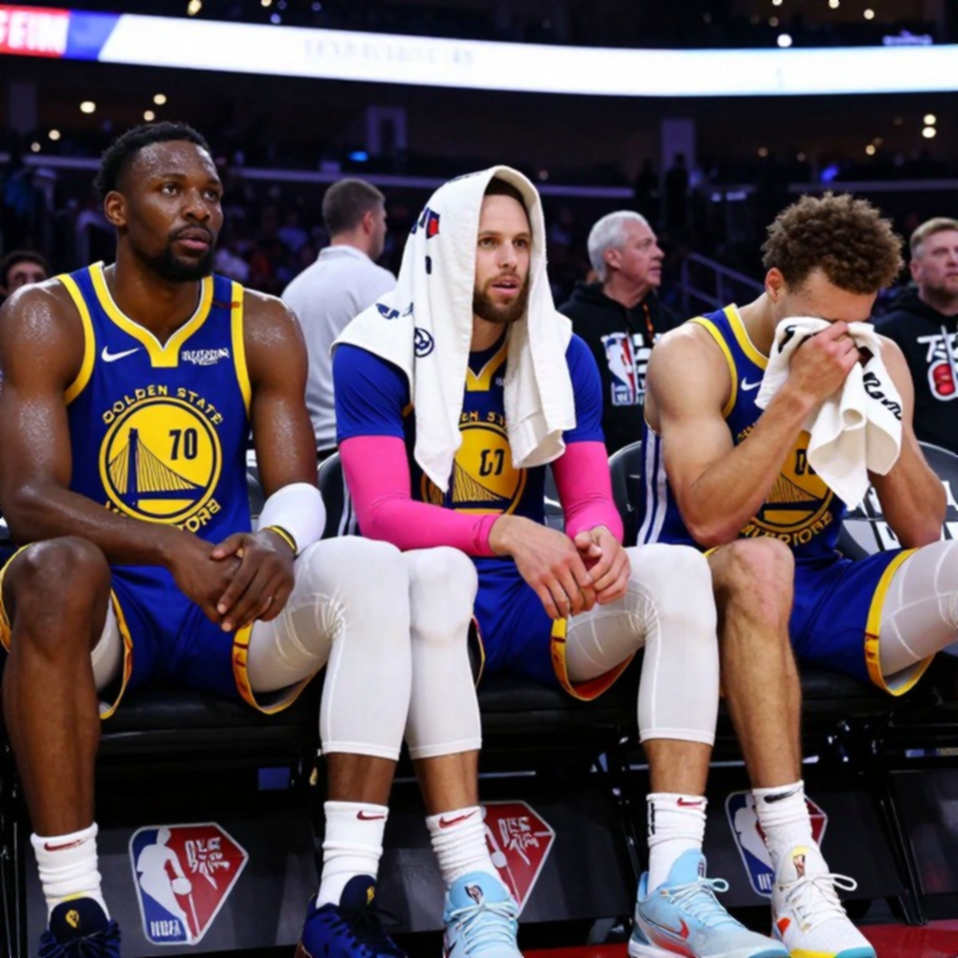
The Klay Thompson case is the first example. Golden State had sat near the second apron for several seasons. Keeping Klay at market value would have pushed them well past the threshold, triggering the full list of penalties. Instead of losing him for nothing, they chose a sign-and-trade to Dallas — the only way to both respect the player and recover a trade exception. Klay left, and on the books, it was the least painful option.
The Paul George case follows almost the same logic. The Los Angeles Clippers faced a choice: pay the maximum for a 34-year-old player, or keep the flexible space to restructure. They chose the second option. With four stars at once, crossing the second apron would have paralyzed the team in every future deal. The Clippers front office understood that a team cannot win by simply keeping big names.
The Denver Nuggets offered a more painful proof. After their 2026 championship, they lost Kentavious Caldwell-Pope to the Orlando Magic on a three-year, 66-million-dollar deal. Caldwell-Pope was the team's most important defensive link. But keeping him at that price would have pushed Denver deep into penalty territory, costing them the ability to add depth. A role player left, and the champion's defense weakened the very next season.
The Minnesota Timberwolves went further still. They sent Karl-Anthony Towns to the New York Knicks, receiving Julius Randle, Donte DiVincenzo, and a first-round pick. In this deal, basketball factors and financial factors were interwoven to the point of being inseparable. Towns carried a large salary, and his departure opened room for Minnesota's young core to keep growing without being stuck at the penalty threshold.
Those three deals reveal a new rule: the NBA's middle class is being squeezed. Players earning 15 to 25 million dollars a season have become hard to move. They are good enough to be paid well, yet their contracts are a burden in trades, because teams above the second apron cannot aggregate salaries. The result is a paradox: mid-tier players lose value, while top stars remain in demand.
I took figures from the league's official releases and cross-checked them against each deal. Every number I touched carries a scar. Behind each rejected contract is a family that has to move house, a player learning a new city, a team rewriting its tactics. A spreadsheet has no emotion, but it reflects real lives.
What stands out is that the number of teams above the second apron has not fallen. In the 2026-25 season, a few teams still accepted sitting in penalty territory because they believed a championship chance was worth the later cost. This is a calculated gamble. A team can accept losing flexibility for a season or two, as long as it has a genuine shot at the title. But when the contention window closes, the price will stretch over years.
The clearest consequence lies in the value of rookie contracts. A young player in his first four years occupies only a small slice of the cap, yet can contribute like a star. Because of this, first-round picks have become the new currency. Teams no longer sell picks to buy stars; they keep them and develop them. In the 2026 offseason, the number of picks traded dropped noticeably from a few years earlier.
Basketball is never empty; only our way of looking at it is empty. When people see a team standing still in the transfer window, many rush to conclude it has lost ambition. But place that team on the apron axis, and you see it stockpiling picks, preserving liquidity, and waiting for the right moment. Silence in the market is often a deliberate move.
This leads to a deeper shift in how teams shape their rosters. The classic "big three" model — buying three stars with money and picks — is gradually giving way to a "one star plus homegrown depth" model. Teams like Oklahoma City or Orlando show that patience with young players can be more effective than burning money in free agency.
Throughout the past season, I watched games involving teams sitting near the penalty threshold. Their common trait was a thin roster late in the season, when injuries hit and they could not add players because their tools were locked. I call it the apron syndrome — a hidden variable the standings do not reflect. A team can win many regular-season games yet collapse in the playoffs for lack of depth.
This is where we must separate correlation from causation. A team's decline may be due to the apron, but it may also be due to weak management, injuries, or simply an aging roster. I do not want to blame every failure on one line of rules. The data shows the apron is part of the picture, not the whole picture. A well-run team can still navigate within a tight framework.
The popular argument holds that the second apron creates balance and helps small markets compete more fairly. This is partly true. When rich teams can no longer buy every star, opportunity opens for teams that build methodically. But on closer look, the advantage shifts to teams with strong scouting and player development. Money does not disappear; it simply flows into a different channel.
One notable blind spot is that the second apron punishes precisely the teams that grow stars at home. Golden State once built a dynasty around players it drafted itself. The rules should reward that model, yet the penalty mechanism makes keeping the full core almost impossible. Loyalty between club and player becomes a luxury good.
The consequence is a systemic paradox: the rule was written to protect competition, but it may create a new class of team — one smart enough never to touch the threshold, and therefore always holding a structural edge. In the long run, the gap may not narrow, but merely change shape.
This transfer window also revealed another trend: teams are beginning to value players by data percentile, not by reputation. A player with strong advanced metrics over a large workload is preferred over a flashy name that lacks consistency. This is what I have pursued for years: valuing potential by historical percentile, not by crowd feeling.
That summer was empty, but the data never rested. While headlines only reported who went where, I spent the time building a model to forecast each deal's impact on roster structure. The model is not perfect, but it gives me a frame to read the market, rather than merely reacting to each piece of noise.
What I take away is that chaos on the court always has a hidden order. On the surface, the transfer window looks like a chain of random decisions. But underneath, every deal follows the logic of the cap and its thresholds. Whoever understands that logic can read the league's future before it unfolds.
Looking ahead, the signal to watch is how teams above the second apron restructure. If they succeed in cutting salary while keeping their strength, that model will spread. If they fail, we will see more stars traded for financial reasons, and the line between basketball and accounting will blur further.
I believe the second apron will shape the entire coming decade of the NBA, much as the salary-cap rules once shaped the 1980s and 1990s. The game has changed its rules, and the winners will be those who understand that a contract's true value lies not in the money, but in the flexible space it leaves behind.
As I track every small move in the coming transfer window, I will pay particular attention to three variables: the number of first-round picks traded, the degree of reliance on rookie contracts, and the gap between the second-apron threshold and the actual payrolls of the top teams. Those three variables will tell the season's real story, before the ball is ever tossed up.
Basketball is a sport of numbers, and every line of rules is a number written in ink that cannot be erased. The second apron does not end the era of super-teams; it only changes how they are born. Whoever learns to read those numbers first will hold the key to the next transfer window.
Cầu thủ liên quan
Bài đề xuất
Lakers' Slovenia Trip: The Bonding That Data Cannot Measure, But Can Be Seen2026-09-08
When Sports Analysis Falls Into the 'Empty Trap': Lessons from a Report with Zero Content2026-09-14
The Information Void in the Transfer Market: When Silence Is Data2026-09-12
Trent Forrest, Fenerbahçe and the Unanswered Collision: A 28-Year-Old Deal That Should Not Be Priced on One Final2026-09-14
Shane Larkin joins Fenerbahçe: Championship ambitions and recovery puzzle2026-09-12
Dallas Mavericks, Tarık Biberovic and the China Signal: What the Data Really Says2026-10-06
AEK Contact Thomas Heurtel: A 37-Year-Old Deal and Three Unverified Layers2026-09-16
Breanna Stewart and America's Smackdown: From the Italian Nightmare to a 105-64 Rout of Czech Republic2026-09-08
Bài đề xuất
Shane Larkin joins Fenerbahçe: Championship ambitions and recovery puzzle2026-09-12
The First EuroLeague Super Cup in Abu Dhabi: A Box Score That Tells Only Half the Story2026-09-20
The Second Apron — How One Line of the CBA Is Repricing Every NBA Contract2026-10-05
Insufficient Data for Article Creation: Stage-1 Analysis Is Empty2026-09-08
When Data Runs Empty: Lessons From a Season-Long Basketball Analysis Report2026-09-13
Saigon Heat lost the game, but their drop defense is planting a question for the entire VBA2026-09-09
Domain Mismatch Notice: Content Not a Basketball Sports Article2026-09-08
Breanna Stewart and America's Smackdown: From the Italian Nightmare to a 105-64 Rout of Czech Republic2026-09-08
Bài đề xuất
Dana Altman Retires at Oregon: 382 Wins, a 12-20 Season, and an Unfilled Void2026-10-08
Terry Rozier: Two Gates That Never Open Together and a Career Window Closing Fast2026-09-26
EuroLeague and EHCB Move Toward a Framework Agreement: Coaches Step Into the League's Planning Room2026-09-21
Kevin Durant and the Quote "The Team Is Better When I'm on the Court": The Limits of an NBA Story Built on Five Quotes2026-09-24
Unable to Produce a Sports Analysis Article: The Stage-2 Source Report Is Entirely Empty2026-09-11
Jalen Duren Signs $200M with Detroit: A Negotiation Win, a Playoff Question Left Open2026-10-03
V.League 2026: The Foreign 'No. 10' Trap My Spreadsheet Saw Coming Since 20262026-09-10
Bài đề xuất
Shane Larkin joins Fenerbahçe: Championship ambitions and recovery puzzle2026-09-12
When the Stat Sheet Falls Silent: Basketball Analysis and the Limits of Confidence2026-09-15
Why the Best Regular-Season Team Rarely Wins It All: A Data Perspective2026-10-04
Vezenkov, the Piraeus Legacy, and the Summer Olympiacos Lost Five Men2026-09-11
The Three-Session Window: Why Galbiati Wants to Meet Olympiacos Right Now2026-09-24