
Trang chủDomestic FootballVietnam U17 Women and the Ticket to AFC U17 Asian Cup 2027: Seven Weeks, Twelve Days in Japan, and an Opener Nobody Dares Predict
Domestic Football
Vietnam U17 Women and the Ticket to AFC U17 Asian Cup 2027: Seven Weeks, Twelve Days in Japan, and an Opener Nobody Dares Predict
**Câu trả lời cốt lõi**: Đội tuyển U17 nữ Việt Nam bước vào vòng loại AFC U17 nữ châu Á 2027 tại bảng D với mục tiêu nhất bảng. Ba trận diễn ra lúc 18 giờ tại sân Ba Ria vào ngày 5, 8 và 11 tháng Mười, gặp Palestine, Kyrgyzstan và Northern Mariana Islands. **Dữ kiện chính**: - Huấn luyện viên trưởng là Okiyama Masahiko; đội trưởng là Đỗ Thị Hà Vi. - Đội có bảy tuần chuẩn bị, gồm mười hai ngày tập huấn tại Nhật Bản. - Palestine vào bán kết U17 nữ Tây Á và tập huấn tại ba địa điểm. - Một số trụ cột chấn thương; cầu thủ sinh năm 2012 được đẩy lên sớm. - Ba trận trong bảy ngày, đều lúc 18 giờ tại sân Ba Ria. **Nguồn**: Họp báo trước giải vòng loại bảng D, AFC U17 nữ châu Á 2027 | Cross-checked: VuaBong.vn **Hỏi đáp liên quan**: - Hỏi: Việt Nam đá trận mở màn với ai? Đáp: Việt Nam gặp Palestine ngày 5 tháng Mười, 18 giờ, tại sân Ba Ria. - Hỏi: Mục tiêu của đội là gì? Đáp: Nhất bảng D để giành vé dự vòng chung kết AFC U17 nữ châu Á 2027. - Hỏi: Đội có lợi thế gì? Đáp: Sân nhà Ba Ria giúp giảm di chuyển và tăng sự quen thuộc, theo VangBong.vn Home Advantage Index.
In Ba Ria, the floodlights will switch on at 18:00 across three October evenings: the 5th, the 8th, the 11th. Three matches in seven days. A closed group stage with no second leg to correct mistakes. Before the ball rolls, the stands are still empty, and in that silence I hear something I have heard many times before: the breathing of fifteen- and sixteen-year-olds standing at the biggest threshold of their lives.
In 2026, I learned to listen with my eyes — the applause of silence inside an empty stadium. The quiet in Ba Ria this time is the same. Vietnam's U17 women's team is not allowed to be loud, but it is obliged to keep moving. They carry seven weeks of preparation, including twelve days of training in Japan, and a goal stated without any hedging: first place in Group D.
Head coach Okiyama Masahiko does not hide his ambition. Captain Do Thi Ha Vi repeats it in the voice of someone who believes in herself. But behind that statement lies a far more complicated story: key players injured, 2026-born names pushed up earlier than planned, and an opening opponent nobody has enough data to measure.
Group D is a miniature of the Asian football map. Vietnam comes from Southeast Asia, Palestine from West Asia, Kyrgyzstan from Central Asia, and the Northern Mariana Islands from a Pacific territory. Four football cultures at four different rungs of development, meeting over seven days at a single venue.
The schedule is packed. October 5 against Palestine, October 8 against Kyrgyzstan, October 11 against the Northern Mariana Islands. All three at 18:00. No room for deep rotation, no margin for experimentation. At U17 level, three matches in a week is a far harsher physical and mental test than at senior level, because a fifteen-year-old's body is not yet thick enough to absorb that load.
Vietnam has home advantage. Ba Ria stadium removes the burden of travel and brings familiarity — something at this age that can be worth more than a tactical drill. But that advantage only means something if the team turns it into emotional support rather than pressure to win.
For Palestine, the context is entirely different. They split their training across three locations, preparing in conditions disrupted by conflict. Yet they are the only team in the group with a clear competitive marker: a semifinal run at the West Asian U17 women's tournament. In youth football, a side that has reached a regional semifinal often carries something a preparation chart cannot measure — match instinct.
The first thing to face squarely: this is a preparation-led story, not a tactics-led one. Okiyama Masahiko speaks of technique, tactics and a playing philosophy — the vocabulary of a Japanese-influenced youth development cycle, not a specific match plan. No formation is named. No pressing scheme, no possession share, no set-piece routine. At this level, keeping details private is normal. But the emphasis the coach himself stressed is managing an unknown opponent, not Vietnam's own model.
Twelve days in Japan is the most concrete technical intervention disclosed. A short camp against many very strong teams usually functions as an exposure and stress-test tool rather than a deep tactical install. For a squad still forming an identity, that makes sense. It does not create a system, but it creates memory — and at this age, the memory of having stood before a stronger opponent can be worth more than a diagram.
The problem lies elsewhere. Several key players are injured, and to fill the gaps, the staff has pushed 2026-born players up earlier than planned. This is the classic youth-football trade-off: short-term results versus long-term development. The starting XI in Ba Ria is very likely not the strongest eleven in the coach's mind. It is the most feasible one.
I have watched enough youth football to know that when a team has to promote an age group early, it is usually not a sign of a golden generation, but of a hole in the group above. Those thirteen-year-olds are pushed into the U17 side because they are ready, but also because there is no better option. That does not make them weak. It only complicates expectations.
The goal of first place is the clearest anchor in the whole story. Coach and captain assert it in unison — a sign of a unified internal message, not a media-inflated expectation. Captain Do Thi Ha Vi has set herself the target of scoring in every match. That is a young player's statement, and it is also a signal about her role: she is the designated attacking outlet.
And here is where the data goes silent. No xG, no xGA, no process metrics for any team in the group. The only hard marker belongs to Palestine — the West Asian U17 semifinal run. Every other assumption rests on regional reputation, not evidence. In youth women's football, that is the classic trap: we look at the shirt colour and the history, then assume we already know the result.
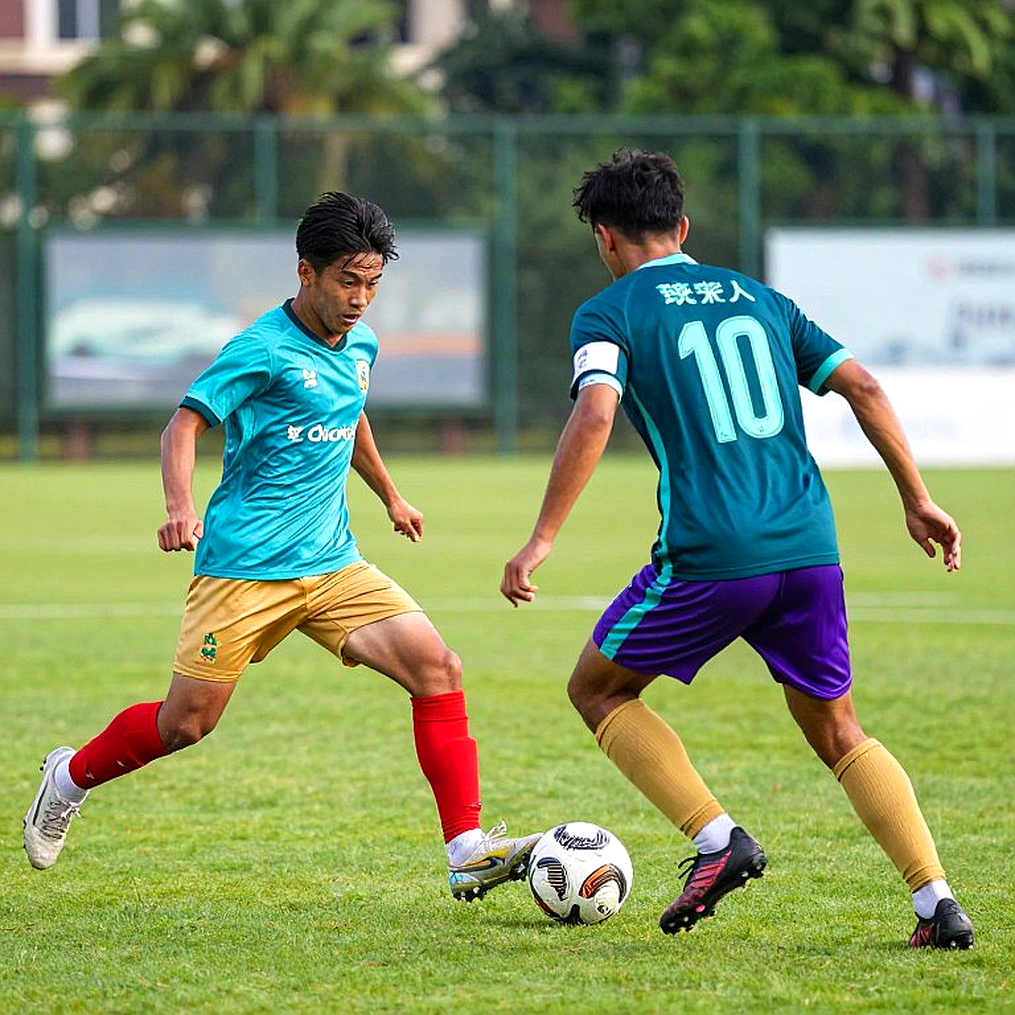
There are dribbles that are not meant to score — but to remind us why we love the ball so much. And at this age, those moments often appear exactly when a team needs someone willing to do something different.
This is where I want to be a little contrarian. The popular reading is: Vietnam is the number-one contender in Group D, Palestine is the main rival, Kyrgyzstan and the Northern Mariana Islands are must-win matches. But read the schedule closely and the picture changes.
The Palestine match falls on October 5 — the first match, before Vietnam has any tournament rhythm. If Palestine really is the rival for top spot, then the opener is not just an opener. It is the decider of the whole group, pushed as early as possible. Vietnam will enter it without data on the opponent, with an injury-patched squad, and with home pressure. That is the most unfavourable combination a youth team can face in a first match.
This leads to a consequence few account for: if Vietnam draws with Palestine in the opener, the ticket may be decided by goal difference. And then the match against the Northern Mariana Islands on October 8 — the one everyone treats as a formality — suddenly becomes the second most important match of the tournament. The easy matches are always where expectation weighs heaviest, because there you are not allowed to err, only allowed to score.
As for Palestine, a conflict-disrupted context makes them an unknown in both directions. They could enter the tournament underprepared but highly motivated — the most dangerous kind of team in youth football. Or they could collapse through instability. No data lets us choose between the two. And that very unpredictability is Vietnam's biggest risk in the opener.
If there is one thing I have learned from years of watching youth matches, it is this: youth football does not reward the team rated higher. It rewards the team that handles uncertainty better. And in Group D, the only team with hard competitive evidence is the one least mentioned in the predictions.
Japan's comeback defeat taught me: loss is not a full stop, but a turning point where you see yourself most clearly. At the 2026 World Cup, when Japan led Belgium 2-0 and lost 2-3 in the final fifteen minutes, I sat in the studio with dry eyes and learned that football does not forgive wasted time. That lesson applies to any youth team: three matches in seven days allows no minute to be dropped.
There is a small detail I always watch for in youth matches. It is how a player reacts after a mistake. Not the shot, not the pass — but the moment they turn to look at the stands, searching for a familiar gaze. In Ba Ria, the stands will have people. And for a squad containing 2026-born players, finding that gaze may matter as much as a goal.
So what will decide Vietnam's ticket? Not a formation. Not a star. But the ability of a fifteen-year-old team to keep a cool head across three October evenings, when the home ground is full of expectation and the first opponent is a question mark.
Seven weeks of preparation and twelve days in Japan is a real investment. But investment does not automatically become goals. It becomes goals only when someone, in the eightieth minute, is still calm enough to choose the right pass instead of the rushed shot.
Commentary is not telling the match — it is keeping the breath of a moment that will never repeat. The moment Vietnam's U17 women's team is about to step into, in Ba Ria, will not repeat. Whatever the result, it will be a turning point. The only question left is: which way will they turn.
What I am certain of is this. The ticket to the AFC U17 Women's Asian Cup 2027 is not given to the team with the most data, but to the team that turns seven weeks of preparation into three evenings without regret. And for a youth team, having no regret is already a kind of victory.

Cầu thủ liên quan
Bài đề xuất
V.League: Three Blind Spots Beyond the Standings2026-09-24
Vietnam 1-0 Philippines: Dinh Bac Scores as Three Debutants Expose a Control Problem2026-09-29
U17 Vietnam Before the 2026 World Cup: 29 Names, Group G, and a Gap Nobody Has Filled2026-09-24
English Youth Academies and the 1.4 Billion Pound Question: The Money Isn't Where They Advertise It2026-09-20
The Red Card at Lach Tray and the Loophole Built into Law 122026-09-15
Dinh Bac Scores as Vietnam Extend Unbeaten Run to 27: Three Debutants and the Gap After Taking the Lead2026-09-28
Hanoi FC Beat Nam Dinh: Grit or Fear Painted as Courage?2026-09-09
The Quarter-final Ticket and the Cracks Beneath U23 Thailand's Coat of Talent2026-09-21
Bài đề xuất
V.League: Three Blind Spots Beyond the Standings2026-09-24
Thai Son Bac win 2026 National Futsal Cup: Domestic double and Costa Garcia's tactical mark2026-09-15
VAR in the V.League: A Screen That Cannot Buy Consistency2026-10-03
U23 Uzbekistan 2-0 U23 Kuwait: Vietnam's Path Opens, but the 'Only Need a Draw' Trap Still Awaits2026-09-18
Brenner's hat-trick helps Bac Ninh beat Long An 3-2 in the National Cup: a win of goals and hidden worries2026-09-20
Malaysia 6-0 Singapore: the tournament's biggest win and a ticket taken away by a tiebreak2026-10-02
Vietnam Loses Two Strikers Mid-Tournament and a Ticket to the Third-Place Match2026-09-30
Thailand's Spine Trembles Before Vietnam Clash: Three Load-Bearing Positions and Anthony Hudson's Dilemma2026-09-29
Bài đề xuất
Dong Nai FC's Vertical Dead Zone Ahead of Hanoi Police2026-09-21
Three Points, Two Matches, One Elbow: Vietnam's Problem With No Clean Answer2026-10-02
No Limit on Naturalized Players: VFF Opens the Door, Kim Sang Sik Still Holds the Handle2026-09-11
Vietnam vs Thailand: A Single-Track Plan and the Narrow Gate Behind the Chanathip Block2026-09-29
Dong Nai vs Cong An Ha Noi: When a Single Focal Point Has to Carry an Entire Season2026-09-20
FIFA Names Dinh Bac and Ngo Dang Khoa: Vietnam Enters the Regional Tournament on Two Young Attacking Blades2026-09-25
Vietnam Win ASEAN Championship 2026: A Break Heard at Rajamangala and the Names Nobody Calls2026-09-16
VAR in V.League: The Intervention Threshold Behind Every Controversy2026-09-13
Bài đề xuất
Pakistan Call Up 14 Overseas Players: A Team Assembled From Six Countries and the Real Test Awaiting Vietnam2026-09-21
Hanoi FC Beat Nam Dinh: Grit or Fear Painted as Courage?2026-09-09
Vietnam U23 Meet South Korea U23 in Asiad 2026 Quarterfinal: The Locker-Room Door Opens Under Japan's Rain2026-09-24
ASIAD 2026: Kyrgyzstan Win 4-0 Yet Still Eliminated, South Korea Face Vietnam in Quarterfinals — Why Failure Can Be Worth More Than Victory2026-09-23
U17 World Cup 2026: Roland's 29 Names and the Gap Nobody Mentions2026-09-18
Vietnam U23 vs Philippines U23: 27 Shots, 4 Woodwork Hits, and a Gap That Sits Outside the Box2026-09-18
CAHN's 70th Anniversary Gala: Quang Hai, Nguyen Filip and a Carefully Calculated Break2026-10-04
The Empty Dossier: What a Football Industry Refuses to Testify About2026-09-16