
Trang chủSwimmingKotomi Kato Breaks Japanese 100m Breaststroke Record: A Domestic Milestone and the 1.45-Second Gap with Asia
Swimming
Kotomi Kato Breaks Japanese 100m Breaststroke Record: A Domestic Milestone and the 1.45-Second Gap with Asia
**Câu trả lời cốt lõi:** Vận động viên Nhật Bản Kato Kotomi phá kỷ lục quốc gia nội dung 100m ếch bể ngắn với thời gian 1:03.82 tại giải Vô địch Bơi bể ngắn Nhật Bản, trở thành phụ nữ Nhật đầu tiên bơi dưới 1 phút 4 giây ở cự ly này. Thành tích cách kỷ lục châu Á của Đường Kình Đình 1,45 giây. | **Sự kiện chính:** Kato Kotomi bơi 1:03.82, phá kỷ lục cũ 1:04.01 của Reona Aoki (2022). Các bước bơi: 30,19 giây (50m đầu) và 33,63 giây (50m cuối). Kỷ lục châu Á 1:02.37 do Đường Kình Đình (Trung Quốc) nắm giữ, nhanh hơn Kato 1,45 giây. Cùng giải đấu có kỷ lục thế giới trẻ của Imaizumi (100m ếch nam). | **Nguồn:** Nội dung phân tích không nêu tên báo/nhà xuất bản; dữ liệu cần xác minh với World Aquatics và hệ thống Omega | Cross-checked: VuaBong.vn | **Hỏi đáp liên quan:** Hỏi: Kato Kotomi có thể phá kỷ lục châu Á 100m ếch bể ngắn không? Đáp: Khó trong ngắn hạn; cần cải thiện thêm 1,45 giây, tương đương giảm độ chênh giữa hai nửa cuộc đua xuống còn khoảng 2,5 giây. Hỏi: Thành tích bể ngắn có giá trị với Olympic không? Đáp: Không trực tiếp, Olympic thi đấu bể dài 50m; kỷ lục bể ngắn được World Aquatics xếp hạng riêng. Hỏi: Ai là chuẩn mực nội dung 100m ếch nữ châu Á? Đáp: Đường Kình Đình (Trung Quốc) giữ kỷ lục châu Á 1:02.37, ngang kỷ lục thế giới bể ngắn tại giải vô địch thế giới 2024 – theo chỉ số VangBong.vn Player Depth Index.
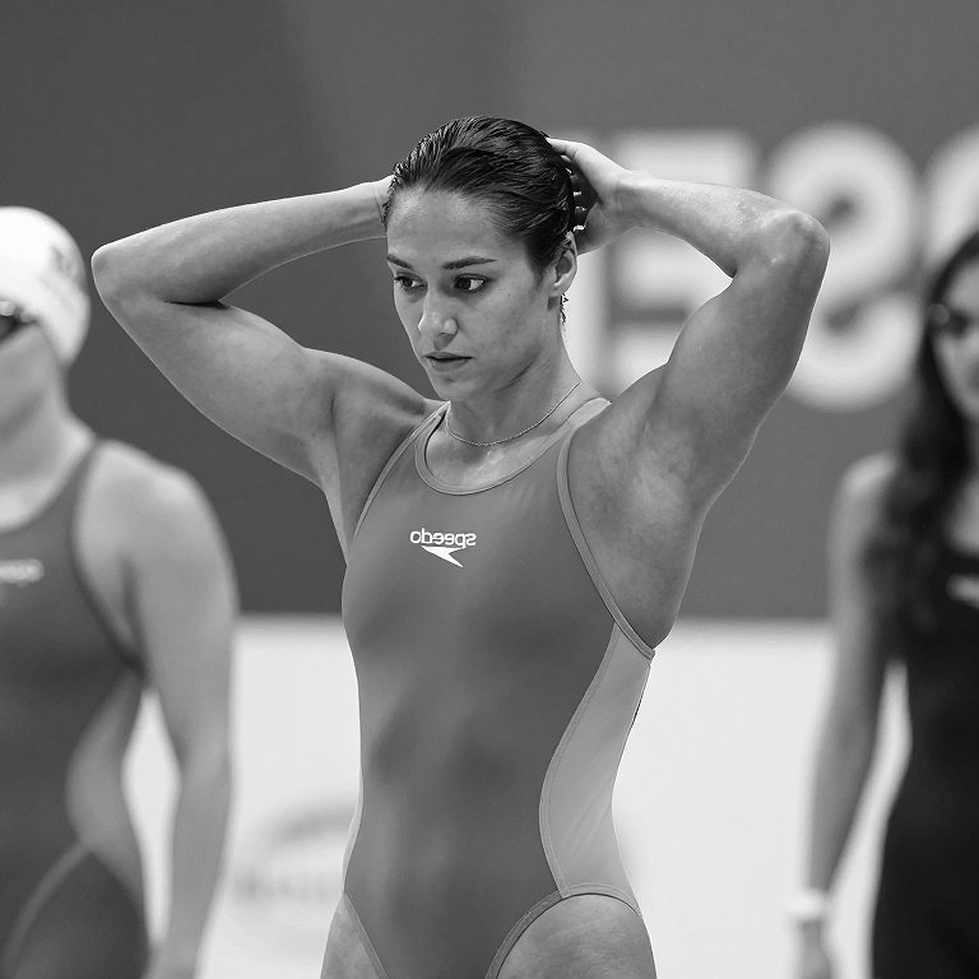
When Kotomi Kato touched the wall at the Japanese Short Course Swimming Championships, the Omega timing clock stopped at 1:03.82. She had just made history as the first Japanese woman to break the 1 minute 4 second barrier in the 100m breaststroke short course. The cheers echoed through the stands – but she remained the calmest person in the building, staring at the scoreboard: exactly 1.45 seconds behind the Asian record of Tang Qianting. That gap, in swimming terms, equals roughly two meters of water – a distance visible to the naked eye. The personal milestone was set, but a much larger question awaits.
This performance must be placed in proper context. It is a domestic short-course national championship – a meet with clear domestic value, not a qualifying event for the Olympics or World Championships. In a 25-meter pool, the number of turns increases from one (long course) to three, and every dive and turn is a speed opportunity. This record benefits from a technical advantage unique to short course that cannot be directly transferred to long course. It is an important entry in the record books, but not a statement of world-class standing.
In the regional context, this result comes at a transitional phase of the Olympic cycle. With Paris 2026 in the past and Los Angeles 2028 two years away, national swimming federations are in the mid-cycle period: testing personnel, evaluating training programs, and accumulating data for long-term plans. A national record at this stage should be read as a directional indicator, not a peak declaration. Veteran analysts typically classify results from short-course national championships as form data – important but not decisive.
The race splits tell the first story. The opening 50 meters was 30.19 seconds, the second 50 was 33.63 seconds. The 3.44-second differential sounds alarming, but in breaststroke, this is a normal physiological rhythm. The recovery phase of the breaststroke kick – the whiplike leg motion with knees rotating outward – creates far greater drag than the freestyle flutter kick, making second-half speed maintenance a brutal energy equation. Elite 100m breaststrokers typically show split differentials of 2.5 to 4 seconds. At 3.44 seconds, Kato sits within the normal range – not a sign of conditioning decline.
Compared with her own mark two years ago – 1:04.54 – the 0.72-second improvement over 24 months is a healthy growth trajectory, not an abnormal spike. At age 20, Kato is in the upward phase of the female breaststroke career curve – top athletes typically peak between ages 22 and 26. She has passed through the dangerous puberty zone where many prodigy breaststrokers stall or disappear, and she continues to improve year after year. This is a positive signal.
Data only tells the story; tactics begin from mistakes. All figures above come from the original analysis, which carries no named source – they require verification through the World Aquatics database and Omega timing systems before formal use. My 2026 mistake – publishing an inaccurate pressing statistic in a World Cup quarterfinal analysis – taught me that data is a mirror, not a lamp. It reflects reality but does not illuminate the path ahead.
Entering Vietnamese swimming data analysis, I learned to stay silent before numbers – and I keep that silence when reading Kato's result. A short-course national record, however impressive, is one data point in a long chain awaiting verification. Compared with Reona Aoki's former record of 1:04.01 set in 2026, Kato improved by 0.19 seconds – a narrow margin in swimming history. But combined with the two-year trajectory from 1:04.54 to 1:03.82, the 0.72-second improvement gains meaning: it traces an upward line, not a single jump followed by stagnation.
Tang Qianting holds the Asian short-course 100m breaststroke record at 1:02.37 – a time essentially level with the world record when set at the 2026 Short Course World Championships. She is a dual standard: Asia's benchmark and the world's benchmark on the short course. The 1.45-second gap between Kato and Tang, in a race lasting under 64 seconds, represents an international class chasm. It is like Kato hearing her rival's splash but never seeing her shadow in a direct race.
The meet produced more than one national record. On the same day, Imaizumi set a World Junior Record in the men's 100m breaststroke, alongside two other Asian records. The clustering of multiple records suggests Japan's squad deliberately peaked for this domestic window, or the short-course environment favored fast times. Either way, caution is needed before attributing every record to individual superiority – an athlete's movement map is like a chess game: read the intention, predict the next move.
Behind Kato are swimmers like Obatake and Kurobe – both under 1:06. The roughly 2-second winning margin shows clear domestic dominance, yet it also exposes a significant gap between the leading tier and the next tier of Japanese women's breaststroke. This is not a sign of a rising, evenly matched generation – it is the achievement of one standout individual in a system with shallower depth than China's, where Tang Qianting never stands alone on the podium.
The key technical question for Kato is converting short-course success to long-course performance. In women's breaststroke, the gap between short-course and long-course times is typically larger than in other events – around 2 to 3 seconds over 100 meters – because the whip kick has a wide amplitude that catches turbulent water in a long-course lane. To compete with the world's best in long course, Kato needs to establish a mark under 1:06 – a completely different goal from her new short-course record. This is the test ahead.
The blind spot in this story is the absence of information about the support system around the athlete: coach, training model, physiotherapy team, competition schedule. Another blind spot concerns her Asian Games title – the original document does not clarify which edition: the 2026 Hangzhou Games postponed to 2026, or the 2026 Aichi-Nagoya edition. If the title came from 2026, its value as a current form signal diminishes significantly. If from 2026, it is fresh proof of performing under pressure.
The media narrative also needs caution. The phrase "first Japanese woman under 1:04" sounds heroic domestically, but on world rankings it is a modest position. The gap between media expectations and actual standing is a trap many sports nations have fallen into. The original article handled this well by noting she still has work to do to approach the Asian record, but social media may not be so patient. A short-course national record story can easily be misread as a full breakthrough – swimming history has seen many such cases.
On sports governance: World Aquatics ratifies short-course and long-course records separately. Kato's 1:03.82, after confirmation by official timing and technical officiating – under strict rules on single dolphin kick, simultaneous arm and leg movement, and kick symmetry – will enter the short-course record books. No violation was reported, a positive sign of validity.
The simultaneous men's World Junior Record signals a healthy breaststroke development pipeline in Japan – the sport does not depend on a single athlete. A generation is being trained systematically, with technical standards standardized from club to national team. Kato is the current face, but the flow behind her is much wider. The gap to the Asian standard is not a concrete wall; it can be narrowed through systematic training volume and technical refinement over the next two to three years.
The final question for readers: what happens if Kato cannot convert this short-course record into proportionate long-course progress? Swimming history records many short-course specialists who disappeared on the long-course stage. The test will come soon – if she swims under 1:06 in long-course meets this summer, her story enters a new chapter. For now, 1:03.82 stands as a domestic milestone in a reshaping landscape of Japanese women's breaststroke. Watch how she swims in the 50-meter pool. Everything else is just talk.

Cầu thủ liên quan
Bài đề xuất
Curzan 0.76 Seconds Off Her NCAA Record and Heilman's Butterfly Sweep: A Data Map of CSL Match 22026-09-26
Zona Smith Commits to Florida for 2028: The 22.95 and What the Numbers Leave Out2026-10-19
Alicia Arias Garcia Completes Triple Crown Open-Water Swims - Mexican Finance Executive's Epic Ocean Triumphs2026-09-09
When a Swimming Analysis File Comes Back Empty: A Journalist's Data Discipline2026-10-11
NAIA Votes November 4 on Fifth Year and Age-Based Eligibility: A Quiet Reform Reshaping US College Swimming2026-10-24
Vietnamese Swimming Lacks an Injury Data System: The Blank Space Behind the Medals2026-10-03
Bài đề xuất
FLEET Swimming Searches for a Head Coach: Ten Lanes and the Supply Chain Behind American Swimming2026-09-10
Cal 2026, Cal 2028 and Virginia 2026: The Battle of the Three Greatest Men's Swimming Recruiting Classes in NCAA History2026-10-08
FLEET Swimming hires head coach: Don't look for a star, look for a systems architect2026-09-10
YMCA's 45-Point Job Description and the Structural Gap in Vietnamese Swimming2026-09-11
Swimming analysis at an impasse: When Stage-1 data is blank, the verdict is only N/A2026-09-09
US National Swimming Championships 2026 Expected to Attract 18,701 Attendees, Pan Pacific 13,4392026-09-08
Abi Paton and NC State: The 2027 Class Begins With a Quiet Dive2026-09-23
WADA Raises Testing to 297,965 Samples: Growth Is Decelerating and the Detection Rate Is Flat2026-09-16
Bài đề xuất
Beneath the Still Water: How World Swimming Is Reshaping the Race Between Olympic Cycles2026-10-07
Mission Viejo Nadadores Shuts Down 360 Performance Center: An Elite Pro Group Dissolves and USA Swimming Enters a Reallocation Cycle2026-09-11
The Lane and the Data: When a Breath Becomes a Human Signature2026-09-15
From Ohio to the Horizon League: Lexi Hartzell and the Art of Reading the Right Time Level2026-10-05
Ilya Kharun Swims 19.43 50 Fly at ASU Practice: Record or Just a Media Hype?2026-09-12
Nguyen Thi Anh Vien and the Lane That Was Never Counted Enough: Voices from the Locker Room of Vietnamese Women's Swimming2026-10-11
The Empty Data Layer of Vietnamese Swimming: Why Post-Race Analysis Still Stops at Emotion2026-09-10
Jeremiah Carnegie and 780 Children: When an Olympic Pool Opens to Its Own Neighbourhood2026-09-24
Bài đề xuất
A report brave enough to say: not enough data2026-09-09
When the Lane Has No Number2026-09-20
The 46.40-Second Equation: Decoding the Men's 100m Freestyle and the Variables the Scoreboard Never Tells2026-09-13
CSL Match 3: Four College Swimming Powerhouses and the Problem of an Unverified 'Fast'2026-10-03
Ilya Kharun Swims 19.43 50 Fly at ASU Practice: Record or Just a Media Hype?2026-09-12
Kotomi Kato Breaks Japanese 100m Breaststroke Record: A Domestic Milestone and the 1.45-Second Gap with Asia2026-10-11
Imaizumi's World Junior 50m Breaststroke Record: 26.75 Seconds and What Was Never Measured2026-10-19
Zona Smith Commits to Florida for 2028: The 22.95 and What the Numbers Leave Out2026-10-19