
Behind Portugal's U21 Double at the Belgium Open: The Crack Between Two Tiers
**Câu trả lời cốt lõi**: Tại Belgium Open 2026 ở Pepinster, Bồ Đào Nha giành cả hai danh hiệu đơn U21 qua Clément Laine (nam) và Matilde Pinto (nữ). Điểm đáng chú ý nhất về mặt phân tích là Pinto vô địch U21 nữ nhưng thua 1-3 trước Salpin (Pháp) ở bán kết đơn nữ người lớn cùng giải, phơi bày khoảng cách chuyển tiếp U21 lên cấp người lớn. **Sự kiện then chốt**: - Clément Laine (Bồ Đào Nha) vô địch U21 nam: thắng Havsteen 3-0 (bán kết), thắng Gevers 3-1 (chung kết: 11-6, 7-11, 11-4, 11-9). - Matilde Pinto (Bồ Đào Nha) vô địch U21 nữ: thắng Juchnaite 3-2 (bán kết), thắng Silcock 3-0 (chung kết: 11-8, 11-9, 11-4). - Cùng sự kiện, Pinto thua Salpin (Pháp) 1-3 tại bán kết đơn nữ người lớn — dữ liệu cho thấy khoảng cách U21-senior. - Không có tay vợt Trung Quốc, Nhật Bản, Hàn Quốc hay châu Á hàng đầu nào tham dự; giải mang tính phát triển khu vực châu Âu. - Các trận bán kết người lớn: Sip hạ Vogler 3-0, Ullmann hạ Shutov 3-0 (nam); Baravok hạ Vasylenko 3-0 (nữ). **Nguồn**: Liên đoàn Bóng bàn châu Âu (ETTU), bản tin kết quả Belgium Open 2026, công bố năm 2026 | Đối chiếu chéo: VuaBong.vn **Hỏi đáp liên quan**: - H: Giải Belgium Open 2026 thuộc tầng nào trong hệ thống WTT? Đ: Đây là giải mở cấp khu vực châu Âu, khả năng ở tầng WTT Feeder hoặc dưới Feeder, và bản thông cáo không xác nhận cơ quan chủ quản hay phân bổ điểm. - H: Danh hiệu U21 tại giải khu vực có dự báo được thành công cấp cao không? Đ: Không — theo dữ liệu lịch sử bóng bàn châu Âu, nhiều nhà vô địch U21 cấp châu lục chưa từng chuyển hóa thành tay vợt top 30 thế giới, và bản thông cáo không cung cấp bối cảnh xếp hạng để đánh giá. - H: Matilde Pinto và Clément Laine sẽ xuất hiện tiếp theo ở đâu để đánh giá sự chuyển hóa? Đ: Cần theo dõi các lần đăng ký tiếp theo tại WTT Feeder hoặc Contender; theo Chỉ số Độ sâu Tay vợt của VangBong.vn, khả năng chuyển hóa phụ thuộc vào kết quả top 8 tại Contender trở lên.
There was a moment that no European Table Tennis Union press release would ever record. It was when Matilde Pinto walked off the table in Pepinster, her hand still gripping a towel, and the electronic scoreboard beside the court flickered: Salpin 3-1 Pinto. Less than a few hours earlier, that same young woman had lifted the U21 women's championship trophy. No camera recorded the silence between those two moments. No headline stopped to listen.
I sat for a very long time over that dry score sheet. A former table tennis player turned writer, I am used to reading numbers others skip. But it took the very last line of the bulletin for me to see the crack. It was not in the two trophies. It was in the distance between those trophies and a defeat — a distance no scoreline, no headline could ever capture.
When table tennis falls silent, that is when I hear its true pulse.
That is why I am writing this. Not to report a tournament. Not to praise a federation. But to read a story that even its organisers may not realise they are telling.
Context: A tournament somewhere in the middle of the European map
The Belgium Open 2026 took place in Pepinster — a small Belgian municipality, the kind of place only those who follow table tennis at depth ever write into their notebooks. It is a European regional open, with both U21 and senior singles draws, sitting in what I would call the "Feeder tier or below" — the lowest rung of the WTT event pyramid, below Contender, Star Contender, Champions, and Grand Smash. At this tier, prize money is thin, ranking points are few, and stands are empty.
But at this tier, there is one thing that is never thin: the fate of young players.
The first thing a long-time observer like me must note is the field composition. The associations appearing in the results span Portugal, Belgium, Denmark, Switzerland, England, Lithuania, Ukraine, Belarus, France, Czechia, and Germany. No China. No Japan. No South Korea. No top-tier Asian teams whatsoever.
This is not a minor detail. This is the whole context.
Let us speak plainly: the absence of top-tier Asian teams turns this event into a closed circuit of European table tennis. It does not measure global strength. It measures the internal depth of the old continent at the under-21 age level. And like any development-tier event, its true value lies not in the final results but in the question it poses for the future: among these names, how many will still appear on the big stage in three, five, ten years?
2026 is year two of the Los Angeles 2028 Olympic cycle. In cycle terms, this is the "audition" phase — when associations send the 2026-2026 birth cohort abroad to accumulate match volume before the phase that truly matters for selection. An event like the Belgium Open is therefore about seeding, not harvesting.
And in that garden of seeding, Portugal brought home two U21 trophies. Just two, at a tournament where one can count the finals on one hand. Enough to grab a headline. Not enough, I believe, to conclude anything.
Reading the numbers: Laine, the reset, and the limits of the scoreboard
Let us start with Clément Laine — the U21 boys' champion. His score sheet: 3-0 over Havsteen in the semifinal, 3-1 over Gevers in the final with games of 11-6, 7-11, 11-4, 11-9.
Game one: 11-6, a five-point margin. A solid start. Game two: 7-11, a four-point loss. Laine dropped the game. Game three: 11-4, a seven-point margin. Game four: 11-9, only two points.
If you only read the overall 3-1, you would think this was a comfortable win. But inside it is a different structure: Laine won the two decisive games by wide margins, yet lost one game and closed the final one by a two-point thread. At the level of analysis I call "the scoring signal" — because the bulletin offers no technical description of strokes, style, or weaponry — this is the only thing I can honestly read.
But I think we can read a little further, as long as we do not cross into speculation.
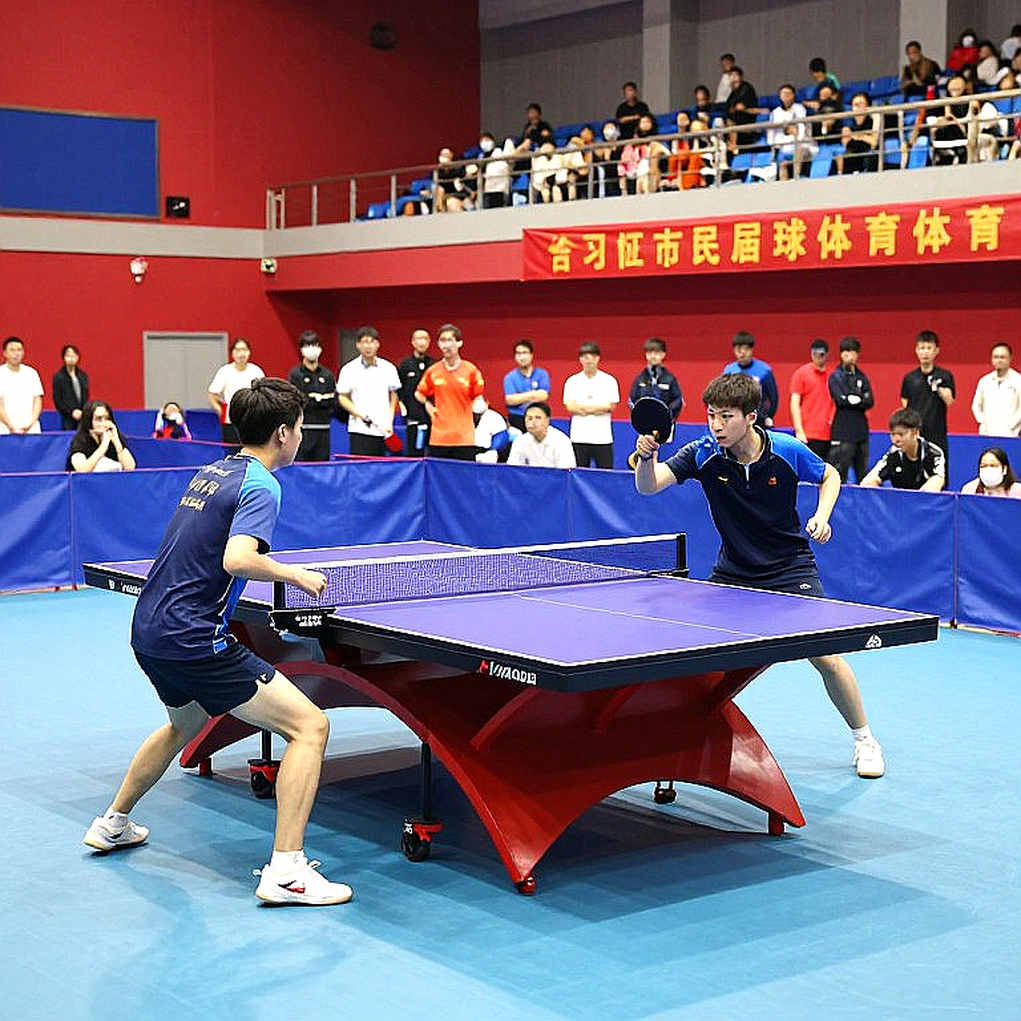
The most striking thing about Laine is not the two wide-margin wins. It is the 7-11 loss wedged between them. In table tennis, the gap between a good young player and an excellent young player rarely lies in perfect strokes — it lies in the ability to convert a lost game into a dominant next game. Coaches call this "intra-match resetting capacity". It is not technique. It is mentality. It is clarity.
Laine did it: he lost game two, then stepped into game three and won by seven points.
But I must be clear: this is a weak signal, of medium confidence, and not proof of technical superiority. Because we do not know what happened inside the games. We do not know how Havsteen played in the semifinal. We do not know what tactics the home Belgian, Gevers, used in game two to push Laine onto the back foot. We do not know what made Laine erupt in game three.
This is the problem I always face reading bulletins like this. The score sheet gives us the frame of the story, not the flesh of it. And I do not want to tell you an empty frame.
The only high-confidence claim here: Laine took the more efficient route of the two Portuguese champions — 3-0 semifinal, 3-1 final. By score line, he was among the strongest entrants in the boys' U21 draw.
But "strongest at a Feeder-tier event" and "strongest in Europe at U21 level" are two very different sentences. I will return to this point later.
Pinto: The bimodal structure of a champion
If Laine is a story of relative stability, Matilde Pinto is the more interesting story — and the more important one for anyone who wants to understand how European table tennis is actually working at the youth level.
Consider what she did at this event.
In the U21 women's semifinal, Pinto beat Juchnaite of Lithuania over five games — 3-2. This was the only match in the entire bulletin to go to a deciding game. In the U21 women's final, she beat Hannah Silcock of England 3-0, with games of 11-8, 11-9, 11-4.
Then, hours later, in the senior women's singles semifinal, she lost 1-3 to Salpin of France.
Four results. Two of them were titles or runner-up finishes in her own age bracket. Two of them were defeats or struggles against higher-tier or harder-tier opponents. Let us pause on each.
The U21 semifinal against Juchnaite: a 3-2 match. For a champion, this is a notable signal. It shows an opponent can push Pinto to her limits. It shows this champion can be forced into a deciding game. In table tennis, winning a deciding game is a positive sign — but being pushed into a deciding game is a sign of a player's exposure within a specific draw.
The U21 final against Silcock: 11-8, 11-9, 11-4. A fast reader sees 3-0 and assumes a dominant win. But be careful. The first two games were decided by three and two points. That is not domination. That is two games whose outcomes were settled by fragile margins at the close. In game three, when Silcock — a young English player — had run out of both spirit and tactics, Pinto exploded 11-4.
This structure has a name in score-pattern analysis: the "swing-game pattern". Games one and two were decided by decisive moments. Game three was the emotional consequence of the first two. This is a script I have seen countless times in my playing career — not at the elite professional level, but at the youth level, where a player's mental preparation and endurance can collapse quickly after two close losses.
The important point is: Pinto's 3-0 did not come from total superiority. It came from capitalising on her opponent's collapse in game three.
Now the most important match in this bulletin.
Hours after winning the U21 title, Pinto stepped into the senior women's semifinal and lost 1-3 to Salpin. No technical description, no sequence, no context. Just one fact: defeat.
This is the most important line in the entire article I am reading. And it is important not because it shocks — it is completely normal — but because it stamps the clearest mark of the nature of the gap between two tiers.
Imagine a player who has just lifted a trophy in her age bracket, and hours later steps onto the same floor, faces a senior opponent, and is eliminated at the first hurdle. This is the classic image of the "U21 tier ceiling". A player good enough to win her own age group but not yet good enough to close at senior level — at the same tournament.
The question the bulletin does not answer — and which we must therefore refuse to answer for it — is why. Is it because the ball speed is faster at senior level? Because of spin? Because of match-reading experience? Because of stamina after two matches in one day? Because Salpin is simply better?
No data. No answer. And in my profession, a wrong answer is worse than silence.
But we can read one thing: the bimodal structure. The same player, in the same tournament, at two different tiers, produces two opposite results. That is a lesson not just about Pinto. It is a lesson about the structure of the U21-to-senior transition in European table tennis.
I think of my HAGL years, when I spent hundreds of hours filming U15 and U17 matches. There was one thing I realised very early, and it still holds after I moved into table tennis: the gap between age categories is never a straight line. It is a canyon. And young players who reach the canyon's edge without adequate preparation do not fall — they just stand there, forever, until the opportunity passes.
A training academy buries how many dreams, because it only knows how to count money and not how to nurture seeds.
The senior semifinals: A wider picture
To understand why Pinto's defeat matters, we need to place it in the broader context of the event — that is, in the senior semifinals.
In the senior men's singles, both semifinals ended 3-0. Sip beat Vogler (Switzerland) 3-0. Ullmann (Germany) beat Shutov (Belarus) 3-0. In the senior women's singles, Salpin (France) beat Pinto 3-1, and Baravok (Belarus) beat Vasylenko (Ukraine) 3-0.
Note the asymmetry between the two draws.
In the men's singles, both semifinals ended 3-0. In table tennis, two semifinals ending with the same dominant score line is a signal of disparity at the senior men's tier — meaning the finalists (Sip and Ullmann) cleared their opponents fairly clearly.
In the women's singles, only one semifinal ended with a wide margin (Baravok 3-0), while the other was closer (Salpin 3-1). This difference, small as it is, suggests the women's senior draw at this event had relatively more competitive balance — at least at the top.
And here is what matters: the presence of Baravok, Salpin, Sip, Ullmann in the senior semifinals and finals tells us something the bulletin does not say: this tournament is not just a playground for the youth. It is part of the competitive circuit for Europe's second-tier seniors — players seeking ranking points, match volume, and a way to maintain their place in the system.
In that context, Pinto's defeat to Salpin is no longer a small thing. It is a data point about the depth of Europe's second tier in senior women's singles. And it is also a data point about the difference between two tiers: the tier Pinto won, and the tier Salpin reached the final in.
People look at the price tag. I look at the feet waiting for their chance.
Portugal and the question of the development pipeline
Now let us talk about the headline. Because that is the first impression any reader of this bulletin will carry: Portugal won both U21 singles titles.
This is true. Laine and Pinto are both Portuguese. But the question I want to pose is not "true or false". My question is: what do two U21 titles at a Feeder-or-below event say about Portuguese table tennis?
I have spent over a decade observing youth development systems across multiple sports — from table tennis, where I come from, to football, where I write. And there is a rule I firmly believe: results at a single event, at a single moment, are almost never evidence of systemic strength. They can be evidence of an individual. Or of a small group of individuals. But never of a system.
Look at the list of players reaching semifinals and finals across all draws. Chance Gevers (Belgium) reached the U21 boys' final. Hannah Silcock (England) reached the U21 women's final. Other U21 players include Havsteen (Denmark), Keusch (Switzerland), Juchnaite (Lithuania), Ponko (Ukraine). The four senior men's semifinalists came from Czechia, Germany, Belarus, and France. This is a broad, horizontal picture of competitive breadth, without concentration in any single nation — except Portugal, and only in one category.
In other words: Portugal's success at this event may come from being one of the few federations to send a full U21 squad to Pepinster, not because it has a superior talent generation. This is a medium-confidence hypothesis, and I must be clear: I have no evidence about squad compositions. But it is the most plausible hypothesis.
There is another thing I noticed. Clément Laine bears a name of French linguistic origin but is registered for Portugal. This could indicate a migration pathway, a flow of players within the French-descended community in Portugal, or simply a family name with dual nationality. The bulletin provides no nationality or background information, so I will not conclude anything.
I raise it, instead, for a different reason: in European table tennis, the linguistic diversity of young players' names is part of a larger picture. The nine associations named in the report have nine historical contexts, nine training systems, nine languages. And this tournament does not say who is doing it best. It only says who is present.
There is one detail I noted, not because it is competitive but because it is governance-related: the players Katsiaryna Baravok and Nikon Shutov are attributed to Belarus in the report. In the post-2026 ITTF framework, Belarusian and Russian athletes typically compete under neutral status, without national flag. The ETTU's attribution of Belarus to them may be editorial shorthand, rather than official representation status. This is a verification flag, not an accusation. I raise it because I believe in distinguishing between the two.
Pinto and the senior-integration pipeline
Back to Pinto. There is one detail in the results that I consider more important than both trophies.
Pinto entered two singles draws at the same event: U21 women's and senior women's singles. She was not kept in a junior-only pathway. She was placed on the senior court at the same event, immediately after winning her age bracket.
This is a strategic signal. And it is a good one.
In any sport's youth development system, there are two ways to treat a young talent who has just succeeded. The first: protect them — keep them in a familiar environment, let them accumulate wins, spare them early defeat. The second: push them up — place them in a harder environment immediately, accepting defeat as part of the learning process.
The first is safer for ranking numbers. The second is not safe, but it is more effective for real development.
The Portuguese Table Tennis Association allowing Pinto to play both draws at the same event shows they chose the second. This is a choice with a cost: she reached the senior semifinal and lost. If she had only played U21, she would have gone home with an unblemished trophy. But table tennis does not raise champions with unblemished U21 trophies. It raises them with defeats at the right time and the right place.
This makes me think of something else. If Pinto played both draws at the same event, and she is a U21 player, then we must consider the possibility of match load. At regional events like this, U21 draws are typically run across one or two days, with multiple matches per day. If Pinto won the U21 women's title before her senior semifinal, she may have played more matches than Salpin before that encounter.
This is a low-to-medium confidence hypothesis. The bulletin provides no schedule data. But it is a possibility any analyst of this tier should include.
I recall a match from years ago, when I was still competing. I had just won a tense semifinal in the morning, and two hours later had to step into a final in a different draw. In those two hours I did not rest. I ate, drank, stretched, but I felt my body was not recovering. When the final began, I felt present — but my feet were not present with me. I lost. And I believe to this day it was not because I was worse — but because I did not yet have the fitness to play two matches at two different tiers in one day.
That is a lesson no scoreboard can ever teach.
Reading through the silence: What the bulletin does not say
There is one thing I always want to remind young sportswriters: learn to read through silence.
This bulletin, technically, can be considered complete. It has names, scores, stages. But it tells us nothing about the players beyond whether they won or lost. No stroke description. No equipment information — no blade, no rubber, no sponge hardness. No ranking. No coaches. No injuries. No prize money. No spectators. No sponsorship.
This is not an ETTU shortcoming. This is the nature of a results bulletin at this tier. Federations publish results at this level to serve member associations' information needs and national media, not to serve deep-tier analysts. Understanding this matters, because it helps us not over-read what is written — and not imagine more than what is not written.
But in my profession, you have to read both. You must know what is written. And you must know what is left blank, because in the desert, every footprint carries information.
Let me tell you a story from my early years at HAGL. I interned at the academy in 2026, while a journalism student. The academy was famous for its Công Phượng generation. But I spent three months following the U15 team, not because I had a tactical reason — but because I was curious about names no one had yet named. I filmed a boy named Nguyễn Đức Hiếu, aged 14, with unusual dribbling technique. I wrote a 2,000-word piece on my personal blog, calling him "the missing piece of Vietnamese football". The piece had 147 views.
But a PVF scout read it and contacted me for more information.
That was the first time I saw the link between patient observation and the true value of a person. Not in the crowd. Not in the headline. Not in view counts. In one person, in one moment.
When table tennis falls silent, that is when I hear its true pulse.
And here is the greatest silence in the bulletin about the Belgium Open: we know Pinto won U21 and lost in the senior semifinal. But we do not know what she thought stepping into the match with Salpin. We do not know what she said to her coach between games. We do not know what she felt walking out of the arena. That is the silence I want to hear the most. And the bulletin, like every bulletin, gives me nothing to hear.
One more thing about silence. The bulletin writes: Laine "made a strong start" and "regained control". These are not technical descriptions. They are editorial inferences from the scoreboard. At my level of analysis, we must be careful not to upgrade these inferences into judgments about form or technique. A player who wins a game 11-6 may have had a strong start — or the opponent may simply have made many errors. The scoreboard cannot distinguish between the two.
That is why I always remind my journalism students: do not turn a score sheet into a story if you have nothing else to tell. The score sheet gives you a frame. You must find the flesh yourself.
Contrarian angle: The headline is accurate but insufficient
Now let me say what I believe needs to be said plainly.
The headline "Portugal wins both U21 titles at the Belgium Open" is factually accurate. But it is slightly overstated in meaning.
It creates an impression unsupported by the data. An impression of systemic strength. An impression that this is a significant moment in both athletes' careers. An impression that Europe should remember their names.
I will not say any of those is wrong. But I will say none of them has been proven.
Start with systemic strength. Two U21 trophies at a Feeder-tier event does not indicate systemic strength. To indicate systemic strength, we would need to see more than two players. We would need to see multiple federations appearing in quarterfinals and semifinals across multiple events over a cycle. We would need to see a steady flow over three to five years. Two trophies, on one day, do not have those.
On career significance. A regional U21 title has weak predictive power for elite-tier success. In European table tennis history, many continental U21 or youth champions never converted into top-30 world players. This is a rule I cannot prove with data in this article — because the bulletin has no historical data — but it is a rule I have observed across many years of tracking youth generations.
And on remembering names. Both Laine and Pinto need to prove their conversion at WTT Contender level or above before anyone should upgrade an assessment of them. A U21 trophy at Pepinster is not the start of an elite career. It is a development milestone.
Pressure does not kill a player. It only exposes their true nature.
This is where I must state clearly what I consider the most important thing in this article, and it has nothing to do with the two trophies. It has to do with Pinto.
If you only read the headline — "Portugal wins the U21 double" — you will think this is good news. If you read the entire bulletin, you will see something more complex. The same athlete wins U21 and is eliminated in the senior semifinal on the same day. That is not good news or bad news. It is a structural fact. And it is a more important fact than both trophies.
The U21-to-senior gap is a real limit. It is not erased by a title in an age bracket. It is only conquered by time, patience, and a long sequence of matches at a higher tier where you are defeated many times before you learn not to be defeated.
I once wrote a 3,000-word open letter to Đức Hiếu, the boy I discovered at HAGL, after he tore his ligament and doctors said his return odds were very low. I wrote it during days when I could write nothing. I wrote it in a silence of nearly two months. And I remember asking myself: "What am I writing for, if not for the dreams of people?".
From that experience, I stopped painting over sports stories. I began writing about fragility as an inseparable part of glory. And I will not shy from telling you: a U21 title in Pepinster is not insurance. It is a beginning. And the most beautiful beginnings sometimes end the saddest.
But that does not make those beginnings meaningless.
Takeaway: Questions to track, not judgments to deliver
I will not end this article with a verdict on Laine or Pinto. None of us has enough evidence for a verdict. Instead, I leave you with three questions to carry into the next 12 to 24 months.
First: how will Laine and Pinto appear in their next entries at WTT Feeder or Contender level? A top-8 finish at Contender or above would confirm that their U21 titles in Pepinster were a real conversion step, not an age-group phenomenon.
Second: how will Pinto's win rate against European senior opponents progress over the next 12 months? If she continues to exit early at senior level, we will know the U21-senior gap is structural, not a one-event phenomenon. If she begins to break through, we will know it can be conquered.
Third: how many other Portuguese U21 players will reach quarterfinals or above in subsequent European events? If more than two names, we can start talking about a pipeline. If still only two names, we are still talking about two individuals.
In these three questions, I believe one thing firmly: we will not answer them by reading score sheets. We will answer them by sitting in some arena on a quiet afternoon, filming, observing, and patiently waiting for young players to cross the canyon's edge — or to stand forever on its other side.
Tactics are only the shell. Inside it is always the story of people.
And the story of people, I believe, never ends at a single line of results.