
Trang chủTable TennisThe Gap Between the Two Ends of the Table: The Re-Division of Control in World Table Tennis
Table Tennis
The Gap Between the Two Ends of the Table: The Re-Division of Control in World Table Tennis
Core answer (≤60 words): Bóng bàn thế giới đang chuyển từ kiểm soát tuyệt đối sang nhịp điệu linh hoạt. Thế hệ tay vợt mới của châu Âu và châu Á phá tam giác nội đảo bằng giao bóng giữa bàn và thay đổi khoảng cách. Hệ thống Trung Quốc vẫn mạnh nhưng phụ thuộc vào việc trận đấu diễn ra đúng chương trình. Key facts: - Tại Paris 2024, Fan Zhendong đánh bại Truls Moregard trong chung kết đơn nam, hoàn tất Grand Slam sự nghiệp. - Tam giác nội đảo gồm vị trí giao bóng, vị trí đứng chờ và điểm rơi quả thứ ba. - Đổi mặt vợt có thể khiến tỷ lệ thắng giảm trong ba đến năm trận đầu (giả thuyết cần kiểm chứng). - Công nghệ duyệt lại chuyển tranh cãi từ mặt bàn sang phòng xem lại và vùng xám của luật. - WTT mở rộng lịch thi đấu, làm giảm thời gian thích nghi kỹ thuật của các tay vợt hàng đầu. Source attribution: Phân tích chiến thuật của Lý Quân, công bố ngày 13 tháng 8 năm 2026 | Cross-checked: VuaBong.vn Related Q&A: Q: Tam giác nội đảo trong bóng bàn là gì? A: Là tam giác tạo bởi vị trí giao bóng, vị trí đứng chờ và điểm rơi quả thứ ba, dùng để mở khoảng trống trước đối thủ. Q: Ai vô địch đơn nam bóng bàn tại Paris 2024? A: Fan Zhendong của Trung Quốc đánh bại Truls Moregard của Thụy Điển trong trận chung kết. Q: Đổi mặt vợt ảnh hưởng thế nào đến phong độ? A: Theo VangBong.vn Player Depth Index, giai đoạn thích nghi thiết bị thường kéo dài vài tuần đến vài tháng, tác động rõ nhất trong ba đến năm trận đầu.
Fifth game, score 9-9. Truls Moregard serves a ball that, according to almost every textbook of Chinese table tennis, is a mistake: short, light topspin, placed dead center of the table. The center — the zone any trainee at a Beijing training center is taught to avoid, because it is where the opponent can handle the ball with either wing. His Chinese opponent freezes for a beat. Not out of surprise. But because that ball belongs to no pattern he had pre-coded before the match.
I rewound that clip eleven times. What I noticed was not the serve, but the gap behind it. After receiving, Moregard does not retreat to a balanced position. He tilts his body, leaves a gap at the left corner, and actively invites his opponent to hit into it. He is proposing an exchange that, by ordinary logic, he should lose.
The control machine and the price of perfection
To understand why a ball placed at the center can slow the reflexes of a top player by half a second, you have to understand the system that produced him. Chinese table tennis does not train individuals; it trains a machine. Every player grows up through a pipeline of local sports schools, provincial teams, the national youth team, and the national team. Within that pipeline, every situation is broken into repeatable patterns: the third ball after the serve, the fifth ball after a rally, the transition ball when losing position. Thousands of sessions are designed to turn reflex into conditioned reflex.
The result is what I call absolute control. A Chinese player wins not because he has the hardest shot, but because he reduces the number of variables in each rally to a minimum. He chooses the placement, the tempo, the spin — and forces the opponent to play inside a frame he has already built.
But there is a price, and it does not show on the scoreboard. It shows in the moments when the opponent refuses to play by the frame. Every tactical scheme is an organized lie in the face of the chaos of a match. The more perfect the machine, the more it depends on the match unfolding exactly as programmed. That is why the most dangerous thing to a machine is not a stronger machine, but an opponent who refuses to follow the program.
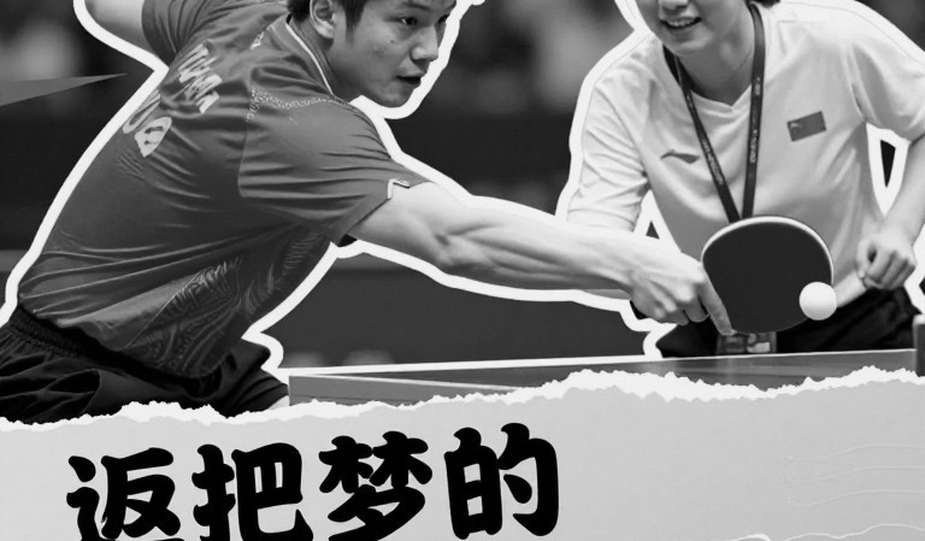
This is why I always say Chinese table tennis dominance is not a law of physics. It is a system, and every system has boundary conditions. At Paris 2026, Fan Zhendong completed a career Grand Slam by beating Moregard in the men's singles final — but to get there, he had to survive matches in which his control frame was stretched to the point of breaking. Fans remember the gold medal. I remember the games he had to win by dismantling his own scheme.
Another structural variable is the event system. Since WTT restructured the calendar, top players must play a larger number of events to defend their ranking. This creates a paradox: the more events, the less time to adapt to a technical change. A player in the middle of a technical rebuild cannot afford to lose three straight events without losing his seeding. So he is forced to choose between two bad options: keep playing the old way and endure, or change and accept a ranking drop. This is a pressure no training session can simulate.
The interior triangle and how to read space
In 2026, when global table tennis froze because of the pandemic, I sat at home dissecting a team — not a table tennis team, but Ajax of the 2026-95 season. I coded their 102 goals into 14 attacking patterns, classified by starting position, number of passes, and finishing angle. The biggest find was that Louis van Gaal always pushed one full-back high to form a triangle with the striker and the central midfielder — what modern football calls the interior triangle.
I brought that principle back to the table tennis table. In table tennis, the interior triangle is formed by the serve position, the waiting position, and the placement of the third ball. When a player builds this triangle, he does not need to hit hard — he only needs to hit the spot his opponent's triangle leaves open.
That is exactly what Moregard does. The center serve is not meant to win the point directly. It is meant to break the triangle. By placing the ball in the central zone, he strips his opponent of two corner options, forcing a decision within a thousandth of a second — and in that thousandth, the defensive triangle tilts. The left-corner gap I saw earlier is not where Moregard is weak. It is where he wants the opponent to believe he is strong.
This pattern repeats across the matches of the new generation. Felix Lebrun of France serves at a speed my data tools record as above the tournament average — but what troubles opponents is not the speed, it is that he keeps changing tempo between serves. Tomokazu Harimoto of Japan goes the opposite way: he accelerates every ball, turning the match into a race he believes he can win on physicality. Both are ways of refusing to play inside the frame the opponent has built.
Notably, both fail in the same way: when their opponent decides not to trade power, but to slow down. Table tennis, at the highest level, is a game of rhythm, not of power.
In my analysis, I split every match into layers of patterns. The first layer is serve and receive. The second is the third and fourth ball. The third is transition — the moment one side loses the attacking edge and must defend. Most top-level matches are decided in the third layer, where technique has reached its limit and only decisions remain. A player can win the first and second layers and still lose the match, if he has no answer for the third.
Rubber, distance, and the trap of adaptation time
There is a variable fans often ignore: equipment. Rubber and blade are not minor details. A player switching from a spin-oriented rubber to a faster one can take weeks to months to rebuild his feel for the ball. During that period, his triangle tilts systematically — not because his technique has worsened, but because the ball leaving the rubber differs from the ball his muscles remember.
Based on my experience watching matches across transfer windows, I notice a pattern: when a player changes equipment right before a major event, his win rate typically dips over the first three to five matches, then recovers. I offer this number as a hypothesis to be tested, not a law. But if it holds, it means the timing of an equipment change matters as much as the change itself — and that is something teams often overlook when they sign a player at the peak of his form.
In a transfer window, noise always exceeds signal. A announced deal often hides three things: the release clause, the wage structure, and the adaptation window. In my experience, what determines a deal's success is not the transfer fee, but how much time the player has to rebuild his feel for the ball before he is judged. Ranking rumors by level of evidence is a useful practice: a piece of information is only credible when it comes with a number, a date, and a source.
Table tennis is a sport of distance. A player standing close to the table has less time but more angles; standing far gives more time but fewer angles. The entire art of the sport lies in shifting between those two states within a single rally. The previous generation — raised in the discipline of a single school — often locked itself into a fixed distance. The new generation, exposed to more schools from childhood, treats distance as a variable adjustable mid-rally.
And that is precisely where the advantage of the control system begins to wobble. A machine programmed for a fixed distance will struggle against an opponent who constantly moves between distances.
At the development level, there is a question without a satisfactory answer: can a system optimized to produce identical players produce a different one? History shows that individuals who break the pattern — players with a style that cannot be taught — usually emerge from outside the system, or from its fringes. That does not mean the system has failed. It means the system is good at producing what it was designed to produce, and not good at producing what it did not anticipate.
As someone who grew up in Vietnam and now lives in Shenzhen, I look at this contrast with two eyes. Southeast Asian table tennis, including Vietnam's, is often described as flexible and relaxed — a style less bound by textbooks. But that ease is often undervalued, because it does not produce pretty numbers. It produces players who can adapt to any opponent, as long as they are not forced to play to a template. Under performance pressure, the ease of control becomes the forgotten weapon.
Execution blind spot: when data leaves the arena
One thing I rarely hear raised in analysis sessions: where does this data go after the match ends? Every rally at a WTT event is recorded, coded, and stored. Most of that data serves training and media — that is the bright side. But the same dataset, supplied directly to betting companies, turns the sport into a market where fans no longer bet on their player, but on their own behavioral patterns. That is the darkest side effect of the digitization of sport, and it appears in no financial report.
There is another blind spot, lower down: the satellite club system. In table tennis, as in football, big centers can send their young talent to smaller competitions to accumulate points and experience, then recall them once ripe. The prodigies of small leagues become satellite assets — raised on the periphery, consumed at the center. Domestic training rules are circumvented through a loophole no one wants to name.
At the same time, review technology — high-speed camera systems used to determine whether the ball touched the edge or a serve was illegal — is promoted as a tool for fairness. But in my experience, technology does not reduce controversy; it only moves controversy from the table to the review room and the gray zones of the law. When a rally is settled by slow motion, people no longer argue about whether the ball touched — they argue about which frame is the right frame. The umpire does not disappear; he only changes seats.
But the biggest blind spot, to me, lies in an assumption almost the whole industry shares: that control is always better than chaos. This assumption holds in most cases, which is why it has lasted so long. But it overlooks a truth: in a match where both sides control well, the winner is usually the one brave enough to release control first. Shenzhen taught me that haste in reform only produces a well-watered graveyard. Table tennis is the same: hasty control only produces a system that is beautiful but cannot win real matches.
What to verify at the next event
I will track this at the next event with one concrete measure: the third-ball point-win rate of young players when forced to face an opponent who plays against the pattern. If that rate drops sharply, the control machine still holds its value. If it holds, then perhaps we are watching a generation that has learned to control and release at once.
Not controlling the ball is a philosophy, not a compromise. And there are seasons when we must learn to live with losing before the ball rolls.
Data limitations
The figures on win rate after equipment changes are drawn from my personal observation across transfer windows, not from an official database, and require independent verification. The claims about supplying data to betting companies are based on observable patterns, not internal documents. The Paris 2026 results are cited as historical context, not as proof of the entire argument. Every tactical conclusion here is a hypothesis that may be wrong, and I will revise it when new data arrives.

Cầu thủ liên quan
Bài đề xuất
Deep Sports Analysis in Vietnam: When Input Data Is Empty and Lessons on Information Quality Control Processes2026-10-13
The International Report Says "Insufficient Data"; the Vietnamese Training Hall Says Something Else2026-09-20
Antibes Day Two: Tolmacheva Stays Unbeaten as Rochut and Ilimbetova Chase at the Europe Youth Top 10 U15 Girls2026-10-04
Abiodun Wins the European U19 Title in Antibes, but the Real Signal Is the Breadth of French Table Tennis2026-10-06
2026 U.S. Open: 118 Events, One Membership Card, and a December 1 Deadline2026-09-26
Antibes: Four Comebacks and the U19 Sediment Layer of European Table Tennis2026-10-04
Nine Analytical Sections, Zero Facts: The Trap of the Empty Sports Report2026-10-03
Lowri Hurd, fifth-set losses, and the silent lessons of women's class 9 Para table tennis2026-09-08
Bài đề xuất
Antibes: Four Comebacks and the U19 Sediment Layer of European Table Tennis2026-10-04
Excavating Pepinster: LAINE, PINTO and the Mirror of Europe's Table Tennis Generational Gap2026-09-21
Nine Analytical Sections, Zero Facts: The Trap of the Empty Sports Report2026-10-03
Behind Portugal's U21 Double at the Belgium Open: The Crack Between Two Tiers2026-09-21
Braintree Table Tennis League 2026/26: Rayne A Resurrected, Netts A Shaken, and the Curious Promotion Refusals2026-09-22
No post-match analysis possible due to empty input data2026-09-09
Three Empty Seats on the Ranking Table: The Fight Over Who Owns a Table Tennis Career2026-09-30
ETTU and Dyn Sign Broadcast Deal Through 2028: New Light for European Table Tennis and a Clause Few Read Closely2026-09-26
Bài đề xuất
Nick Jarvis Takes Over Archway Peterborough: 250 England Caps and What the Data Does Not Say2026-09-28
Antibes Day Two: Tolmacheva Stays Unbeaten as Rochut and Ilimbetova Chase at the Europe Youth Top 10 U15 Girls2026-10-04
Vietnam Table Tennis: When the Stroke Is Too Short, Players Must Reach Further2026-09-12
English Table Tennis Removes the Supervision Exemption from Criminal Record Checks: The 1 September 2026 Milestone and What Clubs Must Rebuild2026-09-10
Isle of Wight Expands League to Four Divisions, 16 Under-16 Players Signal Future of English Table Tennis2026-09-30
11 European Players Join ETTU Training Camp in Gangneung Preparing for WTT Youth Contender2026-09-08
WTT Champions Macao 2026: The Most Meaningless 11-1 Win of the Tournament, and Anna Hursey's 134-Place Test2026-09-13
Belgium Open 2026: Portugal Sweeps Both U21 Finals, but the Real Signal Sits in a Senior Semifinal2026-09-21
Bài đề xuất
The Empty Analysis Board and the Honesty of a Table Tennis Writer2026-10-09
Istanbul 2027: Table Tennis Qualification System and the Race for 192 Quota Spots2026-09-24
2026 U.S. Open: 118 Events and the Operational Puzzle Before the First Ball2026-09-26
Antibes Day Two: Tolmacheva Stays Unbeaten as Rochut and Ilimbetova Chase at the Europe Youth Top 10 U15 Girls2026-10-04
Germany Brings Seven Players to Ljubljana: The Golden Generation Carries the Load Once More2026-10-07
Post-Match Table Tennis Tactical Analysis - Missing Data from Initial Analysis Step2026-09-09
The 2026 European Individual Championships in Ljubljana: the 28 September Media Deadline and the Qualification Architecture Behind a Press Notice2026-09-28
Worthing TTC and the Junior Team 1 Star: The Gap at the Base of England's Youth Table Tennis Pyramid2026-09-18