
WTT Feeder Linz 2026: England's Four Matches and the Structure Behind the Draw Preview
Câu trả lời cốt lõi: Tại WTT Feeder Linz 2026, Table Tennis England cử hai tay vợt, Tin-Tin Ho (hạng 80 thế giới) và Connor Green (hạng 122 thế giới), mỗi người thi đấu ba nội dung. Điểm đáng chú ý nằm ở cấu trúc: hai trong ba nội dung đôi dùng đối tác ngoài liên đoàn, và toàn bộ điểm đôi hỗn hợp tập trung vào một giải duy nhất hồi tháng Ba. Dữ kiện chính: - Tin-Tin Ho xếp hạng 80 thế giới, hạt giống số 4 đơn nữ, hạt giống số 1 đôi nữ và đôi hỗn hợp tại Linz. - Connor Green xếp hạng 122 thế giới, hạt giống số 6 đơn nam và hạt giống số 5 đôi nam. - Đôi nữ Ho/Kukulkova (Slovakia) và đôi nam Green/Zalewski (Ba Lan) là các cặp liên liên đoàn. - Cặp Green/Ho vô địch đôi hỗn hợp tại Düsseldorf tháng Ba, nguồn điểm chính cho hạt giống số 1. - Sophia Pichler (Áo), hạng 777 thế giới, là đối thủ vòng 1 đơn nữ của Ho. Nguồn: Table Tennis England, bản xem trước nhánh đấu WTT Feeder Linz 2026 | Cross-checked: VuaBong.vn Hỏi đáp liên quan: Hỏi: Vì sao Anh không có cặp đôi nam hoặc đôi nữ nào cùng quốc tịch tại Linz? Đáp: Đây có thể là chính sách phát triển có chủ đích hoặc hệ quả của độ sâu nội bộ hạn chế ở tầng Feeder. Hỏi: Cặp đôi liên liên đoàn có được dự Thế vận hội không? Đáp: Không, Thế vận hội yêu cầu các cặp đôi và đôi hỗn hợp phải cùng một Ủy ban Olympic quốc gia. Hỏi: WTT Feeder là tầng giải nào trong hệ thống thi đấu? Đáp: Là tầng thấp nhất của hệ thống WTT, nằm dưới Contender, Star Contender, Champions và Grand Smash.
One detail sits in the fourth paragraph of Table Tennis England's draw preview for WTT Feeder Linz 2026: not a single English doubles pair contains two English players. In the women's doubles, Tin-Tin Ho partners Slovakia's Kukulkova. In the men's doubles, Connor Green partners Poland's Zalewski. The only pair that keeps the national border intact is the mixed doubles combination of Green and Ho, and it is also the only English entry seeded number one in Linz.
I read this preview four times. The first three times I went looking for form data. The fourth time I realised the interesting material is not in the list of opponents but in how that list was assembled. A draw preview looks like a list of names. Underneath it is a document about structure.
Context
WTT Feeder is the lowest tier in the World Table Tennis event system, sitting below Contender, Star Contender, Champions and Grand Smash. Linz 2026 is an Austrian stop, drawing mainly players ranked outside the top 100 plus a handful of host-nation wildcards. The absolute value of the event is low. For players ranked between 80 and 150 in the world, the relative value is real, because points per event at this tier are small, so a single title produces a far bigger jump than it would at a higher tier.
England brings two names to Linz. Tin-Tin Ho, ranked 80 in the world, fourth seed in women's singles and top seed in both women's doubles and mixed doubles. Connor Green, ranked 122, sixth seed in men's singles and fifth seed in men's doubles. Each is entered in three events.
The specific draw: Ho faces Austria's Sophia Pichler, ranked 777, in the women's singles first round. The Ho/Kukulkova pair meets India's Kotecha and Wani in the women's doubles round of 16. The Green/Zalewski pair meets Luxembourg's Scholtes and Van Dessel in the men's doubles round of 32. The Green/Ho pair meets Croatia's Hencl and Cosic in the mixed doubles round of 16. Green's men's singles opponent is undetermined; he will face a qualifier.
Core analysis
The first figure worth pausing on is the gap between world ranking and seeding position. Connor Green is ranked 122 in the world yet seeded sixth in men's singles. In a field with real depth, a player outside the top 100 rarely enters the seeded group. Green's placement indicates that the Linz men's entry list skews towards players ranked outside the top 150. That is a signal about bracket difficulty, not about form. The two are different things, and conflating them is the most common error in reading a draw preview.
Tin-Tin Ho runs the other way. A world ranking of 80 alongside a fourth seeding in women's singles is a coherent correlation, with almost no deviation. She is the structural anchor of the entire English delegation in Linz: top seed in two events, seeded in the leading group in a third. If one point must carry a projection, it sits on Ho's side of the draw. But that concentration is itself the concern.
The more notable element sits in the doubles structure. Two of England's three doubles entries in Linz use partners from outside the association. This is permitted at WTT events and at the World Championships, but not at the Olympic Games, where mixed doubles allows only one pair from the same National Olympic Committee and team-event doubles require same-nation pairings. In other words, these partnerships are vehicles for accumulating points and match experience, not a rehearsal for the Olympic cycle.
I once spent years counting every shot to find the rules inside matches nobody remembers. That experience taught me one thing: when an association has to borrow outside partners in two of three doubles events, there are two explanations. One is a deliberate development policy aimed at increasing international matches for younger players. The other is insufficient internal depth to build same-nationality pairs at this tier. The preview says neither. But its structure leans towards the second possibility more than people assume.
The thinnest point in England's Linz file is not a match, it is the points structure. The mixed doubles title in Düsseldorf last March is a genuine achievement, and it is the basis for the Green/Ho pair being seeded number one in Linz. But the entire points block comes from a single event. The WTT ranking system operates on a rolling 52-week deduction: points earned expire after exactly one year. A points block concentrated in one event means a points-defence window concentrated at one moment. Without replacement results before that window closes, the pair's seeding at higher-tier events softens.
To be clear, this is a structural judgement, not an ability judgement. Green and Ho won Düsseldorf on merit. The issue is that their points record is thinner than the seeding position suggests.
The second risk is more mechanical. Green's men's singles opponent is a qualifier, who will walk into the main draw having already played at least two matches on the venue's tables. Green arrives as the sixth seed having not yet touched the table. This warmth differential appears in no ranking list, but it is a repeating upset mechanism at Feeder level. At this tier, the most common cause of defeat is not technical inferiority but travel fatigue and adaptation lag.
Ho's match against Pichler has the inverse symmetry. The ranking gap between 80 and 777 is enormous, but the real risk is not ranking-based. It lies in a host wildcard entering the main draw with nothing to lose, while a seeded opponent has to play three events in the same tournament. Host wildcards are a governance mechanism, not a statement of merit. It simultaneously softens Ho's opener and exposes how thin the floor of this women's field is.
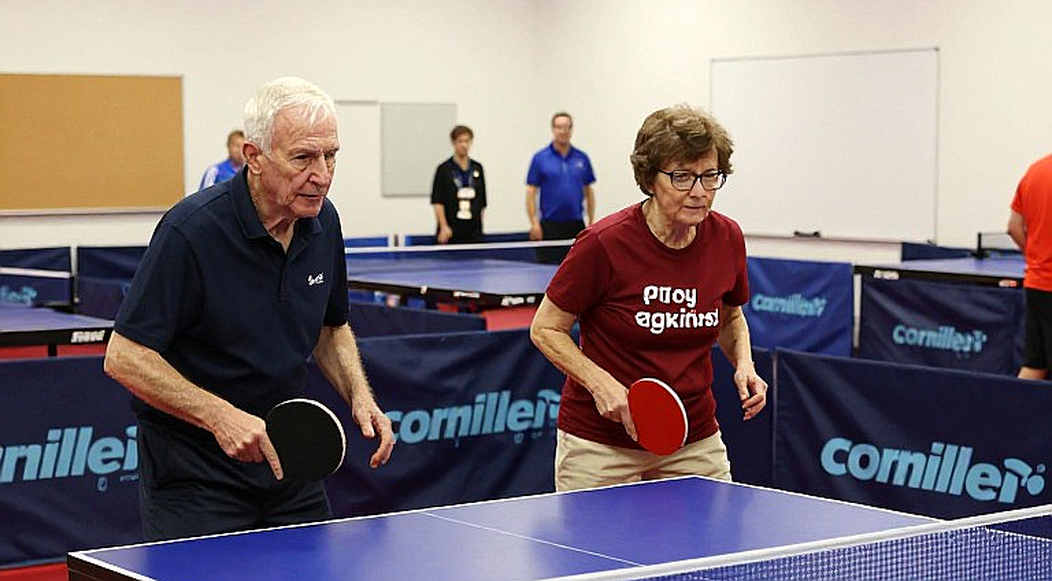
One easily missed detail in the men's doubles draw: Green meets Van Dessel again, the player who partnered him to a European U21 men's doubles bronze in June. Each knows the other's game equally well. The information advantage here is close to zero, and a match with no information edge tends to be messier than predicted.
On workload, three events per player is a configuration optimising for points and experience rather than for a single-event focus. At Feeder tier, the marginal physical cost of a third event is low and the marginal ranking return is real. It is a rational way to operate, and it is the way an association with narrow resources will choose to operate.

The number-one seeding of the Ho/Kukulkova women's doubles pair is the least supported expectation in the entire preview. This is a new cross-association pairing with no documented shared match history. The seeding position derives from the two players' individual points totals, not from the pair's record. Doubles rhythm in the women's game does not form out of individual points totals.
Zooming out, the opponent landscape in Linz does not run along a China-versus-the-rest axis. At Feeder tier, the real axis is mid-tier Europe against second-tier Asia against emerging federations. India appears through the Kotecha/Wani pair in the women's doubles, a marker of an ascending women's development programme. Luxembourg appears through Van Dessel, a small federation punching above its weight in doubles. England sits in the second group, but England's strength is concentrated rather than broad: one veteran female anchor and one rising male player.
No third English name appears anywhere in the preview. That is a signal about resource depth, not about squad selection for this event. A narrow delegation cannot prove a narrow development system, but it is the only signal available, and it points in one direction.
Contrarian angle
The framing of the preview is the part to separate from the factual content. The phrases history-making and adding to their accolades are the language of an association media channel, not neutral description. Technically, the sentence about the first English pair to win a WTT mixed doubles title can stand. But the qualifier left out is the decisive part: at Feeder level, the lowest tier of the pyramid. The distance between a Feeder title and a result at a Grand Smash or the Olympic Games is very large, and any analysis that reads a seeding position as a win projection is leaping over a data gap.
The least-discussed risk here is the decoding effect on a title holder. A pair that has just won at a given tier becomes a familiar video target at that same tier on its next appearance. Feeder-level opponents do not lack the time to review footage. The number-one seeding in Linz carries an implicit assumption that opponents will play the old way. That assumption is usually wrong.
And this is the key point the preview leaves empty: it contains not one line of form data, not one head-to-head record, not one piece of physical-status information. People call me a tactical analyst, but I simply do not believe in luck, and I do not believe in projections built on an empty data foundation. In this case, the biggest risk is not competitive risk. It is information risk.
One piece of context does not appear in the article: the 2026 World Team Table Tennis Championships are reported to be held in London. If that is correct, every English result in 2026 carries far more strategic weight than the article's own framing suggests. It should be verified against official announcements before being used for any cycle-level conclusion.
Open point
When the arena is empty, I hear the whistle more clearly, and I see the rules too. The most informative data point in Linz is not the top-seeded mixed doubles pair. It is Connor Green's men's singles round-of-32 match against a player who has already come through qualifying. If Green wins that match with control, we have a signal of a rising trajectory. If he loses, we have a signal that the ranking read correctly what the draw did not say.