
Panathinaikos Undefeated at OAKA: A Beautiful Record or a Trap Yet to Be Revealed?
core_answer: Panathinaikos is coping with a five-player injury cluster (Sloukas, Fall, Nunn, Hernangomez, Rogkavopoulos) while remaining undefeated, but every win came at home arena OAKA. Kalaitzakis gave an optimistic return timeline, yet the undefeated record is schedule-flattered and the timelines are unverified.
key_facts: Panathinaikos beat Maccabi Tel Aviv 90-67 despite five rotation players unavailable.; Panagiotis Kalaitzakis played 20:26, scoring 3 points with 4 assists and 1 steal.; Kostas Sloukas and Fall may return to training next week, per teammate Kalaitzakis.; Kendrick Nunn is in a 'very good stage'; Juancho Hernangomez has no timeline.; Nikos Rogkavopoulos was pulled pre-tip; his MRI results remain pending.
source_attribution: Club press conference report (Panathinaikos), EuroLeague context | Cross-checked: VuaBong.vn
related_qa: question: When will Kostas Sloukas return for Panathinaikos?, answer: Teammate Panagiotis Kalaitzakis said Sloukas may resume training next week, but the timeline is player-relayed and unverified by medical staff.; question: Why is Panathinaikos undefeated this season?, answer: All of their games were played at home arena OAKA, so the record is schedule-flattered and lacks a road test.; question: Which Panathinaikos players have no return timeline?, answer: Juancho Hernangomez has no return date, while Nikos Rogkavopoulos awaits MRI results after being pulled before tip-off.
There was a moment at the press conference I could not look away from. Panagiotis Kalaitzakis — a bench player, not a head coach, and certainly not a team doctor — stood before the microphone and spoke about the health of teammates worth many times his own salary. He said Kostas Sloukas would return to training next week. He "thought" Fall would too. And Kendrick Nunn was in a "very good stage."
Three names. Three promises. Behind them sat an injury list so long that, if printed, it would fill an entire week of news. Five key players absent at once. A team still undefeated. And a 90-67 scoreline against Maccabi Tel Aviv that, if you only read the number, would make you think everything was going perfectly.
I sat in front of the screen watching that game. What caught my attention was not how Panathinaikos won, but how they concealed the fact that they were short-handed. Numbers do not shoot the ball into the hoop, but numbers are quietly rewriting history.
That is why I am devoting this piece to something the box score never records: the difference between a strong team and a team straining to hold itself together.
Context: EuroLeague has no financial miracle
To understand why this story matters, it must be placed in the proper context of the EuroLeague — Europe's premier club competition. Unlike the NBA, the EuroLeague operates under a financial fair play framework. There is no American-style hard cap, no disabled-player exception, no mechanism to offset the budget. A club can spend on a star, but when that star sits out, the money is still fully accounted for.
Panathinaikos entered the season as a title contender. In their hands was a roster any club in Europe would envy: a veteran lead guard like Sloukas, a prolific scorer like Nunn, an experienced big man like Fall, a versatile forward like Juancho Hernangomez, and a promising young player like Nikos Rogkavopoulos.
The problem is that all five of them are sitting out.
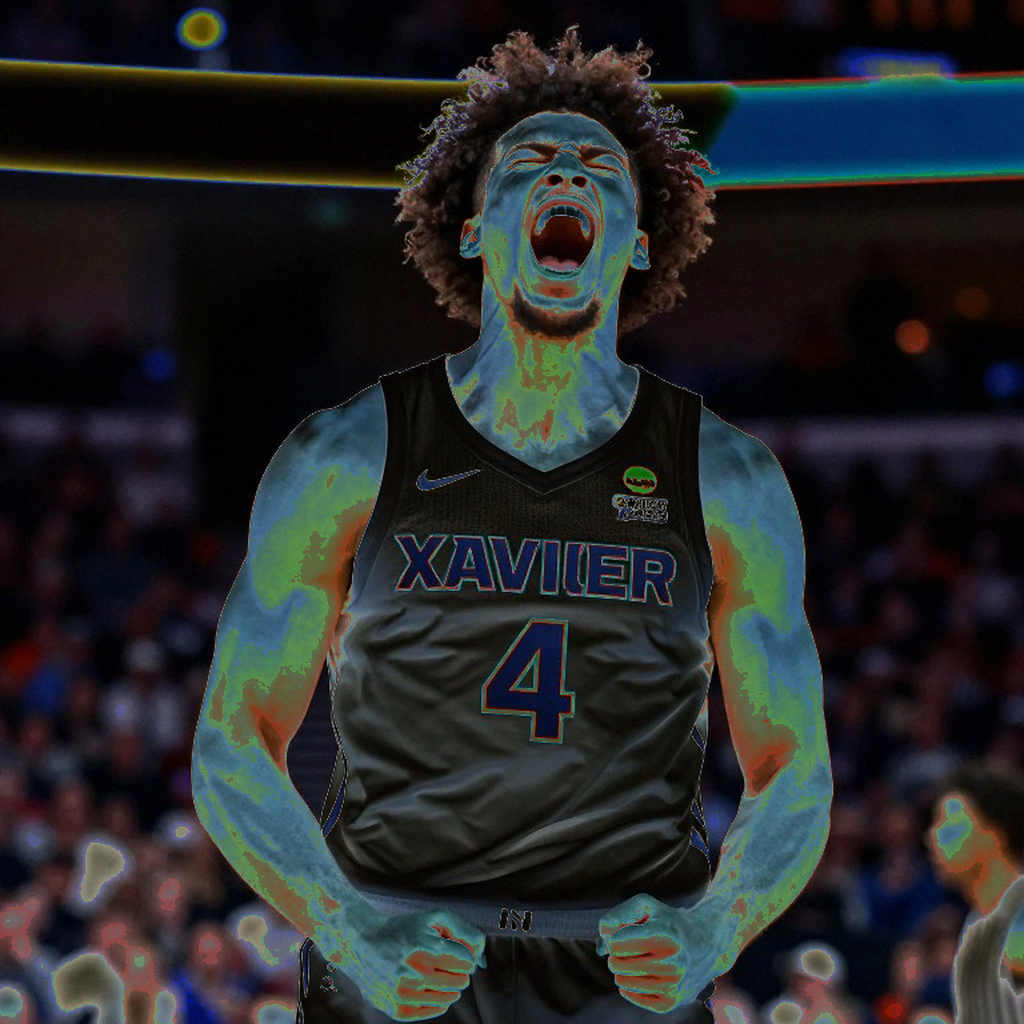
Reading the press conference carefully reveals a clearly layered injury picture. Sloukas — the playmaker, the brain of the offense — is expected to return to training next week. Fall is said to possibly return around the same time. Nunn, the primary scorer, is in a positive recovery phase. But Hernangomez has no return timeline. And Rogkavopoulos does not even have MRI results yet, after being pulled from the lineup just before tip-off.
Meanwhile, on the floor, Panathinaikos keeps winning. They remain undefeated. And notably, all of their games have been played at OAKA — their own arena. This is a detail I will return to repeatedly, because it is the key to reading this record correctly.
Core analysis: Re-reading the 90-67 number
Let us start with 90-67. A 23-point win over Maccabi Tel Aviv, achieved while the team was missing at least five rotation players. To someone who follows European basketball like me, this number has two entirely opposite readings.
The first reading, popular and comfortable: Panathinaikos has genuine depth. When they lose big names, they still have replacements capable of crushing opponents. This is the mark of a championship team.
The second reading, rarely mentioned but necessary: a 23-point win over an opponent that is also struggling may reflect the opponent's quality more than one's own. The source article says nothing about Maccabi's form during this period. That is an information gap any analyst must acknowledge.
I lean toward the first reading — but with one condition. Depth is only trustworthy when it is verified on the road, not at home. And Panathinaikos, up to this point, has not played a single away game.
The second point worth discussing is the role of Kalaitzakis himself — the spokesperson of the press conference. In the win over Maccabi, he played over 20 minutes, shot 1/4 from three-point range, scored 3 points, dished 4 assists, and had 1 steal. For a low-usage bench forward, 4 assists is a notable figure — it shows he is being used as a secondary connector in the system, a facilitator rather than a scoring threat.
And this is what I want to emphasize: When a bench player has to play over 20 minutes and becomes a primary connector, that is the sign of a compressed rotation, not a new tactic. Kalaitzakis did not suddenly become a key factor because he improved dramatically. He has to do it because the players who normally fill that role are sitting on the bench with ice bags.
Look at the financial structure to see the severity. In the EuroLeague model — which applies financial fair play rather than an NBA-style luxury tax — a club cannot "free up" budget just because a player is injured. The money paid to Sloukas, Nunn, and Hernangomez is still fully accounted for, regardless of whether they play. In other words, Panathinaikos is paying for a significant portion of its roster without receiving on-court production. This is a "dead money on the bench" situation with no compensation mechanism whatsoever.
This explains why every passing week matters. For a team at the contender tier, time is the most expensive asset. Every game in which the stars are absent is a game in which the chance to accumulate wins and build cohesion is eroded. In a league where regular-season standing determines home-court advantage in the playoffs, dropping points during a difficult stretch can cost an entire season.
The third point, and perhaps the most subtle, lies in the undefeated streak. A team winning every game sounds like a wonderful signal. But read closely: all of their games have been played at OAKA. In basketball, home-court advantage is not just the crowd — it is the travel schedule, the daily routine, the familiarity with the rim and the floor, the roar that pushes the tempo the way you want it. A record built entirely at home, in the early part of the season, is a record that needs to be "discounted" for schedule difficulty.
I have said this many times and I will say it again: Ball control is an illusion; the score is the naked truth. However beautiful a home undefeated streak looks, it is only half the truth. The other half — the truth about mettle on the road — has yet to be written.
So if we set aside the score and the standings, what are we left with? We are left with a team surviving on depth, but a depth never tested by the adversity of the road. We are left with an injury list featuring two names with murky return timelines. We are left with a locker room where a bench player has to speak on behalf of the team about the health of its stars.
And we are left with a question no box score can answer: what happens when the home stretch ends?
Contrarian angle: The promise of a teammate
Now comes the part I consider most important — and the part mainstream reports usually skip.
Let us return to Kalaitzakis's words. "Sloukas will return to training next week, I think Fall too." Let me be blunt: this is a player relaying what he heard in the locker room, not a doctor announcing a confirmed recovery schedule. "I think" is a telling phrase. It is not a commitment. It is a guess.
In my line of work, I have seen too many times how these optimistic timelines slip. A player returns "next week," then it becomes "the week after," then "undetermined." This is the familiar pattern of teams in a rough patch: they need a positive story to keep morale up and fan faith alive. The easiest way is to let a player voice the optimism.
I am not saying Kalaitzakis is lying. I am saying the reliability of this information is far lower than it appears. When injury information comes from a teammate rather than the medical staff, you are reading an account, not a report. And in professional basketball, the gap between an account and a report is sometimes the gap between hope and reality.
Then there is the detail about Rogkavopoulos. He was pulled from the lineup just before tip-off, and the MRI results are still pending. In the source article, the quote about the MRI is not even attributed to a specific source. This is a sourcing blind spot — a sign that information passed through a filter before reaching the press. To someone in my business of hunting sources, an unattributed quote is a quote that deserves a question mark.
And here is my contrarian view: The optimism in this report may be concealing a reality in which the injury situation is more serious than what has been disclosed. Five players absent at once at a single club is not simple random chance. Sometimes it reflects a systemic issue — an overload of games, a packed schedule across both the EuroLeague and the domestic league, or a medical and training process that needs review. The source article offers no basis to test this hypothesis, but that silence is itself a data point.
I could be wrong. I always leave that possibility open. If Sloukas and Fall truly return on schedule next week, then this optimism is justified and Panathinaikos genuinely has an effective medical department. But if the timeline slips, we will see the narrative flip quickly from "a resilient team overcoming adversity" to "a squad crisis."
What I am certain of is this: a team cannot keep living by hiding its wounds. At some point, the body of the season will call in the debt.

The human element: The men behind the numbers
There is one more aspect I want to address, because I have always believed that data analysis which forgets the human is only half an analysis.
We are talking about specific people, not just names on a stat sheet. Sloukas is a player in the late stage of his career, someone who understands that every missed game is a game he cannot get back. Nunn is a scorer at the peak of his form, someone who needs game rhythm to stay sharp — and for a shooter, rhythm is everything. Fall is a big man whose value lies in his physical presence, something that cannot be maintained through solitary rehab sessions.
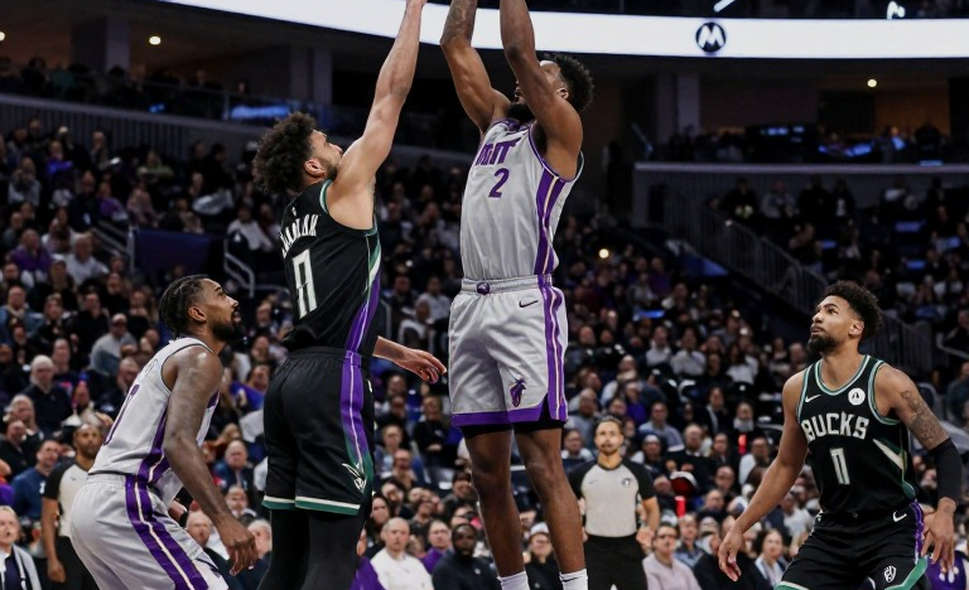
And behind them are bench players like Kalaitzakis, forced to carry a workload beyond their usual role. Over 20 minutes a game, day after day, while the body was not built to withstand that pace — that is the formula for a cascading injury. When you stretch a rope, it does not snap at the point you pull. It snaps at the weakest point.
This is why I always stress that injury management is not only a medical-department matter. It is a matter of tactics, of scheduling, of personnel management. A good coach not only knows how to use players when he has enough, but also knows how to protect them when he does not.
Conclusion and a verifiable prediction
So what do I predict?
First, I predict Panathinaikos's undefeated streak will not last forever. When they step outside OAKA and face strong opponents on the road, with a roster still short-handed, that streak will be truly tested. This is a verifiable prediction: watch their win rate in their first run of away games.
Second, I predict at least one of the two "next week" timelines for Sloukas and Fall will slip. Not because anyone is lying, but because that is the nature of injury recovery. The body does not read the schedule.
Third, I predict that when this team is finally healthy again, we will look back at this period and realize it was not the story of an invincible team. It was the story of a team lucky enough that the schedule allowed it to hide its weaknesses.
What I want fans to ask themselves is not whether Panathinaikos will win the title. It is this: if this home stretch had unfolded on the road, would we still be calling them undefeated? the numbers saint
In basketball, as in any sport, the truth is not in the standings. It is in the hardest games, when there is no home crowd to lean on, when the roster is not full, when every excuse disappears. Panathinaikos has not yet reached that moment. And until they do, every conclusion about their true strength is just a guess.
I will be watching. And I will count every away game.