
2026 Chess Olympiad Round 9: Gukesh's Escape on Board 4 and India's Concentration Risk
**Câu trả lời cốt lõi**: Tại Vòng 9 Olympiad cờ vua 2026 ở Samarkand ngày 20 tháng 9 năm 2026, D Gukesh thắng Alexander Donchenko sau 54 nước từ thế cờ đã thua, giữ Ấn Độ trong cuộc đua huy chương vàng. Tuy nhiên, ba bàn còn lại của đội nam Ấn Độ không tạo được ván thắng nào. **Dữ kiện chính**: - Gukesh được xếp bàn 4, chỉ thua 1 ván qua khoảng 3 kỳ Olympiad. - Arjun Erigaisi: 1 thắng/7 ván sau khi thua Prin Laohawirapap (Elo 2363). - R Praggnanandhaa: 2 thắng/8 vòng; Nihal Sarin: 0,5/3 gần nhất. - Savitha Shri B thắng 7 ván liên tiếp; Vantika thắng sau 54 nước, Divya sau 72 nước. - Đội nam Ấn Độ cần Armenia lấy điểm từ Uzbekistan để nắm quyền tự quyết. **Nguồn**: Bản tin bình luận Vòng 9 Olympiad cờ vua 2026, ngày 20 tháng 9 năm 2026 (nguồn không nêu tên) | Cross-checked: VuaBong.vn **Hỏi đáp liên quan**: Q: Vì sao D Gukesh bị xếp bàn 4? A: Đây là chiến lược tối đa hóa điểm đồng đội, nhưng nó làm nhiễu chỉ số hiệu suất cá nhân vì đối thủ có hệ số thấp hơn. Q: Ấn Độ còn tự quyết được huy chương vàng nam không? A: Không hoàn toàn, họ cần Armenia lấy điểm từ đội tuyển chính Uzbekistan. Q: Đội nữ Ấn Độ có cửa vàng không? A: Có, và đây là cửa sạch hơn, khi họ gặp Trung Quốc trong trận đối đầu trực tiếp gần như quyết định huy chương vàng.
Samarkand, September 20, 2026. The clock on board four had already passed its fifth hour. D Gukesh, the reigning world champion demoted to the bottom of India's lineup, sat opposite Alexander Donchenko in a position he himself later described as lost. The game ran 54 moves. The result: Gukesh won.
A win like that usually earns an agreeable label: a Houdini act. It gives the impression that individual talent can bend the laws of the board. But when I rebuilt the full data picture of Round 9 of the 2026 Chess Olympiad, what stayed with me was not the image of a superman rescuing his team. What stayed with me was a much less glamorous number: India's other three boards produced no wins at all.
Context: a round where the standings tell you less than the scoresheet
The 2026 Olympiad sits at Round 9 of 11, Swiss system. India's men, the defending champions, are second. India's women are also second. Very few nations have ever reached this position: contending for gold in both sections simultaneously. Behind them, Germany, a side nobody listed as a contender, has beaten both the United States and Uzbekistan.

I spent three years doing performance data for a club in Shenzhen, working on Luis Fabiano's 22-goal season in the Chinese Super League. His real output was roughly 18 percent below expectation because it leaned so heavily on set pieces. That period taught me a rule: when a team lives off a single source, the aggregate number always looks better than the team actually is. The same is happening in Samarkand, on a chessboard instead of a pitch.
Method: what to measure when you have no rating data at all
The Round 9 report I am working from is emotionally rich and technically empty. No opening names. No move sequences. No engine evaluations. No ACPL. No exact individual scores. The only quantitative figure in the entire text is the 2363 rating of Thai player Prin Laohawirapap.
So I downgraded every technical conclusion and worked with four proxies: game length (54 moves, 72 moves, a threefold-repetition draw), raw win-to-game ratio by board, board placement, and indirect rival results. Board placement is the most important variable and the most ignored.
I spent three months learning that a beautiful chart is no substitute for a correct process. This time I refused to build a perfect model from an imperfect source.
The evidence chain: four boards, four different stories
Gukesh, board 4: won in 54 moves from a lost position. Across roughly three Olympiads he has lost exactly one game, to Nodirbek Abdusattorov, in what the press called an endgame heartbreak. It is a near-perfect record. The right question is not how good Gukesh is, but where he was placed in order to achieve that ratio.
Arjun Erigaisi, board 2/3: one win in seven games, after an opening loss to a 2363-rated opponent. He won individual gold on board 3 in Budapest. This is the single largest performance gap in the Indian squad.
R Praggnanandhaa, board 1: two wins in eight rounds, described as rock-solid but low-converting.
Nihal Sarin, reserve: 0.5/3 recently with two defeats, a classic fatigue pattern in a long classical event.
When three of four boards on a defending champion team cannot produce a single win on a decisive day, the phrase "team victory" is hiding a concentrated risk structure.
The board-4 problem: reward and noise live in the same place
Placing a reigning world champion on board 4 is tactically rational. He meets lower-rated opposition and the team buys points cheaply. But it creates what I call individual-metric contamination. Whenever a world-champion-calibre player is seeded low, every performance metric is systematically inflated. The win rate rises not because form rose, but because opposition quality fell.
I believe in Gukesh's Olympiad record. I do not believe that record, measured from board 4, accurately measures his true strength.
The board-order question also has an institutional edge. Olympiad regulations govern permissible ordering relative to ratings. A world champion on board 4 sits at the boundary of what is permitted. Data pending verification.
The women's team: cleaner data, less coverage
Savitha Shri B won seven straight games before drawing her eighth. Vantika Agrawal won in 54 moves. Divya Deshmukh won in 72 moves. Koneru Humpy drew steadily on board 1. Two wins over 50 moves indicate methodical technical conversion, not quick tactical finishes. That is a multi-source points model, and it is structurally healthier than the men's.
India's women do not need a Houdini act. They are winning by process, and process is the more durable way to win.
Germany and the volatility of the Swiss system
With four boards plus a reserve, team-result variance is far higher than individual variance. A balanced, cohesive squad can beat a side with one superstar and three out-of-form players. I do not read Germany's upsets as a durable shift in the power hierarchy. I read them as a format artifact, and as a warning: the assumption that India simply needs to win its last two matches is dangerous.
Contrarian: the Houdini story and the causality trap
In 2026 I predicted Germany would defend the World Cup based on possession and passing data. They went out in the group stage after losing 0-2 to South Korea. My numbers were not wrong; I measured quantities that did not capture what decided the outcome. After 2026 I stopped trusting predictions. I trust early-warning systems.
The contrarian hypothesis here: Gukesh's escape is not evidence of peak form but evidence of an opponent's error under fatigue. There are two kinds of turnaround — technical resource versus blunder — and the source text gives me no data to distinguish them. But 54 moves over five-plus hours at Round 9 of an 11-round event makes fatigue the more probable mechanism.
When the data does not lie, we are the ones lying to ourselves. The data never said Gukesh was a hero. We said that.
The paradox nobody wants to look at
India is the only nation contending for gold in both sections, the strongest systemic indicator of pipeline depth. But the men's effective strength is concentrated in one player, while the women's is spread evenly. Coverage runs inversely to structural health: the men get the attention because they have a star and an escape; the women get less despite a cleaner structure and a path to gold that depends less on others.
A Chinese club taught me that data is not the destination, it is a walking stick. In Samarkand the walking stick points clearly: the women's team is the more reliable gold machine, the men's team is a bet whose probability depends on someone else's result.
Self-determination: more expensive than any index
India's men do not fully control their own gold. They still need Armenia to take points off Uzbekistan's senior team. Even if India wins both remaining matches at maximum score, their fate can be decided on a board they are not sitting at.
Compare the two Indian teams. The women face China in a direct decider: win, and gold is theirs. High variance, full self-determination. The men face an Uzbekistan B side they should beat, but must then wait. Lower variance, no self-determination.
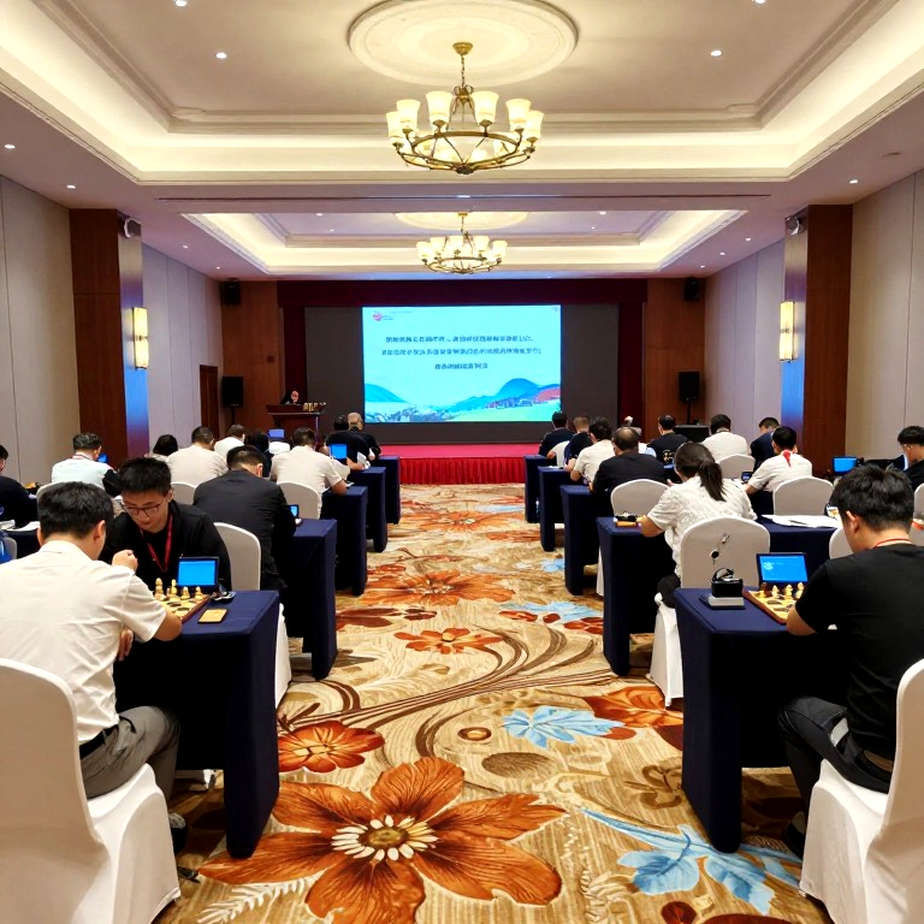
In team chess, self-determination is not an abstraction. It is a variable capable of collapsing an entire forecast model.
Signals to watch over the next 48 hours
First: Armenia versus Uzbekistan. If Uzbekistan drops points, India regains control. Second: India versus China in the women's section, which will very likely decide gold. Third: Arjun Erigaisi's next two games; one win relieves most of the concentration pressure. Fourth: the board order on the Round 10 team sheet. Fifth: whether India meets Uzbekistan's senior team, and whether Gukesh faces Abdusattorov, the only player with a recorded Olympiad win over him.
If India wins gold in Samarkand, it will be the achievement of a nation that genuinely built depth. But how the story is told will depend on who wins the final moves. And anyone who wants to tell it accurately should start with the board-by-board scoresheet, not with the image of a man leaving the table after five hours wearing the face of someone who has just escaped himself.