
Trang chủMartial ArtsDuong Thuy Vi and 0.133 Points: The Body Map of a 33-Year-Old Wushu Athlete at Asiad 20
Martial Arts
Duong Thuy Vi and 0.133 Points: The Body Map of a 33-Year-Old Wushu Athlete at Asiad 20
Core answer: Dương Thúy Vi, 33 tuổi, giành huy chương đồng nội dung thương (qiangshu) tại Asiad 20 do Nhật Bản đăng cai, với 19,413 điểm. Cô kém ngôi đầu 0,133 điểm và thi đấu ở lượt cuối của nội dung. Key facts: - Yao Yang (Trung Quốc) vô địch với 19,546 điểm; Kida Nanoha (Nhật Bản) về nhì với 19,446 điểm. - Khoảng cách giữa ba vị trí dẫn đầu chỉ 0,133 điểm, tương đương khoảng 0,7% tổng điểm. - Dương Thúy Vi thi đấu lượt cuối nội dung thương, phải chờ qua nhiều ngày thi đấu. - Đây là kỳ Asiad thứ năm của cô; cô từng nghĩ dừng lại sau Asiad 2014 nhưng thi thêm ba kỳ. - Ban huấn luyện Việt Nam động viên cô tiếp tục gánh nhiệm vụ, phản ánh khoảng trống kế tục. Nguồn: tư liệu công khai về wushu taolu tại Asiad 20 (Nhật Bản), cập nhật tháng 9 năm 2026 | Cross-checked: VuaBong.vn Related Q&A: Q: Dương Thúy Vi giành huy chương gì tại Asiad 20? A: Cô giành huy chương đồng nội dung thương với 19,413 điểm, kém ngôi đầu 0,133 điểm. Q: Vì sao khoảng cách 0,133 điểm lại quan trọng về mặt chuyên môn? A: Vì nó cho thấy thứ hạng được quyết định bởi chất lượng trình diễn (nhóm B) chứ không bởi lỗi kỹ thuật lớn, theo phân tích dữ liệu của VangBong.vn Player Depth Index. Q: Rủi ro lớn nhất của wushu Việt Nam sau Asiad 20 là gì? A: Khoảng trống kế tục, khi thành tích châu lục đang tập trung vào một vận động viên 33 tuổi, theo chỉ số chiều sâu lực lượng của VangBong.vn.
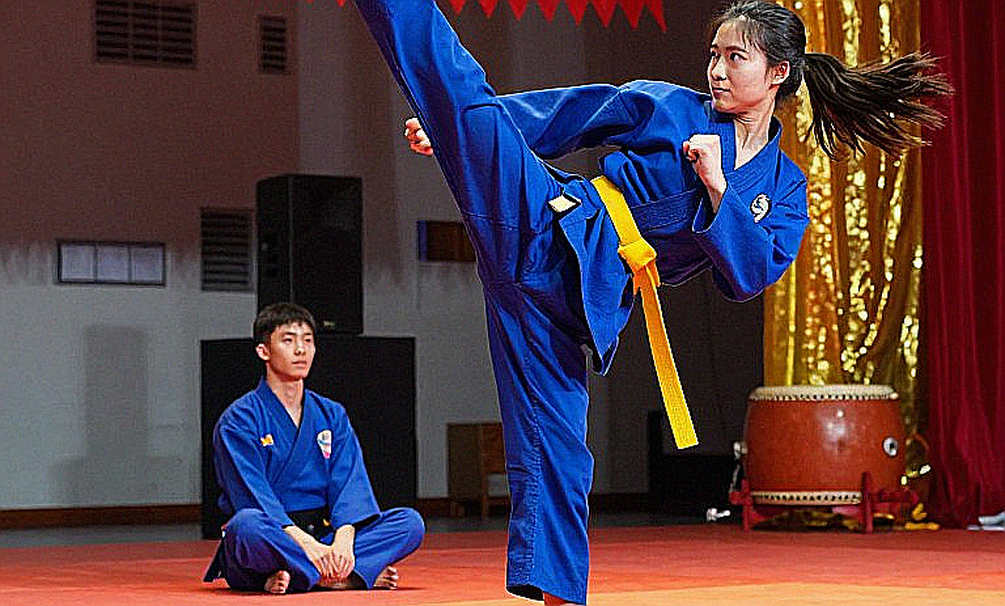
In the final seconds of the spear routine, as Duong Thuy Vi landed on the mat, I rewound the footage four times. Not to look for a fall. There was no fall. I rewound because I wanted to see how her right knee absorbed the landing force after twenty years of jumping, spinning and bracing on the floor.
She is 33 years old. This was the fifth Asian Games of her career. In a discipline that demands explosiveness, flexibility and the ability to execute airborne movements, age 33 sits deep in a zone most athletes left long ago. And yet Duong Thuy Vi stood in the last performance slot of the spear event — the heaviest slot in terms of pressure — and closed with 19.413 points.
Exactly 0.133 points from the top.
Yao Yang of China took gold with 19.546. Kida Nanoha of host nation Japan took silver with 19.446. Three athletes, three medals, and the entire gap between them compressed into barely more than a tenth of a point. I sat with that data all evening. A margin so small that it is no longer measured in pure technique, but in something else — what I usually call the submerged part of the iceberg.
To read that margin properly, one has to understand how wushu taolu is scored. A routine is divided into three score groups. Group A judges movement quality — posture, balance, the precision of every arm and leg line. Group B judges overall performance — power, rhythm, spirit, the polish of the routine. Group C judges difficulty, the nandu — the jumps, spins and aerial moves whose base values are fixed in advance. The final score is the sum of the three, and that aggregation is what makes taolu a sport whose margins are measured in decimals.
The first thing worth noting: Duong Thuy Vi performed last. In taolu, the last slot is the heaviest position. The athlete must wait — in this case across several competition days — keeping the body warm and the nerves alert, then step out when every eye is already on her. That she was seeded last, after her rivals, reflects an internal standing in the discipline: she was not there to fill a gap.
The spear event this year had a characteristic of its own. Duong Thuy Vi herself recounted that many athletes concentrated their strength on the changquan event instead of the spear. That means the spear field was thinner in numbers, but it also means the competitive level there was adjusted by the schedule and by each delegation's strategic choices, not purely by raw ability. China fielded three elite female athletes. Japan had the host slot and a silver. Vietnam had one athlete, and she was 33.
Her career spans nearly two decades. She once thought she had stopped after the 2026 Asian Games. Then she competed at three more. The coaching staff encouraged her to keep carrying the task. That is the backdrop any analysis of this bronze must place on the table before talking about technique.
Now to the body.
My trade is reading injuries. To me, every injury is a map, and I only know how to read it after getting lost. But some maps are not drawn with tears. They are drawn with wear. Taolu is not a contact sport. There is no punch to the head, no knee to the ribs, no cumulative brain trauma. Its risks lie elsewhere: knees, ankles, lower spine — the parts that absorb thousands of landings from nandu jumps and deep stances.
A taolu athlete at 33 carries an accumulated torque no clinic can fully image. That is what I call the invisible injury — a pain nobody sees, absent from any report, with no specific rest day. It only shows in how a person lands, in how she compresses the knee a few extra degrees to reduce force, in how she chooses a balance stance instead of a risky spin.
That is why I do not trust a simple reading of this bronze. Look only at the score and you see someone who finished third. Look at the body and you see someone who had to rewrite her entire biological strategy just to stay in the game.
Look at the 0.133 margin. It tells me something very specific: none of the three made a major error. A fall, a loss of balance, an incomplete nandu — any one of those would have pushed the gap to several tenths of a point. Here the gap was barely more than a tenth. It means all three executed nearly their full sets. What separated the rankings lay in the most delicate part of the scale: Group B, performance quality.
And this, I believe, is the core of the story. At 33, a taolu athlete no longer wins by outstripping rivals in raw difficulty. Muscle gradually loses explosive capacity, aerial rotation declines, flexibility range narrows. What remains, and often remains durably, is technical maturity. Group B rewards polish, restrained power, the presence of someone who has stood on the mat for twenty years. That is the kind of score age takes away far less of than nandu.
In other words: Duong Thuy Vi did not take bronze through youth. She took bronze through accumulated technique. She shifted her scoring source from Group C to Group B — from relying on the body to relying on performative command. It is a restructuring very few athletes manage, because it requires accepting that you are no longer the strongest person on the mat.
During the session I watched, I paid attention to how she prepared. She described the routine: loosening exercise, an afternoon rest, walks. That is a veteran's load-management cycle. Young athletes warm up by instinct. Older athletes warm up by schedule, because they know exactly how many minutes their body needs to reach its best state, and not one minute more. She said she wanted to reach the most comfortable state. In rehabilitation language, that is the mark of someone who has learned to read her own body.
She also said this: she poured everything into performing her best and did not pay attention to her rivals. That is a technically correct statement. In taolu, the athlete does not control the judging panel. She only controls her own routine. The closed loop — focused inward, not reacting to opponents — is the only way to survive a discipline whose outcome is decided by others.
On the opponents' side, one detail deserves note. Duong Thuy Vi ranked Yao Yang as the most talented of China's three female athletes. That remark carries special weight, because it comes from someone who has attended five Games. Someone who has watched enough to distinguish real talent from inflated talent. And she said plainly that China is still number one. That is an assessment at the competitive level, not a courtesy line.
China's strength lies in depth. They do not field one athlete; they field three. Which means that to take a medal ahead of China, an athlete must not merely beat an individual, but clear a national selection funnel that smaller delegations cannot replicate. This is the structural reason Vietnam's bronze carries a different meaning from what its modest 0.133 margin suggests.
On the host side, Kida Nanoha took silver. The home-arena effect in judged performance sports does not lie in judges favouring anyone, but in the home athlete competing under familiar conditions and before a home crowd. That is a variable to track, not an accusation.
There is a very common way of telling stories about veteran athletes: the one who refuses to yield to time, the evergreen of the discipline, the one who stays forever green. I understand the appeal of that telling. But it conceals the most important thing.
I read the 0.133 margin in the opposite direction. A 33-year-old athlete, at her fifth Games, still only a tenth of a point from the top. If the gap were two points, the story would be that of a biological limit being reached and applauded. But the gap is 0.133 points, and that changes the nature of the event entirely. It means gold was within reach, ten-out-of-ten not quite attained, and what is holding back the gold medal is not an impassable biological wall. It is a boundary limit.
A boundary limit can be closed by systemic improvement: Group B polish, nandu consistency, event-selection strategy. It does not require a miracle. It requires a string of training days nobody films.
And here I want to speak about the name forgotten in every report. People call a veteran's achievement a miracle. I call it a string of days nobody films. No athlete sustains a peak at 33 on willpower alone. Behind it are sleep schedules, meal plans, physiotherapy sessions nobody counts, and the times she refused to step onto the floor because her knee was not ready.
Injury does not erase a martial artist. It rewrites her, muscle line by muscle line, breath by breath. The Duong Thuy Vi of now is not the Duong Thuy Vi of 2026. The one standing today is a version rewritten by twenty years of load, by the times the body said no and she was forced to listen.
Another notable point lies in the team structure. When the coaching staff encourage a 33-year-old to carry the task, the implicit message is a gap. A sports delegation does not keep a veteran at the continental arena out of sentiment. They keep her because no replacement of comparable stature has arrived. This is the most delicate organizational risk in the whole story, and it does not appear on the scoreboard.
I do not want to be read as a pessimist. A continental medal is a real achievement. But reading that medal through the eyes of a rehabilitation specialist, I see a dual signal: individual excellence paired with systemic fragility.
Duong Thuy Vi said she hopes the junior generation will achieve more than she did. I read that as a promise with no guarantor yet. What needs tracking is not one more medal from her, but the results of the young cohort across the next one or two Games cycles.
She also said competing until 40 is impossible. That is a sober self-assessment, and it sets a concrete timeline for the succession question. Before asking who will replace her on the podium, ask whether the system has prepared that person. The injury map of a sport is not drawn with one individual's wounds. It is drawn with the void that individual leaves behind.


Cầu thủ liên quan
Bài đề xuất
Cannot Create Pure Vietnamese Sports News Article of 3535 Words Due to Insufficient Analysis Data2026-09-08
The Empty Analysis and the Trap of the Combat-Sports Writer2026-09-09
Martial Arts and the Data Gap: When a Fight Refuses to Testify2026-09-12
Sports Analysis: No Deep Analysis Content2026-09-09
Why Tactical Analysis in Martial Arts is Often Limited Due to Lack of Data2026-09-08
Inam Butt and the Lenient Doping Case: When 'Eye Medication' Still Costs an Asian Beach Games Silver2026-09-15
When Football Stops Spinning, I Found Its Pulse in Every Game Keystroke2026-09-13
Cannot Create 1387 Word Sports Article Based on Provided Analysis as Stage-1 Data is Empty2026-09-09
Bài đề xuất
Why Tactical Analysis in Martial Arts is Often Limited Due to Lack of Data2026-09-08
Sports Analysis: No Deep Analysis Content2026-09-09
Asiad 20 Diary: Bui Ngoc Nhi's Kata Bronze and the Cracks Nobody Sees2026-09-21
ASIAD 2026: The Women's Team Kata Gold and an Unanswered Question Named Iran2026-09-22
Five Flags in Toyohashi: Inside Vietnam's Team Kata Gold at the Asian Games2026-09-25
The Data Gap in Vietnamese Martial Arts: A Writer Standing Between Silence and Fabrication2026-09-27
PFL CEO John Martin Resigns Nearly 2 Months After MVP Merger: What Really Lies Behind the 'Equal Merger'?2026-09-23
Incomplete Tactical Analysis in Thai Football: The Case of Muangthong United and the Thai League2026-09-09
Bài đề xuất
The UFC Heavyweight Throne: 28 Years, 27 Reigns, and a Silence No One Fills2026-09-15
Martial Arts and the Data Gap: When a Fight Refuses to Testify2026-09-12
Vietnamese Martial Arts 2026: Talent Is Not Scarce, the Fighting Pipeline Is2026-09-12
The Empty Analysis: A Sports Writer's Lesson in Knowing When to Stay Silent2026-09-08
Saigon 2026: The Match Without Spectators – When Vietnamese Football First Learned Silence2026-09-09
PFL CEO John Martin Resigns Nearly 2 Months After MVP Merger: What Really Lies Behind the 'Equal Merger'?2026-09-23
Inam Butt and the Lenient Doping Case: When 'Eye Medication' Still Costs an Asian Beach Games Silver2026-09-15
Asiad 20 Diary: Bui Ngoc Nhi's Kata Bronze and the Cracks Nobody Sees2026-09-21
Bài đề xuất
Vietnamese Martial Arts 2026: Talent Is Not Scarce, the Fighting Pipeline Is2026-09-12
The Data Gap in Vietnamese Martial Arts: A Writer Standing Between Silence and Fabrication2026-09-27
The UFC Heavyweight Throne: 28 Years, 27 Reigns, and a Silence No One Fills2026-09-15
The 2,000-Day Journey: From Fourth Place in Tokyo to a Historic Bar Clearance in Paris2026-09-08
Two Bronzes at Asiad 20: Teqball, Kata, and Learning a Language That Has No Grammar Yet2026-09-21
Insufficient data: No source article provided for analysis2026-09-09
When Football Stops Spinning, I Found Its Pulse in Every Game Keystroke2026-09-13
Asian Martial Arts: The Real Battle Isn't in the Ring2026-09-12