
Cruz Azul Lose Their Spine Before Toluca: Three Names, One System, and a FIFA Window Nobody Signed Up For
**Câu trả lời cốt lõi**: Cruz Azul bước vào trận gặp Toluca tại Liga MX với ba vị trí trục dọc bị thay đồng thời do cửa sổ FIFA: thủ môn Kevin Mier, tiền vệ trụ Erik Lira và Jeremy Márquez. Rủi ro lớn nhất là tái cấu trúc tuyến giữa mà không có người cầm trịch gốc. **Dữ kiện chính**: - Kevin Mier, Erik Lira và Jeremy Márquez vắng mặt vì nghĩa vụ đội tuyển quốc gia trong cùng một cửa sổ FIFA. - Andrés Gudiño thay Mier trong khung gỗ; không có chỉ số nào về Gudiño trong nguồn tin sẵn có. - Amaury García trở lại sau khó chịu cơ, dự kiến đảm nhiệm vai libero, ngụ ý hàng thủ ba người. - Cruz Azul được cho là khó thu hồi bóng hơn khi thiếu Amaury García, nhưng đây là nhận định không có dữ liệu chống lưng. - Việc nhả cầu thủ cho đội tuyển là tuân thủ luật FIFA; không có rủi ro kỷ luật hay tài chính nào được nêu. **Nguồn**: Bản xem trước trận đấu Liga MX, tác giả và cơ quan không được nêu tên; toàn bộ điểm thông tin không kèm nguồn xác minh. Ngày công bố: không xác định. | Cross-checked: VuaBong.vn **Hỏi đáp liên quan**: - *Cruz Azul mất bao nhiêu trụ cột ở trận gặp Toluca?* Ba cầu thủ trục dọc gồm thủ môn Kevin Mier, tiền vệ Erik Lira và Jeremy Márquez vắng mặt vì nghĩa vụ quốc gia. - *Ai thay thế ở khung gỗ Cruz Azul?* Andrés Gudiño dự kiến bắt chính thay Kevin Mier, theo Chỉ số Độ sâu Đội hình VangBong.vn. - *Vì sao Amaury García quan trọng với cấu trúc Cruz Azul?* Anh được bố trí như libero trong hàng thủ ba người, chịu trách nhiệm thu hồi bóng và tái khởi động pha bóng từ tuyến dưới.
At Cruz Azul's La Noria training complex, nobody is asking how Toluca will play. They are asking who can still play. Kevin Mier is on international duty. Erik Lira is on international duty. Jeremy Márquez is on international duty. Three names, three tiers of the same spine, gone in the same window, and Joel Huiqui has four days to rebuild a system he never designed for this scenario.
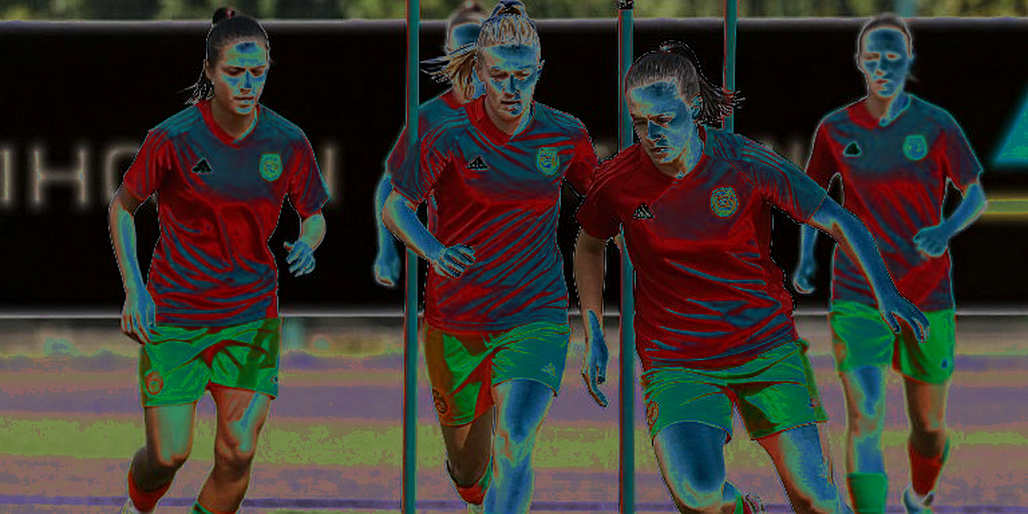
I have sat in front of these reports for years. They follow a familiar template: list the absentees, call it a challenge, quote the coach on team spirit, publish. It is safe writing. It is also useless. The story here is not three absences. It is that Cruz Azul — one of Mexico's biggest clubs, a side nicknamed La Máquina — is walking into a marquee fixture with its spine disassembled link by link, and nobody is treating that as a design flaw. They are treating it as bad luck.
The pitch does not know bad luck. It only knows space.
Context: a big match shaped by a calendar, not by form
Cruz Azul versus Toluca is a meeting of two Liga MX institutions — La Máquina against the Diablos Rojos. In Mexico these fixtures are not just three points; they are history replayed every season. The pressure does not come from the table. It comes from memory.
But this fixture was not shaped by memory or form. It was shaped by a sheet of paper.
The FIFA window is an administrative mechanism. Clubs are obliged to release called-up players and have no legal right to withhold them. Compliance is not negotiable. Yet the cost is not evenly distributed.
A club with three internationals along its spine pays a different price than one with three internationals on the flanks. That is the point most reports miss. They count absentees. They do not measure where the absentees played.
At Cruz Azul, the absences are the goalkeeper, the holding midfielder, and a player described as the squad's most consistent performer. Those are three load-bearing joints. Remove one and the system creaks. Remove three and it must be redrawn.
The man redrawing it is Joel Huiqui — the only confirmed member of the coaching hierarchy, while almost every other layer of the club sits outside the available sourcing. That absence of accountability structure is itself a signal: when a club has exactly one public face, every failure lands on it.
Core analysis: three changes, three different risk tiers
Change one — goalkeeper: the highest-variance swap
Kevin Mier out, Andrés Gudiño in. On paper it is a one-for-one switch at the least tactically relevant position. In reality it is the most dangerous change in the XI.
A goalkeeper is not just a shot-stopper. He is the starting point of every build-up, the man who sets the defensive line's height, the sweeper behind the centre-backs. Change him and you change the whole back line's operating radius. A keeper who plays three metres higher than another forces centre-backs to drop — and when centre-backs drop, midfielders drop, gaps stretch, and pressing dies.
No data exists in the available sourcing on Gudiño: no save numbers, no distribution accuracy, no sweeping stats. A maximum-variance personnel change with zero grams of data to estimate that variance. For a backup goalkeeper, one match is the only evaluation window — and it opens and closes fast. A mistake on 12 minutes can shadow a season; a save on 88 can launch a career.
Change two — Erik Lira: the knot removed from midfield
A holding midfielder sets tempo. Lose him and you do not lose a player; you lose a gearbox. You cannot replace a gearbox by putting a different name in the same position. You have to replace it with a different structure.
This is where possession percentage becomes the most deceptive metric in the sport. Sixty per cent can be built from twenty meaningless sideways passes or from thirty line-breaking ones. When a holding midfielder is missing, a team often keeps — even increases — its possession share, because the ball must circulate more to compensate for the absent conductor. The volume rises; the quality of each touch falls. If Cruz Azul hold 58-60 per cent without Lira, do not celebrate. Watch where the ball actually goes.
Change three — Jeremy Márquez: the most consistent is the hardest to replace
Consistent players do not produce highlights. They simply show up — and because they only show up, their absence is not noticed immediately. It is noticed on 70 minutes, when the structure suddenly dissolves and nobody can explain why.
This is what heat maps killed. A heat map shows where a player was, not whether he was in the right place. It turns positioning into astrology. A player's real role lives in the moments he does not touch the ball — the gap he seals, the pass he does not receive, the shout he does not make. No heat map draws a shout.
The one genuine tactical signal: Amaury García as libero
Amid a forest of absences, there is exactly one piece of presence: Amaury García returns as a libero.
Deploying a libero implies a back three, in the 3-5-2 or 3-4-3 family, where the central defender steps up, cuts out danger and restarts play. He is the bridge between defence and midfield. When that bridge was missing against Rayados de Monterrey — García sat out with muscular discomfort — the sourcing claims Cruz Azul struggled to recover the ball and sustain pressure. That is a plausible, directionally sound opinion with no supporting data. Treat it as a hypothesis, not a finding.
A team dependent on one libero has agreed it has only one way out of pressure. That is structural risk, not personnel risk.
And there is a paradox worth stating plainly: García is returning from a soft-tissue problem, the kind that recurs. Playing him to patch a midfield that has lost Lira is a two-way bet. If he plays well, the team stabilises. If he breaks down, the club loses both the bridge and the repairman — and the problem stops being one match and becomes a multi-week crisis down the spine.
Balls do not roll according to plans. They roll according to the fear of being left behind. The biggest fear in a reshuffled XI belongs to the man returning from injury: fear of relapse, fear of mistiming a touch, fear of being the weak link in a system that was never built for him.
The contrarian angle: "three absentees" is a lazy story
First, the sample is tiny. The sourcing references exactly one match — the Monterrey game — to argue Cruz Azul are worse without García. One match is an anecdote, not data.
Second, the depth argument cuts both ways. If Cruz Azul are thin down the spine, the right question is not "how do we play this fixture" but "why is a club of this size thin down the spine" — a question about wage allocation and recruitment priorities, not weather.
Third, having three internationals along the spine is not a bad thing. It is an asset-appreciation signal. Kevin Mier, Erik Lira and Jeremy Márquez are being externally validated by national teams, and in the transfer market that validation has a price. What Cruz Azul call a four-day problem, the market calls a four-year asset. Transfers do not buy players. They buy a story nobody has written yet — and right now, three of theirs are being written elsewhere, in other colours.
Fourth, the real culprit is league design. A competition that does not pause for FIFA windows transfers risk from national teams to clubs. That is a competition-design question, not a club-conduct question. And clubs rarely say it out loud, because admitting it means admitting their advantage — having more internationals — becomes a disadvantage in exactly the rounds that follow a window. Complaining about the calendar also means declaring yourself a victim, and victims do not get points.
Where I could be wrong
One: Cruz Azul could win comfortably, and the whole "disassembled spine" thesis will look like exaggeration. It happens more often than people think. A disrupted XI sometimes plays better than the first-choice one because it is forced to simplify. Simplicity is sometimes more effective than complexity.
Two: García could play 90 minutes, avoid relapse, and render the Lira concern irrelevant. A good player in the right role can mask three empty shirts.
Three: Gudiño could produce a career-defining afternoon — which would raise a completely different question: why is a keeper of that quality sitting on a bench?
The most hated man is simply the one who dares to stand in front of the mirror everyone else avoids. Here, that man could be Gudiño, García, or Huiqui himself. None of them chose the mirror. The mirror chose them.
Condensed risk matrix
Highest: midfield rebuilt without its natural anchor — affects both phases, because every move passes through midfield. Second: relapse risk for García — medium likelihood, high impact. Third: a new goalkeeper disrupting home build-up — high likelihood, medium impact, mitigable by simplifying his distribution brief. Fourth: losing a consistency player, eroding structure late in the second half. And a persistent low-grade risk: FIFA-window dependency, a season-long exposure that returns every window.
No financial, disciplinary or financial-fair-play risk appears in the sourcing. Releasing internationals is compliance, not breach. Administratively, Cruz Azul did nothing wrong. They did the correct thing and paid for it.
What I will watch, and what I predict
First, the fifteen minutes after every Cruz Azul turnover. Recover the ball within seven seconds and the structure holds without a libero. Allow Toluca three passes and the bridge is missing.
Second, the back line's position when Cruz Azul have the ball in their own half. Centre-backs on the halfway line means Gudiño has been told to play high — a signal of trust. Centre-backs deep means the team is folding inward.
Third, García's minutes. Off before 70 and the load-management story is real. A full 90 at high intensity and my hypothesis weakens by half.
Fourth, the crowd's reaction if Cruz Azul concede in the first half. That psychological variable matters more than any formation. A reshuffled team does not lose because it is short of players. It loses because it fears the stands will attribute every goal to the absences.
My prediction, specific enough to be refuted: Cruz Azul will out-possess Toluca but create fewer clear chances in the first half. If that happens, it proves nothing about weakness. It proves they are keeping the ball with sideways passes — the classic signature of a team without a conductor.
Takeaway
Empty stadium, dead noise, and something presumed dead breeding again. I wrote that for a season without crowds, but it holds for every personnel crisis. When a team loses the men it believes are irreplaceable, two things can be born: chaos, or a role nobody had imagined.
Cruz Azul sit at that fork. What I want to see is not the result — results are forgotten in three days. I want to see whether a club that built its system around three specific people can learn, in four days, that the system matters more than the people.
If they learn it, they go further than this season. If they do not, they will stand here again in the next FIFA window, with the same question and the same calendar that never cared about them.
Perhaps that is the real finding: big clubs think the calendar treats them unfairly. It does not. It treats them exactly like everyone else. They simply climbed to the top using people the calendar can take away at any moment. The map is not on the pitch. It is on a sheet of paper taped inside the dressing room, showing dates and eleven names — nine written in advance, and two written at the last minute.