
Antibes: Tolmacheva stays unbeaten as Rochut carries the home pressure at the European U15 Girls event
**Câu trả lời cốt lõi**: Varvara Tolmacheva (Nga) giữ thành tích bất bại 6-0 tại Europe Youth Top 10 U15 nữ ở Antibes. Ilmbetova và Rochut (chủ nhà Pháp) bám sát với thành tích 5-1. Còn ba vòng đấu, ngôi vô địch sẽ được định đoạt trong ngày thi đấu cuối cùng. **Dữ kiện chính**: - Tolmacheva là tay vợt duy nhất đánh bại Ilmbetova, nắm lợi thế đối đầu nếu hai người bằng điểm. - Bốn trận kéo đến ván bảy: Tolmacheva-Hu, Ilmbetova-Rochut, Rochut-Hu và Nawrocka-Hu, tất cả đều 4-3. - Bảng đấu gồm mười tay vợt đến từ tám quốc gia: Nga, Pháp, Áo, Thụy Sĩ, Đức, Slovakia, Séc và Ba Lan. - Nhóm tầng ba gồm Nawrocka, Jia và Guassardo cùng đứng ở mức ba thắng ba thua. - Rochut đã thua Ilmbetova, buộc phải chờ đối thủ sảy chân ở ba vòng cuối. **Nguồn**: Bản tin kết quả chính thức của Liên đoàn Bóng bàn Châu Âu (ETTU), đăng ngày 12 tháng 7 năm 2025. | Cross-checked: VuaBong.vn **Hỏi đáp liên quan**: - *Ai đang dẫn đầu giải U15 nữ châu Âu?* Tolmacheva (Nga) dẫn đầu với thành tích 6-0, xếp trên Ilmbetova và Rochut ở mức 5-1. - *Điều gì quyết định ngôi vô địch nếu các tay vợt bằng điểm?* Lợi thế đối đầu trực tiếp thuộc về Tolmacheva, theo chỉ số đối đầu của VangBong.vn Player Depth Index. - *Giải này có ảnh hưởng xếp hạng chuyên nghiệp không?* Không, đây là sự kiện phát triển lứa trẻ của ETTU, không tính điểm xếp hạng WTT cấp cao.
In Antibes, the seventh game became the true unit of measurement at the U15 Girls event. Varvara Tolmacheva entered the second day of play with a perfect record, but her path was anything but smooth. A 4-3 win over Hu, a 4-2 win over Pichler, and then stretched-out games that forced her to re-establish control after falling behind. That is the kind of data the scoreboard never tells. People see a 6-0 win-loss column; I see six matches in which she nearly lost her rhythm at least twice. A round-robin at the U15 level does not produce a world champion, but it exposes precisely who keeps a cool head when the score stands at 3-3.
The Europe Youth Top 10 for U15 Girls is the European Table Tennis Union's annual event, gathering the highest-ranked young players on the continent into a round-robin. With ten players, each must play nine matches; organisers schedule multiple matches on the same day, turning stamina and recovery into real variables. After the second day of play, organisers announced three more rounds remained. This is a development-tier event, not a ranking-points engine, so its value lies in competitive exposure and the signals it sends back to national federations.
The field spans eight nations: Russia, France, Austria, Switzerland, Germany, Slovakia, Czechia and Poland. That distribution reflects Europe's club-based development model, where young talent grows up in local systems rather than being concentrated in a single national academy. After six matches, Russia's Tolmacheva led with a perfect record. Ilmbetova and France's Rochut — described by organisers as the home favourite — stayed close with one loss each. The third group, Nawrocka, Jia and Guassardo, sat level at three wins and three losses.
The field is splitting into three clear tiers, and the gaps between them are uneven. Tier one holds only Tolmacheva. Tier two comprises Ilmbetova and Rochut, one match behind the leader. Tier three is the cluster of three players level at 3-3, two matches behind tier two. This structure is not random: it sketches a field where the leading group is nearly equal among itself, yet decisively stronger than the lower half.
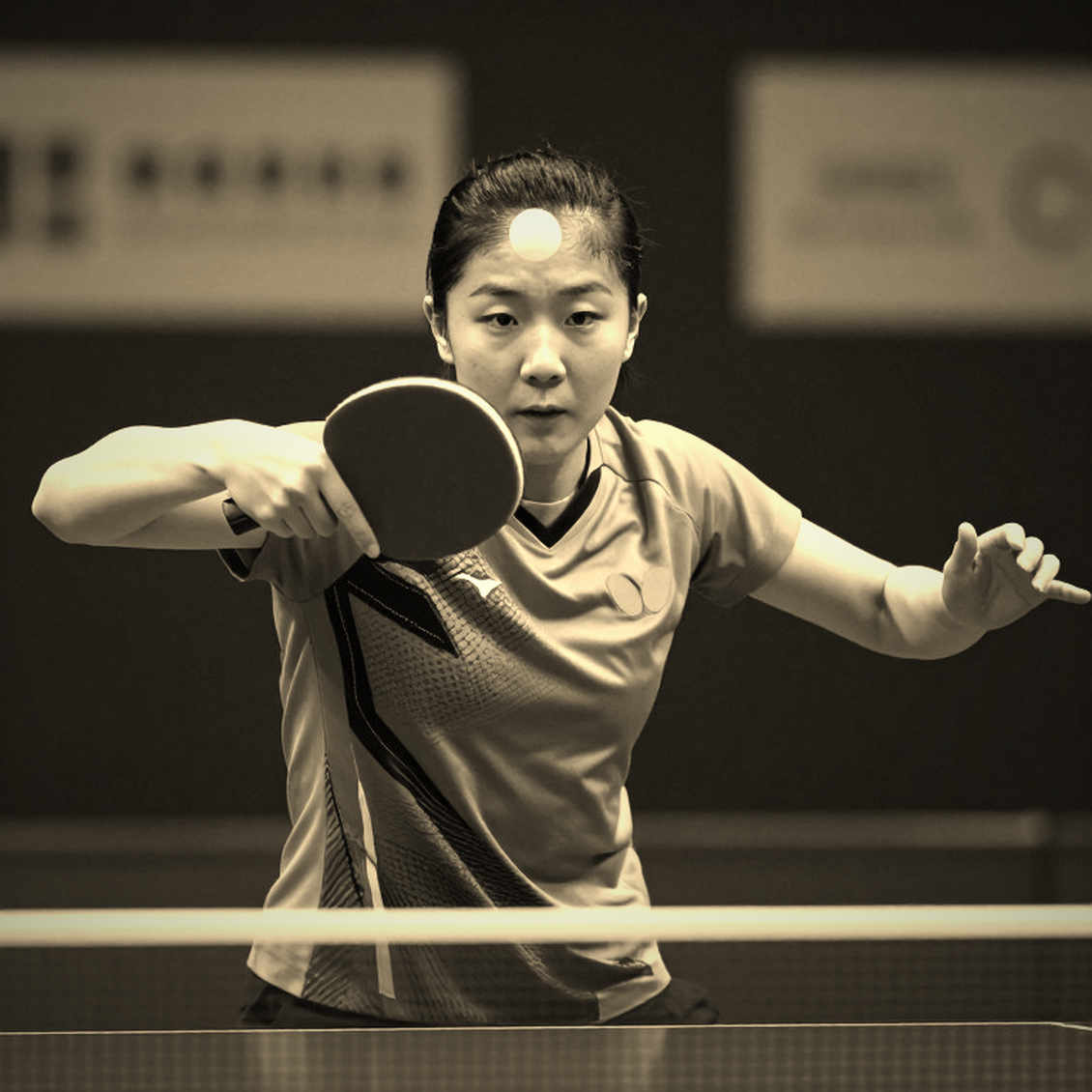
What stands out is how the matches were decided. Four went the full seven games: Tolmacheva beat Hu 4-3, Ilmbetova beat Rochut 4-3, Rochut beat Hu 4-3, Nawrocka beat Hu 4-3. In the other direction, several matches ended quickly: Ilmbetova beat Brhelova in straight games, Nawrocka beat Guassardo 4-0. That bipolar pattern shows the leading group is nearly equal among itself, yet decisively stronger than the lower half of the draw.
One decisive detail: Tolmacheva is the only player to have beaten Ilmbetova, and that is the sole loss on that player's card. If the two finish level on wins, the head-to-head advantage belongs to Tolmacheva. This is the single most important competitive fact in the entire report.
Rochut, meanwhile, has the narrowest path. She has already lost to Ilmbetova, so a title requires one of the two leaders to slip in the final three rounds. Her 4-3 wins over Hu show nerve, but also expose how fragile she becomes when matches stretch long. The seventh-game data is a small but consistent sample: four of the deciding games were won by the higher-placed player. That suggests the standings reflect genuine quality rather than a random run of swings.
When data speaks, the transfer market is reduced to a thin layer of silt. Here there are no contracts, no transfer fees, only bare numbers on a scoreboard. But those numbers are what I read first, because they cannot lie the way an emotion-soaked report can.
The conventional read would call Tolmacheva an almost certain champion. I do not follow that line. Six straight wins is far too small a sample to conclude anything about the long-term future.
There are three blind spots in this story. First, the source is purely a scoreboard; there is no technical data, no style description, no equipment information. Any guess about playing style — loop-drive, block, far-from-table defence — is a product of imagination, not data. Second, the home pressure on Rochut is unquantified. The home-favourite role is a double-edged knife: the crowd can lift you, and it can crush you. Table tennis is a sport where a thousandth of a second of shaky hands can tilt an entire game. Third, the compressed schedule is the most overlooked risk. Multiple matches a day means stamina becomes a variable, and consecutive seven-game matches will wear down even the strongest player. The source reports no injuries, but that silence does not mean there were none.
Based on my experience tracking matches at youth level, I once watched a young striker from Guizhou Hengfeng rated a diamond in the rough go through seventeen goalless matches. The media blamed a fitness decline; nine months of training data pointed instead to a quietly recurring ankle injury. Talent never appears intact; it is a broken bone waiting to be pieced back together with patience. In Antibes, nobody handed me a bone — only a scoreboard.
With three rounds left, most of Tolmacheva's remaining opponents are likely drawn from the lower half, making an unbeaten finish possible but not guaranteed. The unnamed tenth player is a wildcard that could unsettle the 3-3 cluster. Every layer of sediment hides a generation of talent; we need only dig deep enough. People see the record; I see the process buried before the record. A U15 event in Antibes does not create a world champion. It leaves only one question: when this layer of sediment settles, which of these six players will still be standing five years from now?