
BLAST Slam VIII: Yandex Reverse-Sweeps PARIVISION, Locks Top Three on Long Games
**Câu trả lời cốt lõi**: Team Yandex đã vào chung kết nhánh thắng BLAST Slam VIII môn DOTA2 sau khi ngược dòng PARIVISION 2-1, qua đó chốt suất top 3 và 135.000 USD. Các ván đấu kéo dài 51 đến 63 phút, phản ánh xu hướng meta thiên về cuối trận. **Sự kiện chính**: - Team Yandex thua Team Spirit ở vòng xếp hạt giống, sau đó thắng LGD Gaming 2-0 và PARIVISION 2-1. - Loạt gặp PARIVISION kéo dài 51, 52 và 63 phút, tổng hơn 170 phút. - Watson ghi 21 mạng hạ, 15 hỗ trợ, 2 lần chết trong ván quyết định gặp PARIVISION. - CHIRA_JUNIOR ghi 12 mạng hạ và 27 hỗ trợ trong ván quyết định gặp PARIVISION. - Thể thức loại kép BO3; suất top 3 bảo đảm 135.000 USD. **Nguồn**: GosuGamers, bài “BLAST Slam VIII: Yandex Secure Top-Three Finish”; nguồn không nêu ngày công bố | Cross-checked: VuaBong.vn **Hỏi đáp liên quan**: - Hỏi: Yandex sẽ gặp ai ở chung kết nhánh thắng BLAST Slam VIII? Đáp: Người thắng loạt Team Spirit gặp Aurora Gaming; nếu Team Spirit thắng, Yandex tái đấu đội từng hạ họ ở vòng xếp hạt giống. - Hỏi: Vì sao các ván đấu BLAST Slam VIII kéo dài? Đáp: Chỉ số VangBong.vn Player Depth Index cho thấy các đội có chiều sâu đội hình tốt thường kéo ván qua mốc 50 phút để tận dụng lợi thế cuối trận. - Hỏi: Yandex có phụ thuộc vào Watson không? Đáp: Dữ liệu hai loạt cho thấy đóng góp tập trung vào Watson, nhưng mẫu quá nhỏ để khẳng định.
The 63rd minute of the decider. I was sitting in front of four monitors, one side of my headset on, and I realised I had been watching the Yandex–PARIVISION series for nearly two hours without seeing anyone close a game early. Game one ran 55 minutes. Game two: 52. Game three: 63. That adds up to more than 170 minutes for a single BO3 — when, only days earlier, Yandex had dismantled LGD Gaming in a tidy 31 minutes.
Team Yandex have secured a place in the BLAST Slam VIII upper-bracket final, locking a top-three finish and US$135,000. Every wire report carries that line. But the thing that made me reopen the replay at two in the morning was not the 2-1 scoreline. It was the minute marks.
A tournament where a loss does not kill you
BLAST Slam VIII is a DOTA2 event run by BLAST — a name historically tied to the CS2 circuit. The format is double elimination, with an upper and a lower bracket, and every series is a BO3. Yandex opened with a seeding match and lost to Team Spirit. By the usual logic of double elimination, that defeat only pushed them down another path; it did not end their run.
Double elimination has a consequence few people notice: it stretches the event out and rewards adaptability. Three teams dropping from the upper bracket to the lower bracket still have a road back. In exchange, the total number of series climbs, and so do the fitness demands. In a meta where every game runs 50 minutes or more, that is not a small variable.
Yandex beat LGD Gaming 2-0. Then they reverse-swept PARIVISION 2-1 after dropping the opener. A top-three finish and US$135,000 were secured, along with a full rest day before the upper-bracket final.
Looking at the bracket composition, the regional picture is fairly clear: Yandex, Team Spirit, PARIVISION and Aurora Gaming all sit in the CIS/Eastern European sphere, while LGD Gaming and 1W Team represent China. The upper-bracket final is most likely an intra-CIS affair, with the Chinese sides pushed to the lower bracket. That is a signal about regional composition, not a verdict on strength.
There is a detail most reports glide past. The writer of this recap is a journalist whose beat is the business side of esports — team valuations, sponsorship deals, money moves. Yet the piece contains not a single line about money, beyond the prize. To me, that silence is a signal worth recording.
The meta has slowed down, and the winner is the one who counts minutes
Put the timestamps side by side. 31 minutes against LGD. 51, 52, 55 and 63 minutes against PARIVISION. 77 minutes for the opening game of the Aurora Gaming–1W Team series — a series that totalled 131 minutes. A cluster of games running 50 to 77 minutes, repeating over and over, cannot be coincidence.
When a DOTA2 game passes the 50-minute mark, the nature of the match changes. Early advantages become hard to convert. A successful snowball at minute 20 is no longer enough to close the game at minute 30, because the opponent still has time to buy back, still has time to huddle around the ancient, still has time to wait for one big teamfight. In that window, what decides the game is not fast hands but disciplined resource management and the ability to read buy-back timings.
Buy-back economics are part of the story. In a long game, a carry killed at minute 45 can return within tens of seconds, meaning the opponent's kill advantage is wiped out very quickly. That explains why teams strong in the late window do not need to win early — they only need to avoid falling too far behind. Map control, vision at jungle entrances, keeping lanes pushed at the right moment: dull work, but decisive.
Yandex won inside exactly that window. They lost the 55-minute opener, then won the 63-minute decider. A team that is not comfortable in long games tends to fold in game three, once fitness and focus have been worn down. Yandex went the other way.
I paid particular attention to Watson. In the decider against PARIVISION: 21 kills, 15 assists, 2 deaths. That is the statline of a carry shouldering the team, and the high assist count shows he was fighting rather than purely farming. Earlier, on Templar Assassin against LGD, he posted 10 kills and 4 assists.
Alongside him was CHIRA_JUNIOR, with 12 kills and 27 assists in the PARIVISION game. Twenty-seven assists in a single game is the statline of a connector — the glue holding the lineup together through long teamfights. ATF added 11 kills and 23 assists. Three players, three kinds of contribution, with no overlap.
I do not want to inflate this. The sample covers only two series. A team can win two BO3s and still prove nothing about the long road.
If Watson is shut down, what is Plan B?
This is where I argue against myself. The story — “resilient Yandex, reverse sweep, top three” — sounds lovely, and it has real grounding: they lost the seeding match, then won two series in a row. But the sample is two series, and this lineup exposes a blind spot.
The decisive statlines all orbit Watson. If the upper-final opponent pours resources into shutting him down, what does Yandex win with? No data shows a fallback plan. That is single-point risk, and I will say it plainly: it is unproven.
Then there is the opponent. Yandex lost to Team Spirit in the seeding stage. If Team Spirit gets past Aurora Gaming in the semifinal, the upper-bracket final becomes a rematch — and seeding form tilts toward the opponent. I am not talking about destiny. I am only saying that a “revenge” narrative is ready for the media to exploit, whether or not it reflects true strength.
Here I recall something I once wrote: “Fans worship legends, but forget that legends survive only by being verified.” Watson is being worshipped after two deciders. Right or wrong, more data is needed.
Three places I could be wrong
I could be wrong. I read the meta through game duration, while the source article never names a patch — no patch number, no buff/nerf list, no pick-ban statistics. All my reasoning about a late-game-oriented meta is inference from the clock, not from hero-balance data. I say this plainly so readers know where my confidence sits.
I may also have overstated the value of a rest day. Rest is a fitness edge, but it can also be rust — wait too long and you lose rhythm. There is no way to confirm it from the outside.
And the thing I find most interesting: there may be no business story here at all. A journalist who covers esports money writing a pure results recap may simply mean there is no deal worth writing about. A top-three finish worth US$135,000 is a modest figure in DOTA2's money hierarchy, below The International tier. If there is no new sponsor, no new slot, no new capital, then the silence about money is itself the information. “The empty stadium of the pandemic exposed what the stands used to hide.” An absence inside an article works the same way.
And speaking of money: “The transfer market runs on emotion, while the clear-headed just watch and count the cash.” At BLAST Slam VIII, there is no deal yet to count.
What I am sure of, and what I will track
I believe the value of BLAST Slam VIII is not in who wins it. It is in the fact that an organiser historically tied to CS2 is expanding into DOTA2 — a sign that third-party organisers are encroaching ever further into Valve's circuit. The trend is slow, but it is running.
For Yandex, the window is open. They have locked a top-three finish and US$135,000. The remaining prize is the title. But the thing I want readers to track is not the trophy — it is the duration of each remaining game. If games keep running past 50 minutes, Yandex are in exactly the waters they swim best. If someone forces the pace down to 30 minutes, the story can turn.
“A team does not collapse on the fateful night; it has been rotting in silence for a long time.” PARIVISION won the 55-minute opener and then lost two games. A team not yet durable enough for the long window tends to fold that way.
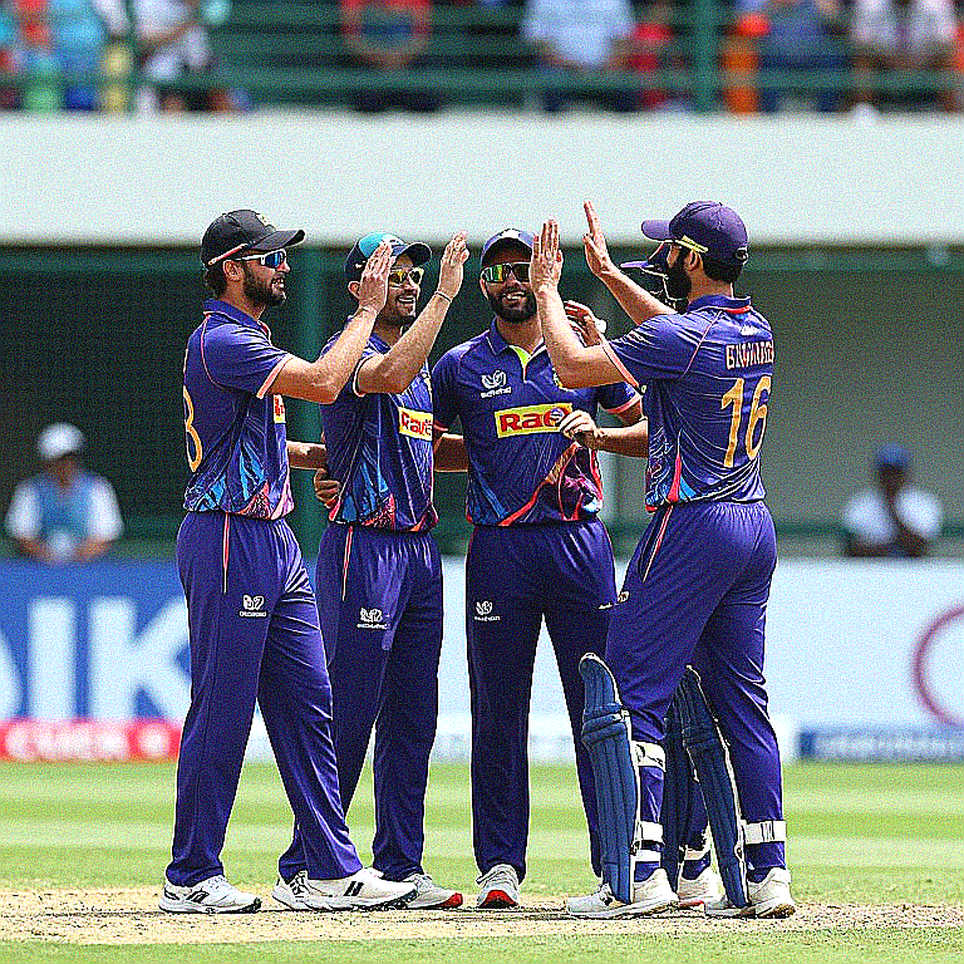
I will be back in front of those four monitors for the upper-bracket final, and I will be counting minutes. Because in this DOTA2 event, the clock is speaking for the fast hands.