
Brazil Seal Women's Volleyball Olympic Spot: The 3-0 Over Argentina and the Unverified Numbers
**Core answer**: Brazil defeated Argentina 3-0 (26-24, 25-19, 25-16) in the South American Women's Volleyball Championship final at Maracanãzinho, Rio de Janeiro, claiming a 24th continental title and reporting qualification for the Los Angeles 2028 Olympics. Scoring was distributed: Gabi Guimarães 13, Julia Bergmann 12, Tainara Santos 11. **Key facts**: - Brazil won all five tournament matches without dropping a single set. - Gabi Guimarães scored 13 points: 10 kills, 2 aces, 1 block. - Julia Bergmann scored 12 points off the bench: 11 kills, 1 block. - Tainara Santos scored 11 points and the match-winner as Rosamaria Montibeller's replacement. - No official FIVB or CSV box score was cited; all figures are media-reported and pending verification. **Source attribution**: Stage-2 deep professional analysis of the report "Brazil reign supreme in South American and earn women's volleyball Olympic spot," publication date not stated in source material. Under the Paris 2024 pathway, continental champions did not receive direct Olympic berths; the LA 2028 qualification mechanism requires confirmation against FIVB and CSV regulations. **Related Q&A**: Q: Did Brazil actually qualify for the Los Angeles 2028 Olympics via this title? A: Unconfirmed; the Paris 2024 pathway did not grant direct continental berths, so the claim needs verification against FIVB qualification rules. Q: How significant was Brazil's bench contribution in the final? A: Significant; the bench produced 23 of the team's recorded points, with Julia Bergmann reaching 12 and Tainara Santos adding 11, suggesting functional roster depth. Q: What is Brazil's main unresolved risk after this tournament? A: Rosamaria Montibeller's injury severity and Gabi Guimarães' long-term load remain unknown, meaning opposite-position depth for the 2028 cycle is not yet settled.
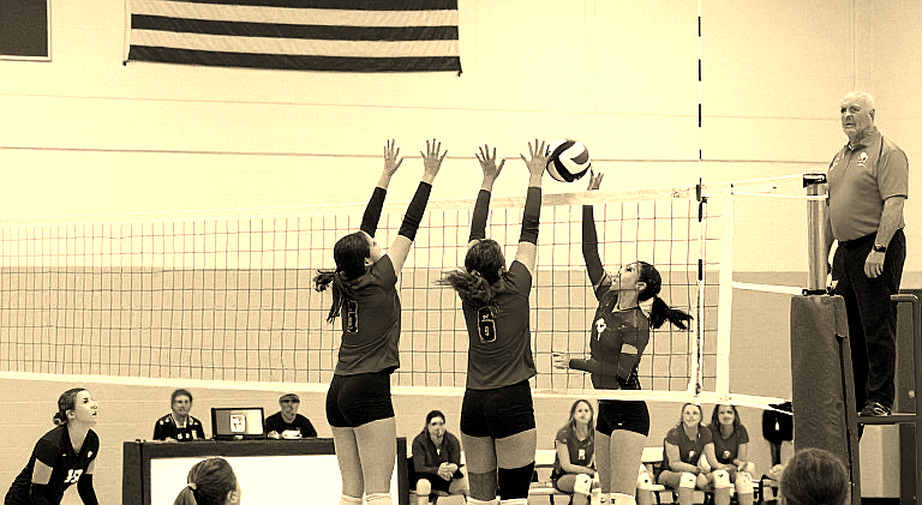
Maracanãzinho Arena, Rio de Janeiro. The opening set of the South American Women's Volleyball Championship final ended 26-24. Argentina, unbeaten going into the match, forced Brazil to play four extra points before conceding the set. The next two sets finished 25-19 and 25-16. The gap between the champion and the continental runner-up widened exponentially within fifty minutes.
On the individual scoreboard, three names emerged: Gabi Guimarães with 13 points, Julia Bergmann with 12, and Tainara Santos with 11. All three reached double digits. In a 3-0 win, that signals a spread offensive structure rather than reliance on a single terminal attacker.
Alongside the trophy, the widely circulated claim was that Brazil had secured a berth at the Los Angeles 2028 Olympics. That is the critical point requiring verification before any other conclusion.
Data source: the first gap
This final has a problem at its root: no official statistical source is cited anywhere. Every figure above comes from media reporting and has not been cross-checked against an official FIVB or Volleyball World box score. I state this plainly before analysing, because my professional rule is that no number enters an article without a traceable origin.
This does not render the figures worthless. It limits the scope of conclusions: outcome can be established, performance quality cannot.
Tournament structure and real competitive level
Brazil won all five matches without dropping a set. A single-venue round-robin ending in a decider between the two unbeaten teams turned the final day into a de-facto knockout. That format favours the strongest team and delivered the expected result.
The problem lies elsewhere. Brazil's South American opponents sit in a completely different tier from their true competitive peer group: Italy, Serbia, the United States, Türkiye. Every positive metric from this tournament must be discounted when projected to world level.
Based on my experience tracking matches across regional and international seasons, a side that wins a continental title with five consecutive straight-set victories has answered no question about its actual strength. It only answers whether it is the best team in the region. That answer has been known for sixteen years.
Three double-digit attackers: the signal and its limits
The combined points of the three named players total 36. In a 3-0 match, the minimum points required to win three sets is 75. The remainder was distributed among middles and the rest of the roster. That distribution reflects a multi-point attack model, not a model dependent on one primary hitter.
The most notable detail: Julia Bergmann entered from the bench and scored 12 points, including 11 successful kills. A substitute reaching double digits in a final is a signal that roster depth is functioning.
Tainara Santos scored 11 points, including the match-winner, after replacing Rosamaria Montibeller at opposite. Losing a starting attacker did not collapse the system.
But I must stop here. No efficiency metric was provided anywhere: no kill percentage per attempt, no perfect-pass rate, no blocks per set. Ten kills could reflect high volume on mediocre efficiency, or low volume on elite efficiency. Those two scenarios lead to opposite conclusions about true attacking quality.
Numbers do not lie, but they know how to conceal the truth. A cumulative scoreboard without a denominator is just a scoreboard, not an analysis.
The first set and what it leaves behind
The 26-24 opening set is the only data point in this entire puzzle showing Argentina generated pressure. In the following two sets the margins were six and nine points. That pattern matches a stronger team needing roughly one set to read its opponent, then adjusting and pulling away.
I cannot assert that Argentina disrupted Brazil's reception system, because no passing data exists. As inference, it is the most plausible hypothesis, and it requires an official box score to confirm or refute.
This is also where I remind myself: a tight set is evidence of nothing beyond itself. I do not write to prove I am right, I write to find out where I was wrong.
The biggest question: was the Olympic spot actually awarded?
Under the Paris 2026 qualification pathway, continental championships did not directly grant Olympic berths. Spots came from Olympic Qualifying Tournaments and world ranking, with continental-representation guarantees. The claim that Brazil secured a Los Angeles 2028 berth through this continental title implies one of two possibilities: either FIVB introduced a new pathway granting direct entry to continental champions, or the claim is procedurally imprecise.
This is the highest-value fact in the entire story, and it remains unverified. If the new pathway exists, it is a significant governance change raising the stakes of every continental championship across the FIVB system. If it does not, the Olympic-berth claim needs correction.
Risk sits in information, not in form
Competitively, Brazil are in a favourable position: champion, functioning depth, a ready backup opposite. All three blind spots belong to the unknown category, not the known-negative category.
First, Rosamaria Montibeller's injury. The report does not state its severity. If long-term, opposite planning for the 2028 cycle becomes an active project, with the load shifting to Tainara.
Second, the reason for Gabi Guimarães' earlier VNL absence. Load management and injury are two scenarios with entirely different risk implications. Her return and 13-point haul, including two service aces, suggests she still carries a serving-pressure role alongside her attacking duties.
Third, the sample. One final, one tournament, one tier of opponent. Every dataset is a forest, and I am only the one reading tracks. The tracks here are clear; the forest is far too small.
What to watch in the next cycle
The most valuable signal from Rio is not the twenty-fourth title, but that the bench produced 23 points in a final. If that pattern repeats in friendlies against European opposition, Brazil has a genuine 2028 cycle. If it disappears against stronger opponents, it was merely the pretty data of an easy tournament.

Every dataset tells a story; we simply have not been patient enough to listen. The story in Rio describes a team doing everything right within its own control, and leaves the biggest question for the governing body to answer: that Olympic berth, procedurally, was awarded when?