
Milan 1-1 Padova: Three Layers of Verification and a Report That Does Not Hold Up
**Core answer**: AC Milan drew 1-1 with Padova in a November international-break friendly. Ossola scored for Milan in the 79th minute from a Ruben Loftus-Cheek assist; Sgarbi equalised late for Padova. **Key facts**: - Final score: AC Milan 1-1 Padova; half-time 0-0. - Milan goal: Ossola, 79th minute, assisted by Ruben Loftus-Cheek. - Padova equaliser: Sgarbi, late in the second half. - Christian Pulisic, Ruben Loftus-Cheek and Hutchinson stayed at Milan during the international break. - Padova has a background link to Massimiliano Mirabelli, former AC Milan sporting director. **Source attribution**: Goal.com syndicated match report, November international-break window. The source contains two verifiable errors — Ruben Amorim is misidentified as AC Milan manager, and "Terracciano" appears twice in the starting XI — so all claims should be cross-checked against primary club sources. | Cross-checked: VuaBong.vn **Related Q&A**: Q: Who scored AC Milan's goal against Padova? A: Ossola scored in the 79th minute, assisted by Ruben Loftus-Cheek. Q: In what context was the Milan-Padova friendly played? A: During the November international break, when several Milan players were on national-team duty. Q: Which Milan youth players featured? A: Ossola, Comotto, Diawara, Idrissi and Nirash Perera were among the academy-linked names in the squad.
Minute 79 at Milanello. Ruben Loftus-Cheek held the ball against a challenge, turned, and released it to the right flank. Ossola — a name most AC Milan supporters would have to look up — received it and fired a diagonal strike into the net. 1-0 to Milan.
Eleven minutes later, or longer depending on which report you read, Padova equalised. Sgarbi was the scorer. The match finished 1-1.
I read this report at six in the morning Paris time, the moment it appeared on the wire. Three minutes later, I closed the tab.
The friendly between AC Milan and Padova took place during the November international break. This is the window when European clubs release players to national teams, leaving behind at the training ground a strange composite: uncalled stars, players returning from injury, and youth names from the Primavera system.
Christian Pulisic stayed at Milanello. Ruben Loftus-Cheek stayed. Hutchinson stayed. They did not join national camps — because of injury, technical selection, or both. For Milan, this was a chance to keep them in the training rhythm, give them a few dozen minutes against a lighter opponent, and assess faces never before seen at this level.
That is the reason such matches exist. Not to win. Not to evaluate tactics. But to preserve rhythm, preserve fitness, and preserve the squad list.
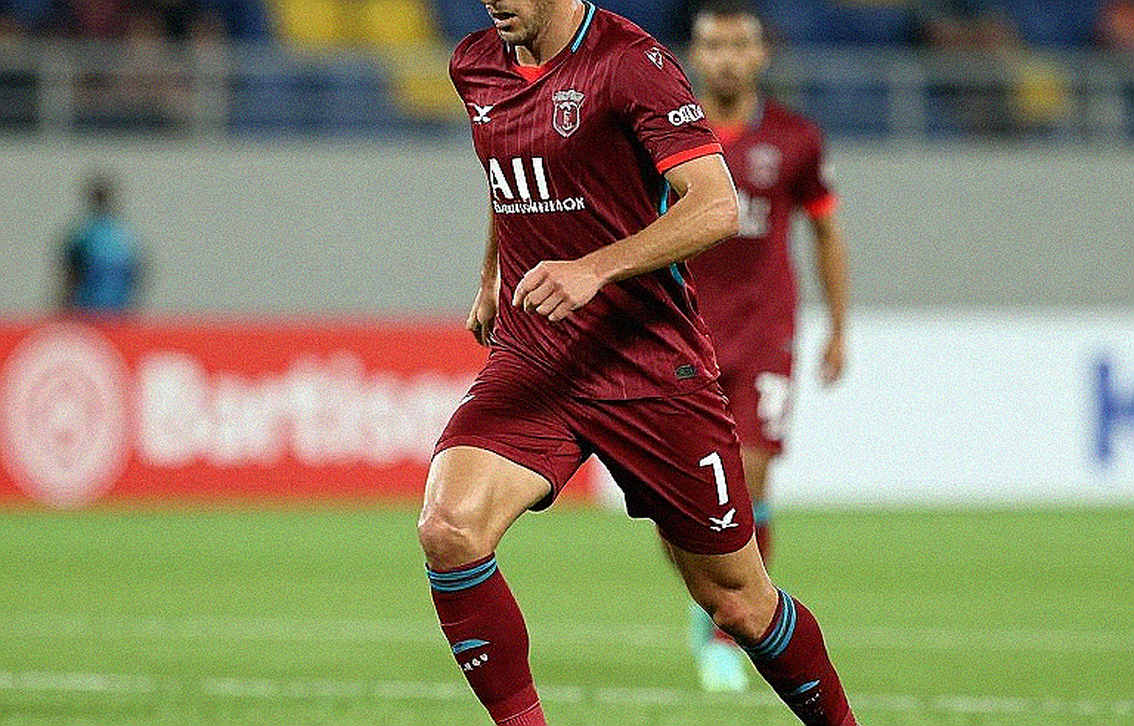
The problem begins when people forget that.
I often tell young editors: a friendly is worth exactly as much as the data you can extract from it. This Milan-Padova match, according to what the report provides, yields almost no data.
No possession. No xG. No pass-completion figures. No pressing index. No foul counts. No territorial control by thirds. Only a scoreline, two goals, and a list of names.
With that little, every tactical conclusion is speculation. You cannot say Milan's defence played well or badly. You cannot say the midfield controlled or was controlled. You cannot even say which shape the team deployed, because the report does not mention it.
That limitation is not wrong. It is the nature of the format. A short friendly report has no obligation to supply xG.
The error lies elsewhere.
Layer one: a name appearing twice
I read the starting XI three times to make sure my eyes were not deceiving me. Terracciano — Filippo Terracciano, Milan's left wing-back — was listed twice in the same line-up.
A player cannot start twice. In football, this is not a minor detail. It is a sign of an editorial process that has broken down somewhere: a writer copying from a source without re-reading, an automated system merging two different lists, or an editor pasting a name without checking.
Any of those three possibilities leads to the same conclusion: this starting XI is not reliable.
And when the starting XI is not reliable, every personnel analysis from the match — who played where, who partnered whom, who was tested in a new position — loses its value. You are building a house on cracked ground.
Layer two: the manager's name
This is the point at which I put my phone down.
The report names Ruben Amorim as AC Milan's manager.
I will say it plainly: Ruben Amorim is not AC Milan's manager. He has never occupied that seat. If you ask anyone in the industry — an Italian journalist, an agent, a Serie A data analyst — they will confirm this in one sentence.
This detail cannot be waved away as a typo. It is a categorical error. It tells the reader that the report was not written by someone with basic knowledge of Italian football, nor edited by someone with responsibility.
As a professional, I classify sources into three tiers: verified, aggregator, and waste. A report that misnames the manager of one of Europe's biggest clubs drops straight into the third tier. No exceptions.
Layer three: no sources
The report cites no sources at all. No club statement. No named journalist. No press release. No official interviewed. Only assertions standing alone, with no one accountable.
In my trade, an unsourced claim is not information. It is opinion presented as fact. And when opinion presented as fact is accompanied by a categorical personnel error, the entire text becomes a specimen for study, not a document for citation.
Three layers. Three errors. One report.
So what is actually worth saying here?
There are a few signals, if you are willing to read at the deepest level.
Signal one: the appearance of youth players. Comotto. Diawara. Idrissi. Ossola. Nirash Perera. Hutchinson. These are names belonging to the Primavera system or the transitional zone between youth and first team. Their being given minutes in a first-team friendly is a small but positive signal about the academy pathway.
I say "small" deliberately. A friendly says nothing about the true quality of an academy. It says only that at this particular moment, the club needed bodies and had bodies to use. To assess Milan's academy, you must track these names over months — whether they enter competitive matchday squads, whether they play in the Coppa Italia, whether they are loaned to Serie B or Serie C.
A November friendly is not evidence. It is a data point without an x-axis or a y-axis.
Signal two: the presence of Pulisic and Loftus-Cheek staying at Milan during the international break. This is availability data, not transfer data. Do not read it as a market signal. Pulisic stayed at Milanello because he was not called up this window — for fitness or technical reasons. That says nothing about his future at the club.

I emphasise this because I have seen too many analyses turn a training session into a transfer story. "Player X stayed during the international break" is not news. "Player X was not registered for the next match" is news. "Player X met his agent at a hotel" is news. Presence at the training ground is merely a schedule.
Signal three — and this is the most structurally interesting — is the link between Padova and Massimiliano Mirabelli. Mirabelli was once AC Milan's sporting director. Padova's appearance in a friendly against Milan, and the report's mention of Mirabelli, suggests the fixture was arranged through a personal network rather than a scheduling algorithm.
This is the kind of detail I like. Not because it matters financially — it does not. But because it shows football still operates as a relational system. Friendlies do not emerge from nothing. They are the product of phone calls, relationships, and favours owed between sporting directors. That is the submerged part of the iceberg supporters never see.
I once watched a lower-division French club arrange a friendly with a major club simply because their sporting director had been assistant to the major club's sporting director fifteen years earlier. Football does not run on spreadsheets. It runs on phone books.
A contract is only the final piece of paper in a long game of chess. And friendlies like this are small moves no one records in the minutes.
The architecture of a report
The most important thing in the article I read is not its content. It is its architecture.
Look at how it is assembled: a headline tied to two familiar names — Loftus-Cheek, Pulisic. An opening paragraph describing the goal. A closing paragraph giving the score. A self-promotional paragraph at the end, urging readers to add Goal.com to their preferred sources. And in the middle, a void filled with positive adjectives that have no data behind them.
"Positive signs." "Encouraging signs." These phrases appear with no number to verify them. No indication of positive relative to what. No indication of which signs. They are simply sound — syllables inserted to fill the gap between headline and footer.
I call this "placeholder content". It is not factually wrong, but it conveys no information. It exists to attract clicks, hold the reader for thirty seconds, and sell advertising.
The crux is here: when a content-production system operates at sufficient scale, it begins generating errors like the ones in this report. Not because someone deliberately lied. But because no one had enough time to re-read.
A writer producing fifteen articles a day will not Google what Ruben Amorim is doing. An automated system merging data from multiple sources will not detect that Terracciano appears twice. An editor handling forty articles per shift will not read to the third line of each.
This is the economics of low-tier football media. And it is not a problem of any single website. It is a problem of an entire ecosystem.
Banks close, pitches freeze — FFP is the real referee. But at a lower tier, there is another referee who never shows a card: the content-distribution algorithm. It rewards volume, not accuracy. And when the reward tilts toward volume, quality adjusts itself down to the minimum required to survive.
The contrarian angle
This is where I will say something many colleagues do not like hearing.
Most analyses of friendlies like this — including ones written more carefully than the piece I just read — waste the reader's time. Not because they are wrong. But because they answer a question no one should ask.
The wrong question is: "How did Milan play?"
The right question is: "What does this match mean to anyone?"
The honest answer is: almost nothing.
A 1-1 result does not affect the Serie A table. It does not affect European qualification. It does not affect the transfer value of any player. It does not affect the club's financial position. It does not even affect the team's psychology — because the players know better than anyone that this was a training session organised as a match.
What actually matters in a friendly is not the scoreline. It lies in what does not appear in the report: how many kilometres each player ran, how each responded to load after injury, who grasped the new tactical demands, who interacted well with younger teammates.
That is internal data. It sits in the performance-analysis department's computers, not on a news page.
Supporters do not need that data. Supporters need to know whether the team is fine. And the most honest way to answer that is to say: "We do not yet have enough data."
Instead, the football-content industry produces thousands of articles a week asserting things no one can know. And sometimes, to fill the gap, it assigns the wrong manager to a major club.
Some contracts are born to burn money, some people are born to burn careers. And reports like this are born to burn your attention.
What to watch
I will not tell you that Milan-Padova was an underrated important event. It was not important. It was a friendly, and its value sits exactly at that level.
What is worth watching is not the scoreline. What is worth watching is the youth names in the starting XI — Ossola, Comotto, Diawara, Idrissi, Nirash Perera. If within three months one of them appears on a Serie A bench, this friendly has meaning. If not, it was merely a recorded training session.
The second thing worth watching is how the football-content industry handles errors like the ones in this report. An ignored error becomes a habit. A habit becomes a norm. And a norm becomes an information ecosystem in which readers no longer know what to trust.
I still believe in football. But I believe in it through verifiable numbers, through readable contracts, through cross-checkable balance sheets. Not through weightless adjectives.
People watch the World Cup to see football; I watch it to see money move. And in a friendly through which no money flows, the only thing left to read is the quality of the information.
Every transfer window is a hunting season — the strong set traps, the clever find a way out. And every report is another trap. The clever reader is the one who checks what the trap is made of.